
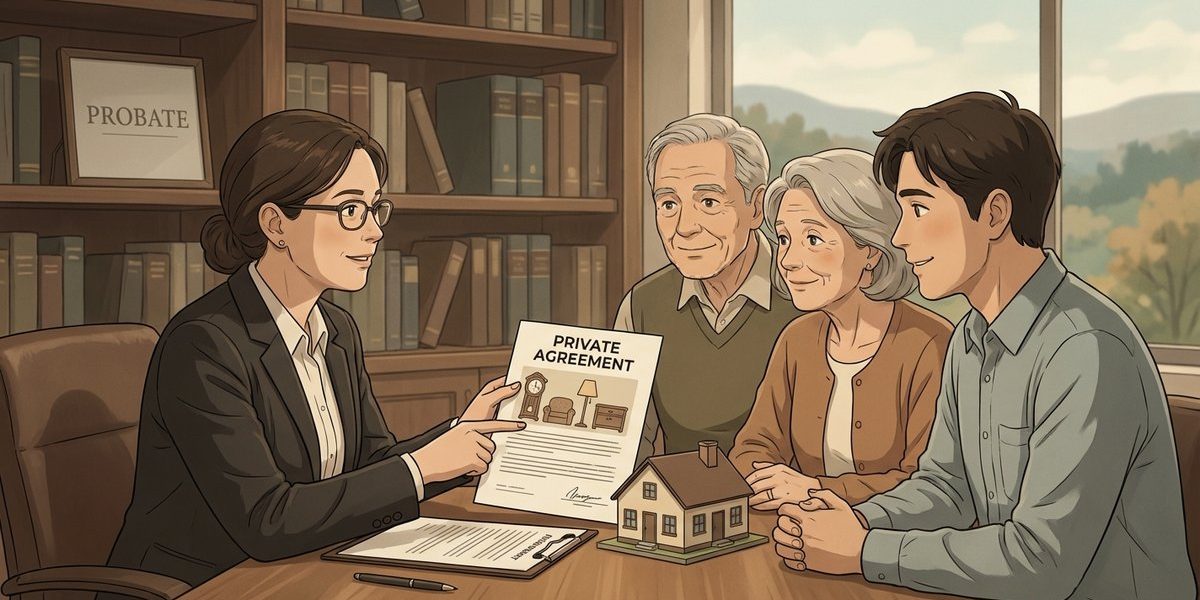
Can the life tenant and the remaindermen sign a private agreement listing what items stay with the house and what personal property is only being “loaned” for use during the life estate? – North Carolina
Short Answer
Yes. In North Carolina, the life tenant and all remaindermen can sign a written private agreement that clearly lists which items are treated as part of the house (and will stay) and which items are personal property that is only being “loaned” for use during the life estate. A clear, signed writing helps prevent later disputes about fixtures versus personal property and can also set practical rules for replacements, maintenance, and move-out at the end of the life estate. If the agreement effectively changes rights “in or concerning” the real estate, it should be in writing and signed to be enforceable.
Understanding the Problem
In North Carolina, when a parent’s will gives one child a life estate in a home and the other siblings are remaindermen, disagreements often arise over what “goes with the house” versus what is personal property. The decision point is whether the life tenant and the remaindermen can privately agree—during the life estate—on a written list that treats certain items as staying with the home and treats other items as personal property that is only being provided for use during the life estate.
Apply the Law
North Carolina generally treats a life tenant as having the right to possess and use the home during the life estate, while the remaindermen hold the future ownership that becomes possessory when the life estate ends. Because fixtures can be treated as part of the real estate (and personal property is not), families often use a written agreement to reduce uncertainty and to document intent about borderline items (like appliances, mounted TVs, shelving systems, or outdoor equipment). If an agreement amounts to a contract affecting an interest “in or concerning” land, North Carolina’s Statute of Frauds requires a writing signed by the party to be charged.
Key Requirements
- All interested owners sign: The life tenant and all remaindermen should sign so the agreement binds the whole family group and reduces later challenges.
- Clear item-by-item descriptions: The agreement should list items with enough detail to avoid confusion later (brand/model/serial number when helpful, location in the home, photos as an exhibit).
- State the intended treatment: For each item, the agreement should say whether it (a) stays with the house at the end of the life estate, (b) belongs to a named person now and is only “loaned” for use, or (c) will be handled under a stated replacement rule.
What the Statutes Say
- N.C. Gen. Stat. § 22-2 (Contracts concerning land must be in writing) – Requires a signed writing for contracts to convey land or an interest in or concerning land, which is why a written, signed agreement is the safer approach when the agreement affects rights tied to the home.
- N.C. Gen. Stat. § 105-384 (Duties and liabilities of life tenant) – Places tax responsibility on the life tenant and allows remaindermen to seek reimbursement if they pay, which is a common topic families also address in life-estate agreements.
Analysis
Apply the Rule to the Facts: Here, one sibling has the right to live in the home for life, and the other siblings will own the home after the life tenant’s death. A written, signed agreement can reduce conflict by documenting which items the family agrees will remain with the home when it is later sold and which items are personal property being provided for use during the life estate. Because the goal is to avoid disputes and delays later, the agreement should be specific, signed by everyone with an ownership interest, and kept with the estate and house records.
Process & Timing
- Who signs: The life tenant and every remainderman. Where: Privately (not a court filing), but signatures should be notarized as a best practice. What: A written “Life Estate Personal Property and Fixtures Agreement” with an item list and photo exhibit. When: As soon as practical after the life estate begins and before major replacements or renovations create confusion.
- Document the inventory: Create a room-by-room list and photos. For higher-value household items, consider an appraisal or at least a detailed description and confirm insurance coverage is appropriate for items that remain personal property.
- Store and update the agreement: Keep signed copies with the estate records and with the family’s important papers. Update it in writing if major items are replaced (for example, an appliance swap) so the “what stays” list remains accurate.
Exceptions & Pitfalls
- Missing signatures: If one remainderman does not sign, that person may later dispute the list, which can recreate the same conflict the agreement was meant to prevent.
- Vague categories instead of specific items: Labels like “all appliances” or “all furniture” often cause disputes. Item-by-item lists (with photos) prevent arguments about borderline items.
- Accidentally changing real estate rights: If the agreement goes beyond personal property and effectively changes who owns what interest in the home (or changes the life estate terms), it may need more formal documentation. A North Carolina attorney can confirm whether a deed-related document is needed for the family’s goal.
- Replacement confusion: Without a replacement rule, families fight over whether a replacement refrigerator, washer/dryer, or light fixture is a “house item” or the life tenant’s personal property. The agreement should state how replacements are treated.
- End-of-life-estate logistics: When the life tenant dies, the personal representative may need to inventory and distribute personal property. Written lists and receipts for distributed items help reduce conflict and administrative delays.
Conclusion
North Carolina families can use a private, written agreement signed by the life tenant and all remaindermen to spell out what stays with the house and what personal property is only being “loaned” during the life estate. The safest approach is a clear, item-by-item list with photos and a replacement rule for major items. Because agreements affecting rights “in or concerning” land generally must be in writing, the next step is to put the agreement in writing and have all owners sign it before anyone relies on it.
Talk to a Probate Attorney
If a family is dealing with a North Carolina life estate and wants to prevent later disputes about fixtures versus personal property, our firm has experienced attorneys who can help document clear ground rules and timelines. Call us today at [919-341-7055].
Disclaimer: This article provides general information about North Carolina law based on the single question stated above. It is not legal advice for your specific situation and does not create an attorney-client relationship. Laws, procedures, and local practice can change and may vary by county. If you have a deadline, act promptly and speak with a licensed North Carolina attorney.

