
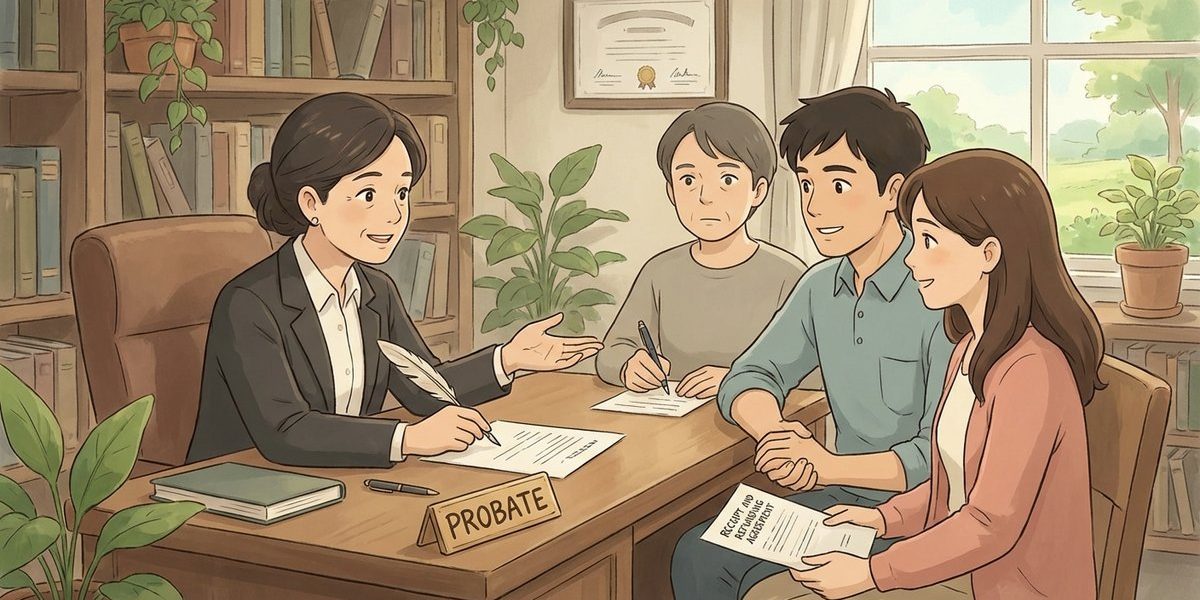
Can my spouse witness a receipt and refunding agreement I’m signing for an estate? – North Carolina
Short Answer
Usually, a spouse can physically serve as the witness on a receipt and refunding agreement in North Carolina, but it is often a bad idea if the spouse could benefit from the estate distribution or if the Clerk of Superior Court expects a “disinterested” witness. A safer approach is to use an adult witness with no stake in the estate and who is not married to anyone who has a stake. If the form is being filed with the estate (or reviewed by the Clerk), using a disinterested witness helps avoid delays and re-signing.
Understanding the Problem
In a North Carolina estate administration, a beneficiary or other recipient may be asked to sign a receipt and refunding agreement to confirm what was received and to agree to return funds if later estate debts or expenses require it. The practical question is whether the witness requirement is satisfied if the signer’s spouse acts as the witness, or whether that relationship creates a problem that could cause the paperwork to be rejected or questioned when it is mailed in for the estate file.
Apply the Law
North Carolina law commonly focuses on whether a witness is “competent” and, in certain contexts, whether the witness is “interested” (meaning the witness or the witness’s spouse benefits from the document or transaction). A receipt and refunding agreement is not a will, but the same practical concern shows up in probate administration: if the witness has a financial stake (directly or through a spouse), the document may draw objections, require extra proof, or be treated as unreliable. When the receipt is being submitted to the estate file and reviewed as part of closing steps, the safest practice is to use a disinterested adult witness who can later confirm the signature if needed.
Key Requirements
- Competent witness: The witness must be an adult who can understand what is happening and can later truthfully confirm that the signer signed the document.
- Disinterested witness (best practice for probate paperwork): The witness should not receive money or property from the estate because of the signer’s share, and should not be married to someone who does.
- Clean execution: The witness should watch the signer sign (or the signer should acknowledge the signature to the witness), and the witness should sign the same document promptly to reduce later disputes.
What the Statutes Say
- N.C. Gen. Stat. § 8-56 (Husband and wife as witnesses in civil action) – generally treats spouses as competent to testify in civil matters, with limits for confidential marital communications.
- N.C. Gen. Stat. § 31-10 (Interested witness to a will) – shows North Carolina’s concern about “interested” witnesses and how a spouse’s interest can matter in probate-related documents.
Analysis
Apply the Rule to the Facts: Here, the document requires a witness and the proposed witness is the signer’s spouse. If the spouse has no financial connection to the estate distribution (and is not receiving part of the signer’s share), the spouse is usually a competent witness, but the relationship can still raise avoidable questions when the paperwork is reviewed as part of the estate administration. If the spouse could benefit from the estate funds—directly or indirectly—using the spouse as witness increases the risk that the personal representative, an heir, or the Clerk will ask for a re-signing with a disinterested witness.
Process & Timing
- Who signs: the person receiving estate funds (often an heir or beneficiary). Where: typically signed outside of court, then returned to the personal representative (executor/administrator) for the estate file with the Clerk of Superior Court in the county where the estate is open. What: the receipt and refunding agreement provided for the estate administration. When: before the estate can complete certain closing steps or distributions, depending on how the personal representative is handling receipts.
- Witnessing step: choose an adult witness who is not a beneficiary and not married to a beneficiary; have the witness observe the signing (or have the signer acknowledge the signature) and then sign as witness.
- Submission: return the original signed document as instructed (often by mail) and keep a copy in case the estate later needs confirmation of the signature.
Exceptions & Pitfalls
- Spouse has an indirect financial interest: even if only one person is named as beneficiary, a spouse may still be viewed as benefiting from the household’s receipt of estate funds, which can make the witness look “interested.”
- Local practice and form instructions: some receipt forms or estate administrators expect a disinterested witness even if the form does not say it clearly; ignoring that expectation can lead to rejection and re-signing.
- Execution problems: a witness who did not actually observe the signing (or did not receive an acknowledgment) can create credibility issues if the signature is later questioned.
For more on common execution problems, see what happens if the wrong person witnesses a receipt and refunding agreement and the proper way to submit the receipt and refunding agreement after signing.
Conclusion
In North Carolina, a spouse is generally a competent witness, but using a spouse to witness a receipt and refunding agreement for an estate can create avoidable “interested witness” concerns and lead to delays or a request to re-sign. The safest approach is to have a disinterested adult witness sign. As a next step, the signer should re-check the form instructions and, if the estate is being administered through the Clerk of Superior Court, return a properly witnessed original to the personal representative promptly.
Talk to a Probate Attorney
If an estate is requiring a receipt and refunding agreement and there is concern about whether a spouse can serve as the witness without causing problems, our firm has experienced attorneys who can help explain the requirements and reduce the risk of delays. Call us today at (919) 341-7055.
Disclaimer: This article provides general information about North Carolina law based on the single question stated above. It is not legal advice for your specific situation and does not create an attorney-client relationship. Laws, procedures, and local practice can change and may vary by county. If you have a deadline, act promptly and speak with a licensed North Carolina attorney.

