
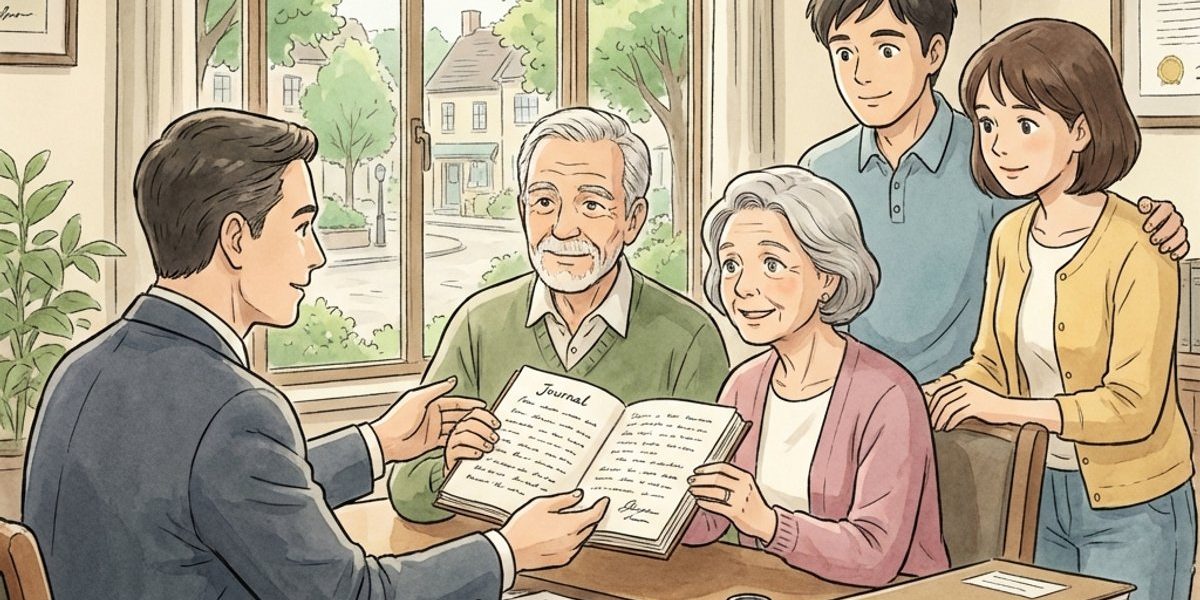
Can journal entries be used like a holographic will to show our parent wanted the children to inherit the home? – North Carolina
Short Answer
Sometimes, but only if the journal entry itself qualifies as a valid holographic (handwritten) will under North Carolina law. A journal entry that merely describes wishes or plans usually does not change who inherits; the Clerk of Superior Court generally must follow a valid will, or (if there is no valid will) North Carolina’s intestate succession rules. If the writing is entirely in the parent’s handwriting and is signed in a way the parent adopted as a signature, it may be offered for probate as a holographic will.
Understanding the Problem
In North Carolina probate, the issue is whether a parent’s journal entry can function as a will that legally transfers the home to the children. The key decision point is whether the writing shows a present intent to make a will and meets North Carolina’s formal requirements for a holographic will, rather than being a diary note, a plan, or a statement of preference. If the writing does not qualify as a will, the home passes under the will that exists (if any) or under North Carolina intestacy rules administered through the Clerk of Superior Court.
Apply the Law
North Carolina recognizes holographic wills. A holographic will is a will written in the testator’s handwriting and signed in the testator’s handwriting. If a journal entry meets those requirements and reads like a present disposition of property at death (not just a hope or instruction), it can be submitted to the Clerk of Superior Court for probate. If there is no valid will, the estate (including a home titled in the parent’s name alone) generally passes under North Carolina’s intestate succession statutes, and a surviving spouse’s share can affect whether children receive the entire home.
Key Requirements
- Handwritten document: The dispositive words must be written entirely in the parent’s handwriting (minor printed/typed material that does not affect meaning may not defeat validity).
- Signature adopted by the parent: The parent must sign in handwriting, or write a name/mark in a way the parent intended as a signature (it does not have to be a full legal name).
- Testamentary intent: The wording must show a present intent that the writing control who receives property at death, not merely a wish, a reminder, or an instruction to “make a will later.”
What the Statutes Say
- N.C. Gen. Stat. § 31-3.1 (Will invalid unless statutory requirements complied with) – North Carolina generally requires wills to meet statutory formalities to be valid.
- N.C. Gen. Stat. § 31-3.2 (Kinds of wills) – Real property can be devised by an attested written will or a holographic will that meets the statute.
- N.C. Gen. Stat. § 31-3.4 (Holographic will) – Defines the handwriting and signature requirements for a holographic will in North Carolina.
- N.C. Gen. Stat. § 29-14 (Share of surviving spouse) – If there is no valid will, a surviving spouse may take a share of real property, which can limit what passes to children.
- N.C. Gen. Stat. § 29-15 (Shares of heirs other than surviving spouse) – If there is no valid will, children (and descendants of deceased children) take the remaining share under intestacy rules.
Analysis
Apply the Rule to the Facts: A journal entry can help only if it is the will. That usually means the entry is entirely in the parent’s handwriting, includes language that reads like a present decision about who gets the home at death, and is signed in a way the parent intended as a signature. If the entry is more like “I hope the kids keep the house” or “I need to change my will,” it may show intent but still fail as a will, and the Clerk of Superior Court will generally apply an existing will or intestacy rules instead.
Process & Timing
- Who files: A person with the original writing (often a family member) or the person seeking to qualify as the personal representative. Where: The Office of the Clerk of Superior Court (Estates) in the county where the estate is administered in North Carolina. What: The original journal page(s) or notebook (or best available original), plus the probate application paperwork required by that county. When: Typically as soon as possible after death once the writing is located.
- Proof issues: The Clerk will focus on whether the document meets holographic-will formalities and whether the handwriting and signature are the parent’s. In practice, families should be prepared to identify witnesses who can recognize the parent’s handwriting and explain how the writing was kept and found, because authenticity and intent are common points of dispute.
- Outcome: If the Clerk admits the writing to probate as a will, the estate is administered under that will. If the Clerk does not, the estate proceeds under any other valid will that exists, or under intestate succession rules.
Exceptions & Pitfalls
- “Wish” language vs. “I give” language: Journal entries often read like hopes, explanations, or family history. North Carolina probate usually needs language that looks like a present decision about who receives property at death.
- No signature (or unclear signature): A handwritten page without a signature (or without a name/mark adopted as a signature) is a common reason a writing fails as a holographic will.
- Multiple writings and confusion: Several entries over time can create disputes about which writing controls, whether one revoked another, or whether the writing was meant as a note rather than a will.
- Surviving spouse rights: Even when children are intended beneficiaries, a surviving spouse may have statutory rights that impact the home and other assets, especially if there is no valid will.
- Title issues: If the home was owned jointly with survivorship rights or had a recorded transfer-on-death mechanism (where available), it may pass outside probate regardless of a journal entry. A deed and title review is often necessary before assuming the will controls the house.
Conclusion
In North Carolina, a journal entry can function like a holographic will only if it meets the statutory requirements for a holographic will and shows a present intent to control who inherits at death. If it does not, the home passes under any other valid will or, if there is no will, under North Carolina intestate succession rules (which may include a surviving spouse’s share). The next step is to bring the original writing to the Clerk of Superior Court (Estates) to determine whether it can be admitted to probate.
Talk to a Probate Attorney
If a family is dealing with handwritten journal entries and questions about whether the children can inherit a home through probate, our firm has experienced attorneys who can help evaluate the writing, explain the probate process, and identify timelines and risks. Call us today at (919) 341-7055.
Disclaimer: This article provides general information about North Carolina law based on the single question stated above. It is not legal advice for your specific situation and does not create an attorney-client relationship. Laws, procedures, and local practice can change and may vary by county. If you have a deadline, act promptly and speak with a licensed North Carolina attorney.

