
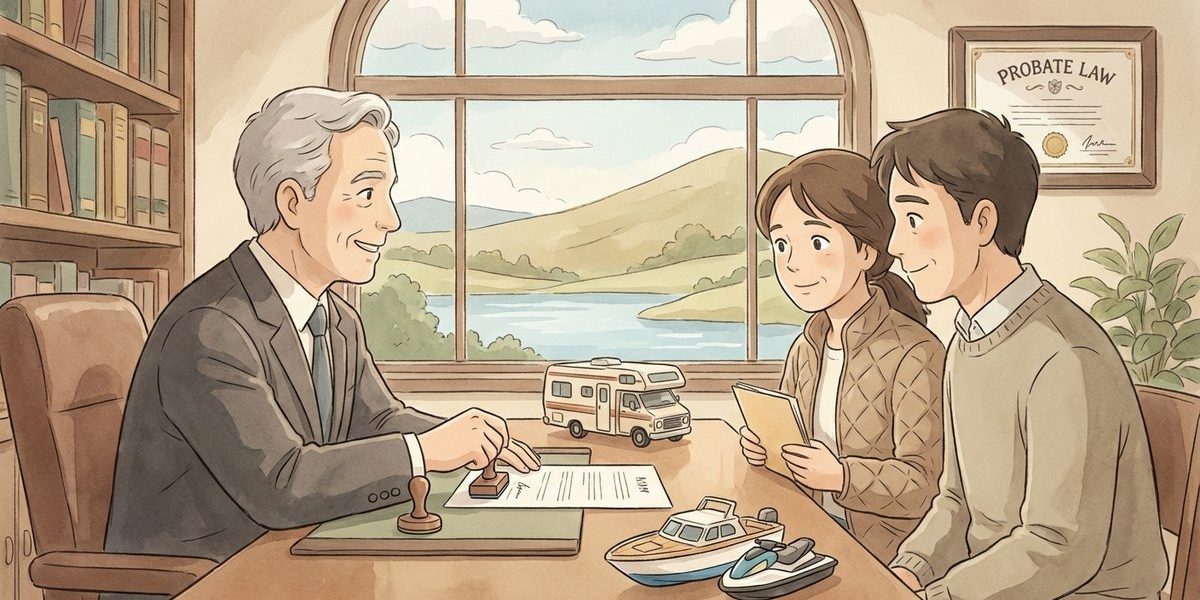
Can I transfer or sell an RV, boat, or jet ski that is titled only to my spouse before the estate is officially opened? – North Carolina
Short Answer
Usually, no. In North Carolina, if an RV, boat, or personal watercraft (jet ski) is titled only in a deceased spouse’s name, a surviving spouse generally cannot sell or transfer it until there is legal authority to sign for the deceased owner—most often after a personal representative (executor/administrator) qualifies and receives Letters from the Clerk of Superior Court.
There are limited workarounds for certain motor vehicles (including some RVs) through DMV “transfer by operation of law” procedures, and some items may be assigned through the surviving spouse’s year’s allowance. Boats and jet skis commonly require estate documentation for retitling or sale.
Understanding the Problem
In North Carolina probate, the key question is whether a surviving spouse can sign a title and complete a sale or transfer of an RV, boat, or jet ski when the title shows only the deceased spouse as owner and the estate has not yet been opened with the Clerk of Superior Court. The decision point is whether there is already a legally recognized person with authority to act for the deceased owner’s property (for example, a qualified personal representative) or a specific statutory process that allows a title office or agency to retitle the asset without a full estate being opened.
Apply the Law
North Carolina treats titled property as requiring the proper signing authority to transfer ownership. When the titled owner has died, the person who usually gains authority to sign and transfer is the estate’s personal representative after qualification with the Clerk of Superior Court. For motor vehicles, North Carolina law also allows certain “transfer by operation of law” processes through the N.C. Division of Motor Vehicles (DMV) in inheritance/devise situations, including transfers tied to a surviving spouse’s year’s allowance or, in some limited situations, an affidavit process when no administration is pending or expected. Boats and personal watercraft are typically handled through the North Carolina Wildlife Resources Commission (or, for some larger vessels, the U.S. Coast Guard documentation system), and those agencies commonly require estate authority documents to retitle or sell.
Key Requirements
- Correct signing authority: A living owner signs a title voluntarily; after death, the signature usually must come from a qualified personal representative (or another legally recognized method such as a DMV inheritance transfer process where allowed).
- Correct agency and paperwork: RVs and other motor vehicles run through the DMV title process; boats/jet skis typically run through the Wildlife Resources Commission (or Coast Guard documentation for certain vessels). Each system has its own required forms and supporting documents.
- Clean title chain: If the title was never properly registered from a prior seller, or the original title is missing, the estate often must fix the paperwork first (for example, by obtaining a duplicate title or using the agency’s lost-title/duplicate-title process) before any valid sale can occur.
What the Statutes Say
- N.C. Gen. Stat. 20-77 (Transfer by operation of law) – Allows the DMV to issue a new title when ownership passes by inheritance/devise and describes documentation the DMV may require, including transfers tied to a surviving spouse’s year’s allowance and certain affidavit-based transfers in limited situations.
- N.C. Gen. Stat. 30-19 (Property awarded to surviving spouse and children) – Provides for the Clerk of Superior Court to determine personal property awarded as part of the surviving spouse and children’s allowance process, which can affect how certain personal property (including vehicles) is assigned and then retitled.
Analysis
Apply the Rule to the Facts: Some recreational items are already jointly titled or have been retitled to the surviving spouse through an allowance process, which typically makes transfer or sale much simpler because the surviving spouse is already the titled owner (or can become the titled owner using the proper certificate/order). For items titled only in the deceased spouse’s name, the surviving spouse generally cannot sign as “seller” before anyone has qualified to act for the estate. The situation becomes more complicated where there are signed titles from prior sellers that were never registered, because the paperwork gap often must be corrected before a lawful transfer to a new buyer can be completed.
Process & Timing
- Who files: Usually the person named in the will as executor (or another qualified person if needed). Where: Clerk of Superior Court (Estates) in the county where the decedent resided. What: Application to qualify and obtain Letters (Letters Testamentary if there is a will; otherwise Letters of Administration). When: As soon as practical once it becomes clear a titled asset must be sold or retitled and no non-probate method applies.
- Retitle or sell through the correct agency: For an RV or other motor vehicle, the personal representative typically signs the title as the transferring party and the buyer/beneficiary applies for a new title through the DMV; supporting documents commonly include a certified death certificate and certified Letters. For a boat or jet ski, the transfer commonly goes through the North Carolina Wildlife Resources Commission with its transfer form(s) and estate documentation.
- Fix title problems before marketing the item: If the original title is missing, or the paperwork was never properly registered from a prior seller, the estate may need to request a duplicate title or use the agency’s special process for missing-title situations before any sale can close cleanly.
Exceptions & Pitfalls
- DMV inheritance/affidavit transfers are limited: North Carolina law gives the DMV authority to retitle certain vehicles after death in limited situations, but it is not a blanket rule that a surviving spouse can sell anything titled only to the decedent before an estate is opened. The DMV may require a year’s allowance assignment certificate, Letters, a filed will, or affidavits signed by all heirs depending on the scenario. See N.C. Gen. Stat. 20-77.
- Boats and jet skis often require estate authority documents: Even when the surviving spouse is the ultimate beneficiary, the agency processing the transfer commonly expects proof of the personal representative’s authority (certified Letters) and a properly executed transfer form/title paperwork.
- “Signed but never registered” titles can stop a sale: A buyer (and the agency) may refuse a transfer if the chain of ownership is unclear. The estate may need to correct the record first, which can take time.
- Liens and taxes can block transfer: If there is a recorded lien, it typically must be released or addressed before a clean transfer can occur. Motor vehicles also commonly require compliance steps tied to registration and property tax listing before a new title/plate is issued.
Conclusion
In North Carolina, a surviving spouse generally cannot transfer or sell an RV, boat, or jet ski titled only in the deceased spouse’s name until someone has legal authority to sign for the deceased owner—most often a personal representative who has qualified with the Clerk of Superior Court and received Letters. Some motor vehicles may be retitled through limited DMV “operation of law” procedures, including transfers connected to a spouse’s year’s allowance. The practical next step is to confirm how each item is titled and, if needed, qualify an estate so the proper person can sign and retitle or sell.
Talk to a Probate Attorney
If a titled RV, boat, or jet ski is still in a deceased spouse’s name (or the paperwork was never properly registered), the fastest path often starts with confirming whether a DMV or agency shortcut applies or whether estate qualification is required. Our firm has experienced attorneys who can help explain the options and timelines. Call us today at (919) 341-7055.
Disclaimer: This article provides general information about North Carolina law based on the single question stated above. It is not legal advice for your specific situation and does not create an attorney-client relationship. Laws, procedures, and local practice can change and may vary by county. If you have a deadline, act promptly and speak with a licensed North Carolina attorney.

