
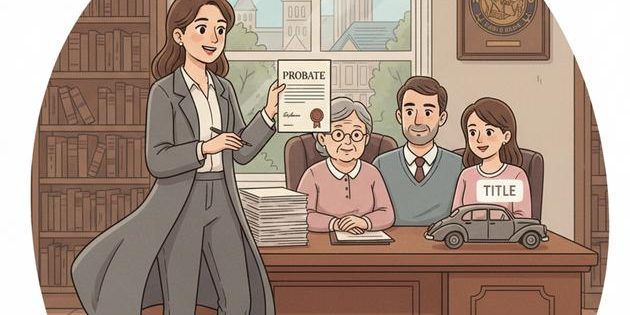
Can I transfer car titles to family members now, or should I wait until the amended affidavit is accepted and file-stamped? – North Carolina
Short Answer
In North Carolina, a person acting under the small-estate “collection by affidavit” process generally should wait until the Clerk of Superior Court has accepted the amended affidavit and provided a file-stamped (clerk-authorized) affidavit before trying to retitle vehicles through the DMV. The clerk-signed affidavit is what shows legal authority to collect and distribute the decedent’s personal property, and the DMV typically requires that proof of authority for a title transfer by inheritance. If the clerk is requiring an amended filing, completing transfers before the amended affidavit is accepted can create delays, rejected DMV transactions, or later accountability issues if a full estate is opened.
Understanding the Problem
In North Carolina probate, can a nominated executor (working with a relative) retitle a decedent’s vehicles to family members while a small-estate affidavit is being corrected and refiled, or must the transfer wait until the Clerk of Superior Court accepts the amended affidavit and provides a file-stamped copy?
Apply the Law
North Carolina allows certain small estates to be handled through “collection of personal property by affidavit.” This process is filed with the Clerk of Superior Court in the county where the decedent was domiciled. The clerk’s accepted and signed affidavit functions as the authority for the affiant (sometimes called a “collector by affidavit”) to collect and distribute the decedent’s personal property, which can include vehicles. Separate DMV rules also address title transfers that happen by inheritance or other operation of law, and the DMV can require documents that prove the transferee’s authority and entitlement.
Key Requirements
- Eligibility for a small-estate affidavit: The estate must fit within the value limits for personal property (measured after liens/encumbrances), and the affidavit process is not available until at least 30 days after death.
- Properly completed affidavit accepted by the clerk: The affidavit must include required statements (including the heirs/devisees information) and be filed with the Clerk of Superior Court; when corrections are required, the amended version must be accepted before it reliably serves as proof of authority.
- DMV proof for title transfer by inheritance: To retitle a vehicle after death, the DMV generally requires the last title (if available) plus documents showing authority and the basis for the transfer, which can include clerk-issued documentation or affidavits executed by all heirs in certain situations.
What the Statutes Say
- N.C. Gen. Stat. § 20-77 (Transfer by operation of law; inheritance/devise) – Explains DMV title transfer requirements when ownership changes by operation of law, including transfers due to inheritance or devise and when affidavits may be used.
Analysis
Apply the Rule to the Facts: The facts describe an ongoing small-estate filing in North Carolina where the Clerk of Superior Court required a refiled amended affidavit with supporting documents. Because the small-estate affidavit is the document that shows authority to collect and distribute personal property, attempting to retitle vehicles while the clerk is still requiring corrections increases the chance that the DMV will reject the transfer for lack of acceptable proof. Waiting for the amended affidavit to be accepted and file-stamped also reduces the risk of having to unwind transfers if later information pushes the estate into full administration.
Process & Timing
- Who files: The affiant authorized by statute (often an heir, a creditor, or a person named as executor in a will). Where: Office of the Clerk of Superior Court in the county where the decedent was domiciled. What: The AOC small-estate affidavit form used for collection of personal property (commonly the AOC-E-203 series) plus the clerk-requested supporting documents. When: Not before 30 days after the date of death, and only if no personal representative has been appointed.
- Clerk review and acceptance: If the clerk rejects the initial filing or requests an amendment, the amended affidavit must be refiled and accepted. The practical milestone is obtaining a file-stamped copy that also reflects the clerk’s authorization/signature where required for use with third parties.
- Vehicle retitling step: After acceptance, the transferee (or the person handling the transfer) typically presents the accepted affidavit and other DMV-required documents to a local license plate agency or submits them to the DMV Vehicles Services Section to request a new title in the family member’s name.
Exceptions & Pitfalls
- DMV may require different proof depending on the scenario: Some inheritance title transfers rely on letters of administration/testamentary, while others can be handled through an affidavit signed by all heirs in limited situations. A clerk-requested amendment is a red flag that the documentation is not ready for third-party reliance.
- Small-estate authority is limited and can change midstream: If an unexpected asset is discovered or the value threshold is exceeded, an interested person can seek appointment of a personal representative, and people who received property may be accountable to the later-appointed personal representative.
- Creditor and debt issues: Even in a small-estate affidavit process, estate property can remain subject to valid debts and claims. Retitling a vehicle too early can create conflict if the vehicle (or its value) is needed to pay estate obligations.
- Title paperwork problems: Lost titles, liens on the vehicles, or using the wrong DMV forms can cause the DMV to reject the transfer. These issues are easier to address after the amended affidavit is accepted and the authority document is settled.
Conclusion
In North Carolina, vehicle retitling after death usually requires clear proof of authority and entitlement. When the Clerk of Superior Court has required an amended small-estate affidavit, the safer course is to wait to transfer car titles until the amended affidavit is accepted and a file-stamped copy is in hand for the DMV. The key timing rule is that the small-estate affidavit is generally not available until 30 days after death; the next step is to refile the amended affidavit with the Clerk of Superior Court and obtain the accepted, file-stamped affidavit before submitting title-transfer paperwork.
Talk to a Probate Attorney
If dealing with a North Carolina small-estate affidavit that must be amended and vehicles that need to be retitled, our firm has experienced attorneys who can help clarify what documents the Clerk and the DMV will accept and what should happen first. Call us today at (919) 341-7055.
Disclaimer: This article provides general information about North Carolina law based on the single question stated above. It is not legal advice for your specific situation and does not create an attorney-client relationship. Laws, procedures, and local practice can change and may vary by county. If you have a deadline, act promptly and speak with a licensed North Carolina attorney.

