
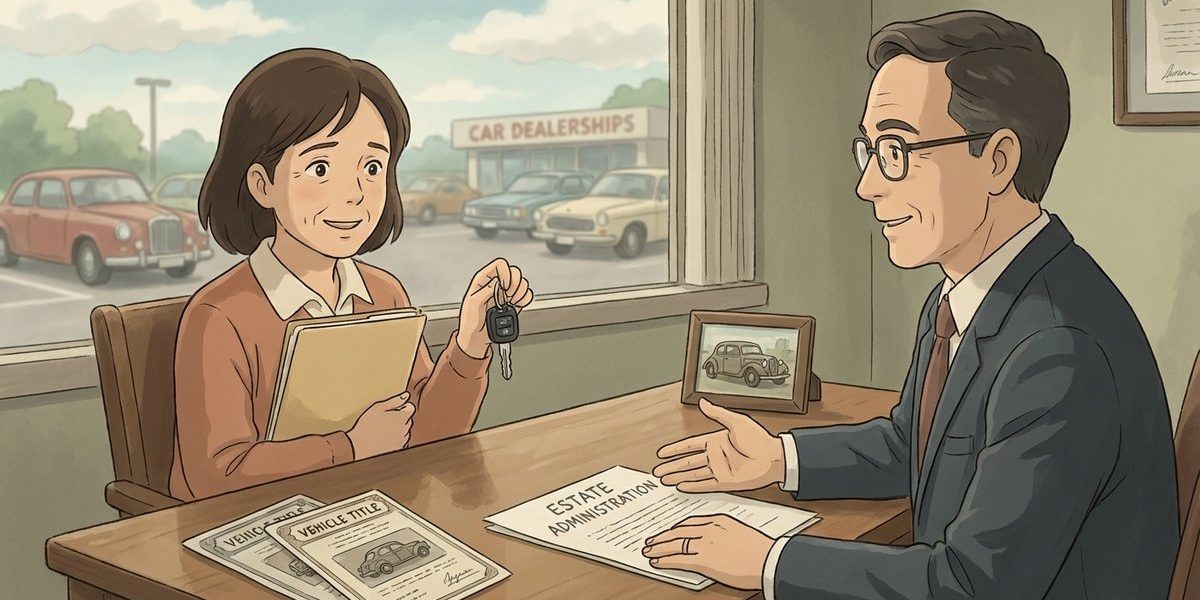
Can I sell estate vehicles to a dealership if the registration and tags are expired and the vehicles haven’t been driven in a long time? – North Carolina
Short Answer
Yes, an estate vehicle in North Carolina can usually be sold to a dealership even if the registration and tags are expired and the vehicle has not been driven recently. Expired tags mainly affect whether the vehicle can be legally driven on the road, not whether it can be sold. The key is having the right authority to sign and the right title paperwork (and handling any lien or missing-title issue) so the dealership can obtain good title.
Understanding the Problem
In North Carolina probate, the main question is whether an estate administrator can sell vehicles that are still titled in a deceased parent’s name when the registration is expired and the vehicles have been sitting. The decision point is whether the administrator has the legal authority and paperwork to transfer ownership through the North Carolina Division of Motor Vehicles (NCDMV) without first renewing tags or putting the vehicles back into regular operation.
Apply the Law
Under North Carolina law, when a vehicle changes hands because of a death (a transfer “by operation of law”), the person receiving or selling the vehicle typically must apply for a new certificate of title through NCDMV using the prior title and proof of authority (such as Letters of Administration). Expired registration does not prevent a title transfer, but it does prevent lawful driving until proper registration/permits are in place. In practice, dealerships often accept an estate vehicle as a trade-in or purchase as long as the personal representative can properly sign the title and provide supporting estate documents.
Key Requirements
- Authority to act for the estate: The seller must be the properly appointed personal representative (administrator) or another person allowed by NCDMV rules for certain small-estate/no-administration situations.
- Transferable title documentation: The original certificate of title (or a DMV process to address a missing title) must support the transfer to the dealership or to a buyer.
- Clear lien status and required disclosures: Any recorded lien must be released or handled, and required odometer/damage disclosures must be completed when applicable.
What the Statutes Say
- N.C. Gen. Stat. § 20-77 (Transfer by operation of law) – Explains how NCDMV handles title transfers when ownership passes other than by a voluntary sale, including certain inheritance/devise situations and affidavit-based transfers in limited cases.
- N.C. Gen. Stat. § 20-50 (Registration required to operate; temporary permits) – Requires registration to operate a vehicle on NC highways and authorizes temporary permits in appropriate situations.
- N.C. Gen. Stat. § 20-52 (Application for registration and certificate of title) – Describes the application process and information required for titling/registration through NCDMV.
Analysis
Apply the Rule to the Facts: Here, the vehicles are titled in the deceased parent’s name and the administrator is trying to transfer a trailer title and sell other vehicles. The expired tags matter if the vehicles need to be driven to a dealership or inspection station, but they do not usually stop a sale if the administrator can sign as the estate’s personal representative and provide the documents the dealership (and NCDMV) require. If a title is missing or a lien still appears in DMV records, that issue often becomes the real obstacle—not the expired registration.
Process & Timing
- Who files: The estate’s administrator (personal representative) and/or the dealership as the buyer/transferee. Where: A North Carolina License Plate Agency (tag office) or NCDMV (depending on the transaction and paperwork). What: Typically the signed NC title (assignment section), supporting estate authority (commonly certified Letters of Administration), and commonly a certified death certificate; if the title form requires it or the title is older, NCDMV may require separate odometer/damage disclosure forms. When: Before completing the sale and releasing the vehicle, so the dealership can be confident it can obtain good title.
- If the vehicle cannot be driven: The vehicle can be towed or transported. If it must be driven briefly, a one-way trip permit or temporary plate may be needed under NCDMV rules rather than renewing full registration.
- Finish the transfer: The dealership submits the title transfer packet to NCDMV and obtains title in its name or processes the reassignment to the next buyer, depending on how the dealership structures the purchase.
Exceptions & Pitfalls
- Missing title: If the paper title cannot be found, the estate may need to use NCDMV’s duplicate-title or alternate transfer process before a dealership will buy it. Dealerships often refuse to proceed without a clear path to title.
- Liens still showing: Even if a loan was paid off years ago, a lien can still appear in DMV records. A lien release may be required before the dealership will accept the vehicle.
- Wrong signer on the title: The administrator should sign in the capacity of personal representative (not as an individual owner) and follow NCDMV formatting requirements. A mismatch between the estate authority documents and the signature block can cause rejection at the tag office.
- Trying to “drive it just to sell it” on expired tags: Expired registration can create road-legal problems. Towing or obtaining the correct temporary permit is often safer than risking a traffic stop.
- Trailer title vs. plate issues: Trailers can have different registration/title rules depending on type and weight, so the title-transfer steps may not match the steps for passenger cars.
Conclusion
In North Carolina, expired tags and a long period of non-use usually do not prevent an estate administrator from selling an estate vehicle to a dealership. The controlling issue is whether the administrator can prove authority and deliver a properly transferable title (or complete the DMV process if the title is missing or a lien must be cleared). The practical next step is to gather the title(s), certified Letters of Administration, and a certified death certificate and confirm the dealership’s required paperwork before arranging transport or any temporary permit.
Talk to a Probate Attorney
If an estate is dealing with vehicles that still show the deceased owner on the title, missing paperwork, or vehicles that have been off the road for a long time, our firm has experienced attorneys who can help explain the probate and DMV steps and the timelines to avoid delays. Call us today at [CONTACT NUMBER].
Disclaimer: This article provides general information about North Carolina law based on the single question stated above. It is not legal advice for your specific situation and does not create an attorney-client relationship. Laws, procedures, and local practice can change and may vary by county. If you have a deadline, act promptly and speak with a licensed North Carolina attorney.

