
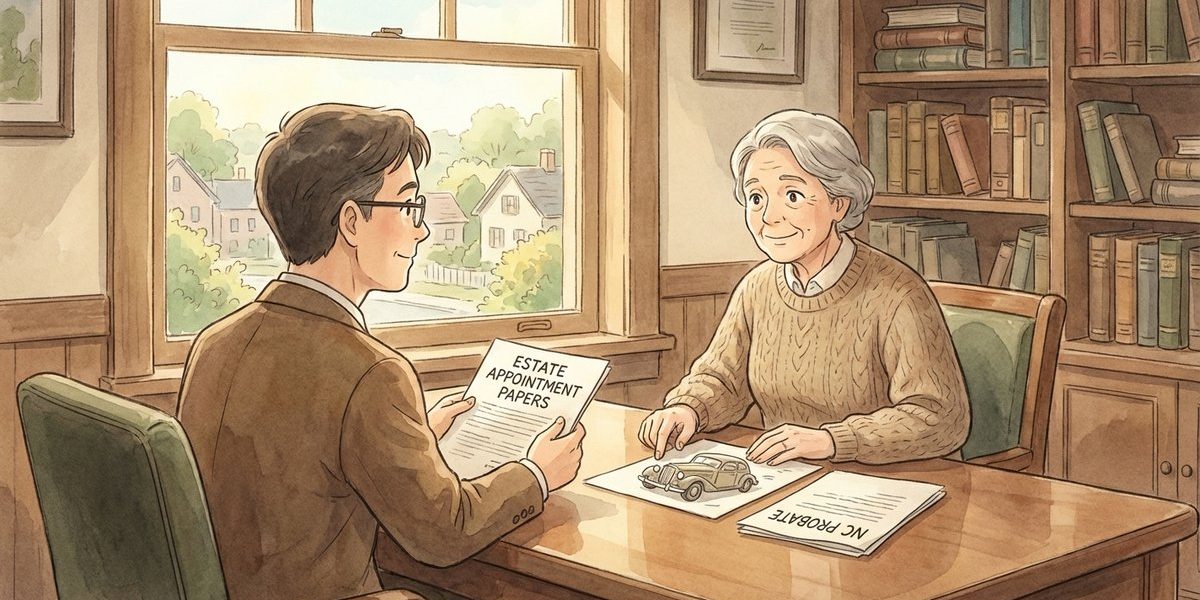
Can I request a complete vehicle title history during probate without a subpoena if I only need limited information? – NC
Short Answer
Usually no for a complete title history. In North Carolina, a personal representative handling probate can often use estate appointment papers to request a duplicate title for a decedent’s vehicle or mobile home, but a broader title-history request may be treated differently. If only limited ownership or lien information is needed to move the estate forward, the North Carolina DMV process for a duplicate title is often the more direct route, while a full history request may require additional legal process, including a subpoena depending on the records sought.
Understanding the Problem
In North Carolina probate, the decision point is whether the estate needs only enough DMV information to replace or transfer the decedent’s title, or instead needs a complete title history for the vehicle or mobile home. The actor is the personal representative, usually working through estate appointment papers, and the key action is obtaining DMV records needed to administer the estate. The timing matters because title issues can delay sale, transfer, or distribution of estate property.
Apply the Law
Under North Carolina law, a personal representative has authority to gather and transfer estate property, including titled vehicles. For probate administration, the main forum is usually the North Carolina Division of Motor Vehicles, with estate papers issued by the Clerk of Superior Court supporting the request. A duplicate title request follows DMV procedures.
Key Requirements
- Estate authority: The person making the request must have authority to act for the estate, usually shown by certified Letters Testamentary or Letters of Administration.
- Correct DMV process: A duplicate title request is not the same as a request for a complete title history. The estate must use the process that matches the information actually needed.
- Ownership and lien status: Before a transfer or duplicate title can be completed, the estate should confirm whether DMV records show an active lien or other title issue.
What the Statutes Say
- N.C. Gen. Stat. § 20-77 (Transfer by operation of law) – addresses transfer of title when ownership changes by operation of law, including inheritance.
- N.C. Gen. Stat. § 8-37 (Certified DMV ownership records) – addresses admissibility of certified copies of DMV records as evidence.
- N.C. Gen. Stat. § 28A-13-3 (Powers and duties of personal representative) – gives the personal representative authority to possess, collect, and manage estate assets.
Analysis
Apply the Rule to the Facts: Here, a law-firm staff member is handling an estate and wants either a duplicate title or limited title information for a vehicle or mobile home owned by the decedent. If the personal representative already has appointment papers, North Carolina probate practice generally allows those papers to support a duplicate-title request without first obtaining a subpoena. But that does not automatically mean the estate can obtain a complete historical DMV record without added process, because a full title-history request asks for more than the minimum information needed to replace or transfer title.
If the estate only needs to confirm current ownership, title status, or whether a lien appears in DMV records so it can complete the duplicate-title process, the narrower DMV route is usually the better fit. North Carolina probate practice materials also note a practical point: before using the duplicate-title form, the estate should determine whether DMV records still show a lien, and if DMV has no lien release on file, a separate lien release may be needed. Those practical limits often matter more than a full historical chain of title.
A second practical point is that DMV practice distinguishes between replacing a missing title and obtaining broader records. Probate materials indicate that the same DMV duplicate-title form may be used when no certificate of title can be found, and that DMV headquarters may need to assist if a local office is unfamiliar with an estate transfer involving a deceased owner. That supports the idea that estate papers can often solve the duplicate-title problem even when they do not open the door to every historical record the estate might want.
Process
- Who files: the personal representative, or someone acting for the estate with that authority. Where: the North Carolina Division of Motor Vehicles, either through DMV processing channels or a local license plate agency if accepted for that transaction. What: estate appointment papers and the DMV duplicate-title form, commonly Form MVR-4, plus any lien release if DMV records still show a lien. When: as soon as the estate identifies that the original title is missing.
- Next, DMV reviews the application and checks its title and lien records. If the estate only needs limited information tied to the duplicate-title request, that review may answer the immediate probate issue without a separate demand for a complete title history.
- If the estate instead needs a full historical title record for litigation, a contested ownership issue, or proof beyond current title status, the estate may need a certified record request or subpoena-based process depending on what DMV will release. The final result is either a duplicate title, a transfer-ready title record, or notice that additional legal process is required.
Exceptions & Pitfalls
- A complete title history and a duplicate title request are different requests. Treating them as the same can cause delay.
- If DMV records show a lien that was paid off but never cleared, the estate may need a lien release before the title issue can be resolved.
- Mobile homes can raise added ownership questions, especially if title was held jointly or passed automatically to a surviving spouse under a different rule than a solely owned vehicle.
- Local DMV offices may not handle estate vehicle transfers the same way in practice, so probate counsel sometimes must work directly with DMV headquarters.
- If the estate needs records for a court dispute rather than routine administration, service and record-request rules may matter, and a subpoena may still be required for broader disclosure.
Conclusion
In North Carolina, a personal representative usually can seek a duplicate title for a decedent’s vehicle or mobile home with estate appointment papers and without a subpoena, but that does not necessarily allow access to a complete title history. If the estate only needs limited ownership or lien information, the best next step is to file the duplicate-title paperwork with DMV; if broader historical records are needed, additional record-request steps or a subpoena may be required.
Talk to a Probate Attorney
If an estate is dealing with a missing vehicle or mobile home title and uncertainty about what DMV records can be obtained without a subpoena, our firm has experienced attorneys who can help clarify the right probate and DMV process. Call us today at 919-341-7055. For related issues, see what can be done if the title or registration cannot be found or how to get a duplicate title during probate.
Disclaimer: This article provides general information about North Carolina law based on the single question stated above. It is not legal advice for your specific situation and does not create an attorney-client relationship. Laws, procedures, and local practice can change and may vary by county. If you have a deadline, act promptly and speak with a licensed North Carolina attorney.

