
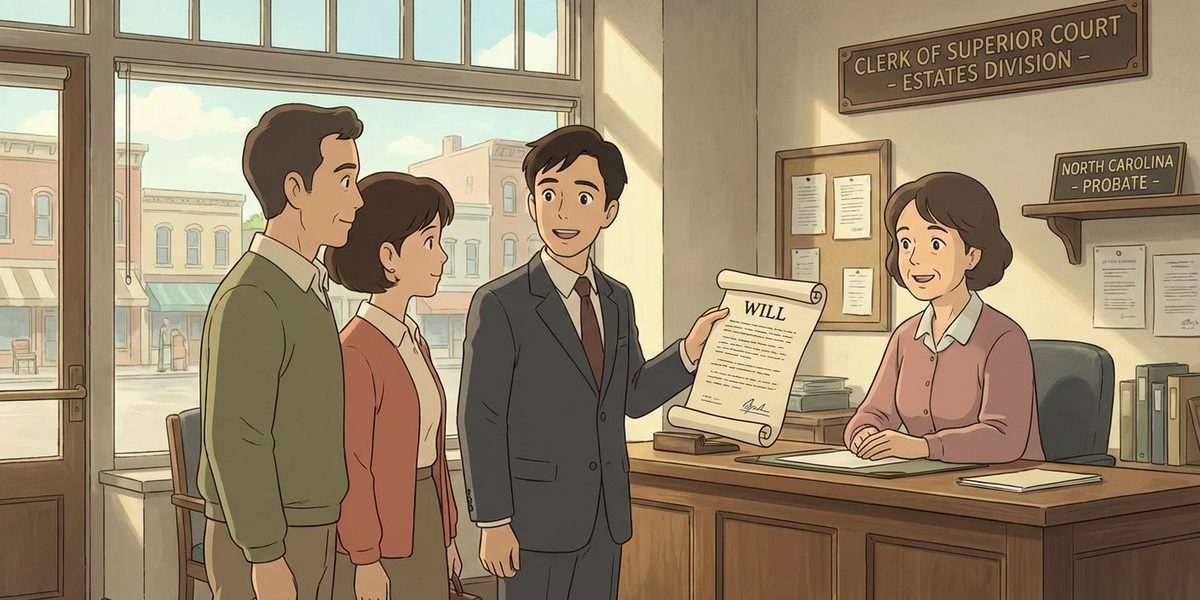
Can I file the will myself if the named executor refuses to take action, and what paperwork do I need? – North Carolina
Short Answer
Yes. In North Carolina, an “interested person” (often an heir or beneficiary) can take the will to the Clerk of Superior Court (Estates) to get it filed and, if appropriate, ask the Clerk to probate the will and appoint someone else if the named executor will not qualify. The paperwork depends on whether the goal is only to get the will on file, or to open the estate and have a personal representative appointed.
Understanding the Problem
In North Carolina probate, the key question is whether an heir or beneficiary can bring the decedent’s original will to the Clerk of Superior Court when the person named as executor refuses to act, so the will can be placed in the court file and the estate can move forward. The decision point is whether the filing is only to put the will on record, or whether the filing is meant to start an estate administration and result in someone being appointed to handle the estate.
Apply the Law
North Carolina probate is handled through the Estates Division of the Clerk of Superior Court in the county with proper venue (often where the decedent lived at death). A will can be filed with the Clerk even if the named executor is not cooperating. If the will is offered for probate, the Clerk can admit it to probate (commonly in an ex parte “common form” proceeding) and then issue letters to a qualified personal representative. If the named executor will not qualify, North Carolina law allows a written renunciation, and it also allows a process for the Clerk to treat the executor as having renounced after notice and a response period in the situations covered by statute.
Key Requirements
- Proper forum: The will is filed with the Clerk of Superior Court (Estates) in the appropriate North Carolina county.
- Original will and proof: The Clerk typically needs the original will and enough information to determine it was properly executed (for example, a self-proving affidavit attached to the will, or witness affidavits if needed).
- Path to move forward if the executor will not act: If the named executor will not qualify, the Clerk can accept a renunciation or, in the right circumstances, enter an order deeming the executor to have renounced after notice, so a successor can be appointed.
What the Statutes Say
- N.C. Gen. Stat. Chapter 28A (Administration of Decedents’ Estates) – North Carolina’s main probate and estate administration statutes, including probate procedure and appointment/qualification of personal representatives.
- N.C. Gen. Stat. § 28A-5-1 (Renunciation by personal representative) – Addresses renunciation and the process that can apply when a named executor does not timely qualify after the will is probated.
- N.C. Gen. Stat. § 31-11.6 (Self-proved wills) – Describes how a will can be made self-proved, which can reduce the need to locate witnesses during probate.
Analysis
Apply the Rule to the Facts: Under the facts given, the decedent left a will naming a spouse as executor, but no estate has been opened. As the only child, the child is usually an “interested person” with a reason to ensure the will is filed and the estate is administered. If the spouse will not take the will to the Clerk and qualify, the child can bring the original will to the Clerk to get it filed and can ask the Clerk to probate it and address the executor’s refusal through renunciation procedures so someone else can be appointed if needed.
Process & Timing
- Who files: An interested person (often an heir or beneficiary) can file the will. Where: Clerk of Superior Court (Estates) in the proper North Carolina county. What: The original will plus the county’s required intake information (often an application/petition to probate and for letters, and supporting documents). When: As soon as practical after death, especially if assets need to be accessed, bills must be paid, or property must be protected.
- Probate step: If the will is offered for probate, the Clerk reviews execution proof (self-proving affidavit or witness affidavits/other proof if witnesses are unavailable) and admits the will to probate if the legal requirements are met.
- Appointment step: If the named executor will not qualify, the Clerk can accept a written renunciation or, in the situations covered by statute, proceed after notice toward an order deeming renunciation, then issue letters to the next appropriate person (for example, a successor named in the will, or an administrator with the will annexed if no successor is available).
Exceptions & Pitfalls
- Filing the will vs. opening the estate: Getting the will “on file” does not always mean a personal representative is appointed the same day. If the goal is to access accounts, sell property, or deal with creditors, the estate usually must be opened and letters issued.
- Witness issues: If the will is not self-proved, the Clerk may require witness affidavits or other proof. Delays happen when witnesses cannot be found or refuse to cooperate, so it helps to identify witnesses early.
- Executor refusal can be formal: The cleanest path is often a written renunciation signed by the named executor. Without that, a petition and notice process may be needed before the Clerk will treat the executor as having renounced.
- Local practice varies: Counties can differ on required intake documents, scheduling, and whether filings are handled in person or through e-filing workflows. Calling the Estates office for the county’s checklist can prevent rejected filings.
Conclusion
In North Carolina, an interested person can take the original will to the Clerk of Superior Court (Estates) to get it filed and, if needed, offer it for probate even when the named executor refuses to act. The core paperwork is the original will plus the Clerk’s probate/qualification forms and any required proof of execution (often satisfied by a self-proving affidavit). If the executor will not qualify, the next step is to seek the Clerk’s action under the applicable renunciation procedure so letters can be issued to a successor.
Talk to a Probate Attorney
If a will has not been filed and the executor named in the will is refusing to move forward, our firm has experienced attorneys who can help explain the options for filing the will, starting the estate, and requesting that the Clerk appoint the right person to serve. Call us today at [CONTACT NUMBER].
Disclaimer: This article provides general information about North Carolina law based on the single question stated above. It is not legal advice for your specific situation and does not create an attorney-client relationship. Laws, procedures, and local practice can change and may vary by county. If you have a deadline, act promptly and speak with a licensed North Carolina attorney.

