
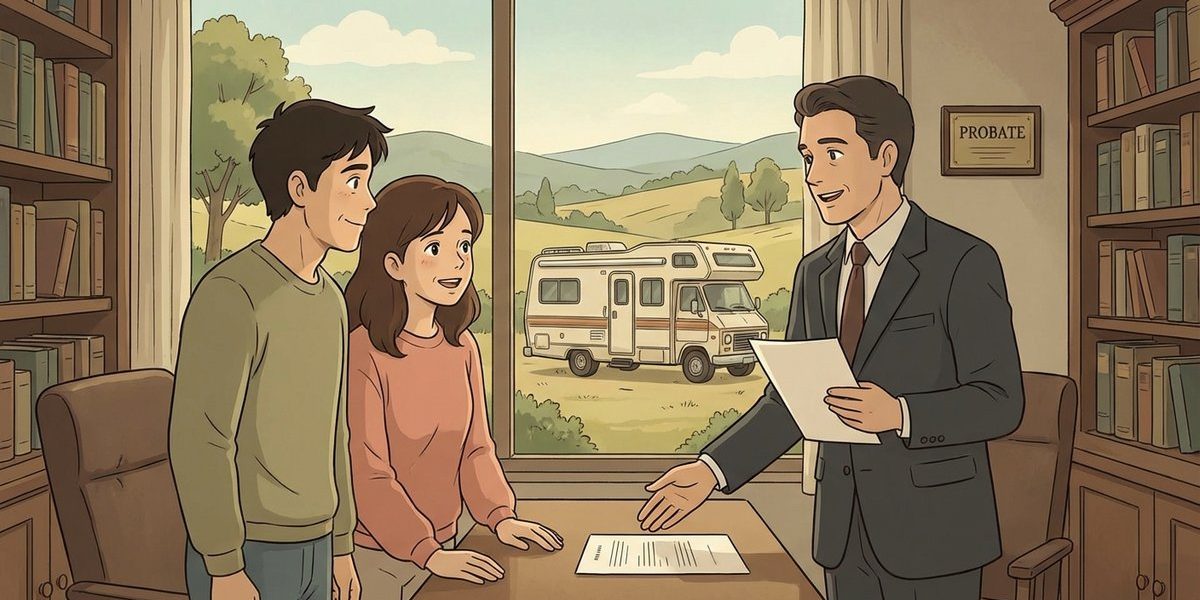
Can an heir who has possession of the RV be required to turn it over during probate? – NC
Short Answer
Yes. In North Carolina, an heir who is holding an RV that belongs to the estate can be required to turn it over so the personal representative can control, protect, and administer that asset during probate. That is especially true when the RV is subject to a loan, because the estate needs possession to decide whether to keep, sell, or surrender it and to address any secured debt before the asset is distributed.
Understanding the Problem
In North Carolina probate, the main question is whether a personal representative can require an heir who is holding a deceased person’s RV to give it back to the estate while administration is still pending. The issue usually comes up when the RV has not yet been distributed, title is still tied to the decedent’s estate, and a decision must be made about a secured loan, storage, sale, or surrender through the probate process.
Apply the Law
Under North Carolina law, estate property does not become an heir’s to control just because that heir has physical possession of it. The personal representative is the person responsible for gathering estate assets, identifying debts, protecting property, and handling administration through the estate file before distribution. If an heir keeps an RV that is still part of the estate, the personal representative may demand turnover and, if needed, use a court action to recover possession of that personal property. In practice, the estate usually proceeds through the clerk of superior court handling the probate estate, and if possession cannot be resolved informally, a civil action to recover the RV may be necessary. Timing matters because the estate must inventory assets early in the administration and secured creditors may move on their own deadlines.
Key Requirements
- Estate ownership before distribution: If the RV has not been formally distributed, it remains an estate asset even if an heir is storing or holding it.
- Personal representative’s right to control: The personal representative must be able to gather and manage estate property so debts, liens, and administration issues can be handled in the proper order.
- Wrongful detention supports recovery: If the heir refuses to return the RV after demand, the estate may seek possession from the person who actually has control of it.
What the Statutes Say
- N.C. Gen. Stat. § 1-472 (Claim for delivery of personal property) – allows a plaintiff in an action to recover personal property to seek immediate delivery before final judgment.
- N.C. Gen. Stat. § 29-28 (Inventory) – addresses inventory of lifetime advancements from an intestate donor and is not a general probate turnover statute for estate property.
- N.C. Gen. Stat. § 1-339.32 (Report of sale by administrator or executor) – addresses reporting after a public sale by an administrator or executor.
Analysis
Apply the Rule to the Facts: Here, the RV appears to be an estate asset because it belonged to the decedent and is still being evaluated for payoff, sale, or surrender. One heir’s possession does not by itself give that heir the right to keep control of it while probate is open. Because the RV may be collateral for a loan, the personal representative needs access to determine the balance, communicate with the secured creditor, and decide whether surrender or sale makes more sense for the estate.
The facts also suggest the RV is not being used and that estate counsel is coordinating with multiple heirs while seeking more time to respond. That makes turnover more important, not less. When an asset is idle but subject to a lien, delay can create storage, insurance, condition, and repossession problems, and the estate cannot make a clean decision without control over the vehicle.
North Carolina practice also treats possession claims as claims against the person who actually has the property. That means if the heir in possession refuses to cooperate, the estate’s remedy is aimed at that heir as the person detaining the RV, rather than at heirs who do not control it. The estate would still need to show that the RV belongs to the estate or that the personal representative is otherwise entitled to possess it for administration.
The secured-debt piece matters as well. If the estate cannot or should not keep making payments, the personal representative may decide to surrender the RV to the lender, or may try to sell it if the numbers support that choice. Either option usually requires possession, title paperwork, payoff information, and coordination through the estate, which is why an heir generally cannot block turnover by simply holding the keys.
Process & Timing
- Who files: the personal representative or estate administrator. Where: first through the estate proceeding before the Clerk of Superior Court in the county where the estate is pending, and if needed through a civil action in North Carolina court against the person holding the RV. What: a written demand for turnover, estate inventory updates, and if necessary an action to recover possession of the RV with a request for claim and delivery under North Carolina law. When: as soon as the RV is identified as an estate asset and before the secured creditor’s default or repossession timeline makes the problem worse.
- Next, the estate gathers the title information, loan payoff, storage details, and condition of the RV. If the heir cooperates, the personal representative can arrange surrender or sale and report the result through the estate file. If the heir does not cooperate, the court can be asked to compel turnover or allow recovery of possession.
- Finally, the personal representative applies the proceeds or surrender result to the secured debt, determines whether any deficiency remains, and reflects that in the estate administration and creditor process.
Exceptions & Pitfalls
- An heir may resist turnover by claiming the RV was already gifted or otherwise passed outside the estate. If that claim is real, title and ownership facts must be checked before the estate acts.
- A common mistake is assuming physical possession equals ownership. In probate, possession alone usually does not control if the asset has not been distributed and remains needed to pay debts or administer the estate.
- Another mistake is waiting too long while a secured creditor’s rights continue to run. Missed notices, lack of insurance, or poor storage can reduce value and complicate both surrender and sale. For related issues, see another heir is using an estate vehicle and refusing to cooperate and how to handle a financed car in probate.
Conclusion
Yes. In North Carolina, an heir who has possession of an RV that still belongs to the estate can usually be required to turn it over so the personal representative can administer it, address any lien, and decide whether to sell or surrender it. The key threshold is whether the RV remains an undistributed estate asset. The next step is to make a prompt written demand for turnover through the estate and, if needed, file to recover possession before creditor deadlines create added problems.
Talk to a Probate Attorney
If a secured RV is tied up in probate and an heir is holding it while the estate tries to sort out payoff, surrender, or sale, our firm has experienced attorneys who can help explain the estate’s options and timelines. Call us today at 919-341-7055.
Disclaimer: This article provides general information about North Carolina law based on the single question stated above. It is not legal advice for your specific situation and does not create an attorney-client relationship. Laws, procedures, and local practice can change and may vary by county. If you have a deadline, act promptly and speak with a licensed North Carolina attorney.

