
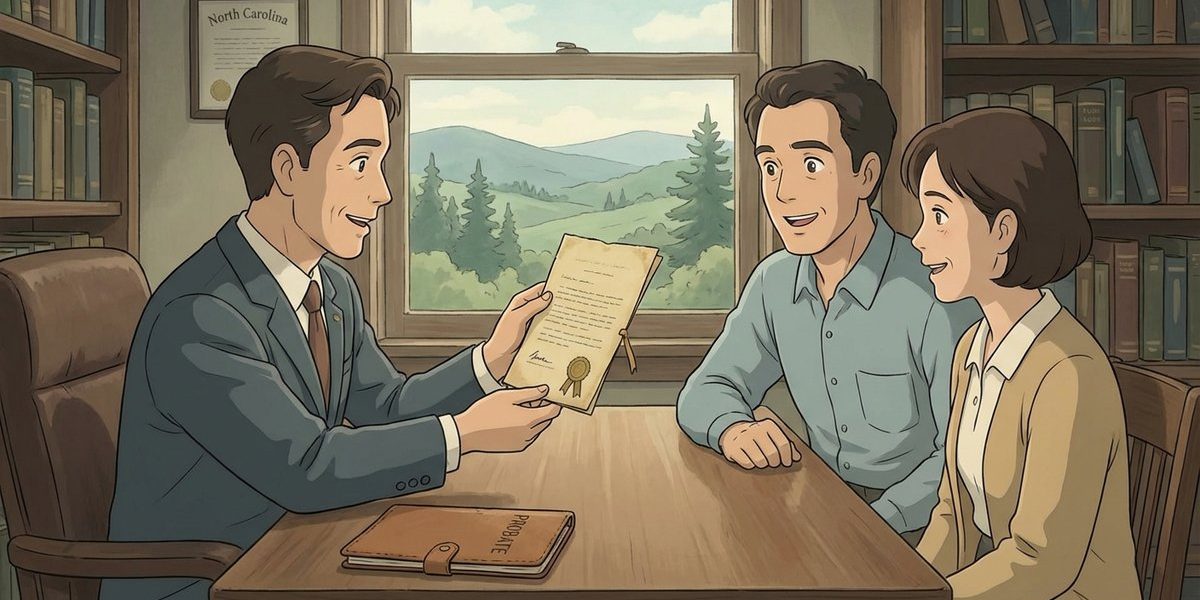
Can a will still be probated if the person died many years ago and the will was never filed? – North Carolina
Short Answer
Yes. In North Carolina, there is generally no deadline to offer a written will for probate, even if many years have passed. However, waiting can create real title problems for real estate, because an unprobated will may not protect the will beneficiaries against certain purchasers or lien creditors after a two-year window. The will is typically offered to the Clerk of Superior Court in the county where the decedent lived at death.
Understanding the Problem
In North Carolina probate, the issue is whether a deceased parent’s will can still be admitted to probate when no estate was opened for years and the family has treated the home as “heir property.” The decision point is whether the will can still be filed and accepted by the Clerk of Superior Court so the will controls who inherited the house. Timing matters most when the house has been sold, mortgaged, or encumbered based on intestate (no-will) ownership assumptions.
Apply the Law
North Carolina probate is handled through the Clerk of Superior Court (the “judge of probate”) in an estate file. A will can be offered for probate long after death, but delay can affect whether the will is effective against third parties who relied on intestate heirs’ apparent ownership. North Carolina also has two main ways to probate a will—common form (typical, without advance notice to everyone) and solemn form (with formal notice and a hearing when a conclusive determination is needed).
Key Requirements
- Original will and proof of death: The original will is filed with the Clerk along with an application that includes sworn information establishing the death and listing heirs/devisees as best as can be determined.
- Proper execution proof: If the will is “self-proved,” the Clerk can usually admit it without tracking down witnesses. If it is not self-proved, the Clerk typically requires witness affidavits or other acceptable proof.
- Correct probate route for the risk level: Common form probate is often sufficient, but solemn form may be considered when a dispute is likely or when a final, binding determination is needed.
What the Statutes Say
- N.C. Gen. Stat. § 31-39 (Probate necessary to pass title; protection for lien creditors and purchasers) – A probated will passes title, but a late-probated will may not be effective against certain lien creditors or purchasers who took from intestate heirs after the statute’s time limits.
- N.C. Gen. Stat. § 31-32 (Caveat deadline) – An interested person generally has three years after probate in common form to file a caveat (will contest), with limited extensions for legal disability.
Analysis
Apply the Rule to the Facts: The facts describe a parent who left a will giving a house to four children, but the will was never probated and the property has been treated as heir property. Under North Carolina practice, the will can still be offered to the Clerk of Superior Court for probate even years later, which can help align the public record with what the will says. The biggest risk from the delay is whether any third party has acquired rights in the property (for example, a buyer or lender relying on intestate heirs’ title), because late probate can be less effective against those third-party interests under North Carolina law.
Process & Timing
- Who files: The executor named in the will, or if the executor does not act, a devisee (will beneficiary) or other interested person. Where: The Clerk of Superior Court (Estates) in the county where the decedent was domiciled at death. What: The original will plus an application for probate (and witness affidavits if the will is not self-proved). When: A written will can generally be offered even after many years, but delays can create title issues for real estate and may increase the chance of a dispute.
- Clerk review and admission: In common form, the Clerk typically reviews the paperwork, confirms the death and execution proof, and (if sufficient) admits the will to probate and issues a certificate of probate.
- Next steps for the house: If the goal is to clear title, the estate may need additional filings depending on whether a personal representative is appointed and whether any conveyances or partition actions are needed. If a dispute is likely, solemn form probate may be considered to give formal notice and reduce later uncertainty.
Exceptions & Pitfalls
- Third-party title problems: If an heir has already sold, mortgaged, or otherwise encumbered the property as an “intestate heir,” late probate may not unwind a protected purchaser’s or lien creditor’s rights under N.C. Gen. Stat. § 31-39.
- Will contests after late probate: Probating in common form can start the three-year caveat window under N.C. Gen. Stat. § 31-32, which may matter if family members disagree about validity.
- Missing witnesses or weak execution proof: Older wills are often not self-proved. If witnesses cannot be located, extra steps may be needed to prove execution.
- Confusing “filing” with “probating”: Simply placing a will in the estate file is not the same as admitting it to probate. For real estate, the will usually must be admitted to probate to be effective to pass title.
- Wrong county: The estate file is typically opened where the decedent was domiciled at death, and real estate in another county may require additional recording steps to protect title.
For more background on delayed estates, see no probate was opened when the person died and it has been several years. Related issues often come up when families treat land as heir property; see using an unprobated will to prove an heir’s interest in real property.
Conclusion
In North Carolina, a written will can generally still be offered for probate even if the person died many years ago and the will was never filed. The practical problem is that delay can create title risks for real estate, especially if someone relied on intestate heirs’ ownership and a sale or lien occurred after death. The next step is to file the original will and an application for probate with the Clerk of Superior Court in the county of the decedent’s last residence as soon as possible.
Talk to a Probate Attorney
If you’re dealing with a parent’s unprobated will and a house that has been treated as heir property, our firm has experienced attorneys who can help you understand your options and timelines. Call us today at [CONTACT NUMBER].
Disclaimer: This article provides general information about North Carolina law based on the single question stated above. It is not legal advice for your specific situation and does not create an attorney-client relationship. Laws, procedures, and local practice can change and may vary by county. If you have a deadline, act promptly and speak with a licensed North Carolina attorney.

