
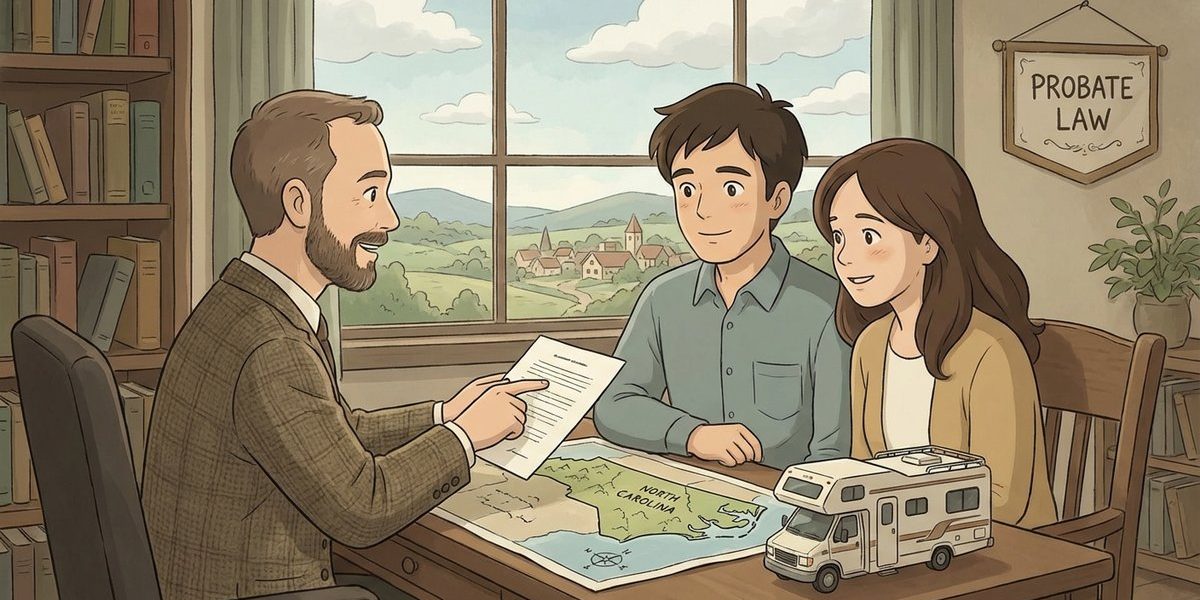
Can a creditor repossess estate property while probate is pending? – NC
Short Answer
Yes. In North Carolina, probate does not automatically stop a secured creditor from enforcing a valid lien against estate property after default. If the RV loan is secured and the creditor has the right to possession under the loan documents and North Carolina law, the creditor may pursue repossession of the collateral even while the estate administration and any claim dispute are still pending.
Understanding the Problem
In North Carolina probate, the main question is whether a secured creditor can take back estate property that serves as collateral for a debt while the personal representative is still administering the estate. The issue usually turns on the creditor’s status as a lienholder, whether the loan is in default, and whether the property is still part of the estate’s control during the probate process.
Apply the Law
Under North Carolina law, a creditor with a security interest in personal property does not stand in the same position as an unsecured creditor filing a routine estate claim. Probate sets deadlines for presenting claims against the estate, and the personal representative must review, allow, reject, or litigate those claims. But a secured creditor may also look to the collateral itself. For a vehicle-type asset such as an RV, the security interest is generally perfected by notation on the certificate of title, and after default the secured party may seek possession of the collateral. If the estate disputes the debt, payoff amount, default status, or lien validity, that dispute may affect timing and procedure, but probate alone does not erase the lien or automatically bar repossession.
Key Requirements
- Valid security interest: The creditor must have a real lien on the RV, usually shown on the North Carolina title or other proper title records.
- Default or other trigger: The creditor must have a present right to enforce the lien, which usually means the loan is in default under the contract.
- Proper enforcement method: The creditor must use a lawful repossession process and may not rely on probate delay alone to expand its rights.
What the Statutes Say
- N.C. Gen. Stat. § 20-58 (Perfection by indication of security interest on certificate of title) – a lien on a titled vehicle is generally perfected through notation on the certificate of title.
- N.C. Gen. Stat. § 14-114 (Fraudulent disposal of personal property on which there is a security interest) – North Carolina recognizes secured-party rights in collateral, while also stating that refusal to surrender property during an attempted nonjudicial repossession is not, by itself, a crime.
Analysis
Apply the Rule to the Facts: The estate is dealing with an RV loan, which strongly suggests a secured debt tied to specific collateral rather than a purely unsecured probate claim. If the creditor is listed as lienholder on the RV title and the loan is in default, the creditor may try to repossess the RV even though a claim or lawsuit against the estate is still pending. If the estate has defenses such as no default, incorrect balance, insurance coverage, or a title problem, those issues should be raised quickly because they affect the creditor’s present right to possession.
North Carolina probate practice also treats estate claims and lien enforcement as related but not identical tracks. A personal representative usually should not pay ordinary claims until the creditor period has run, and a rejected claim generally must be sued on within three months after written rejection. But those probate claim rules do not necessarily force a secured creditor to wait before acting against the collateral itself. That distinction matters in a case involving an RV because the creditor may pursue the property while separately asserting any remaining deficiency or claim in the estate proceeding.
If the estate wants to keep the RV, the practical questions are whether payments are current, whether the estate has authority and funds to continue payments, and whether the asset benefits the estate enough to justify that expense. If the estate does not intend to retain the RV, the personal representative may instead focus on confirming the lien, documenting the estate’s position, and limiting later disputes over any claimed balance. For related guidance on handling estate claims generally, see handling a creditor claim during probate and claims involving a financed vehicle.
Process & Timing
- Who files: the personal representative handles the estate response, and the secured creditor or its attorney pursues lien enforcement. Where: the estate administration remains with the Clerk of Superior Court in the county where the estate is pending, while any civil action over possession or debt may proceed in the proper North Carolina trial court. What: the personal representative should gather the RV title, loan contract, payment history, insurance information, and any filed creditor claim or lawsuit. When: act immediately after notice of default, repossession demand, claim, or suit; if the personal representative rejects a probate claim, the claimant generally has three months after written rejection to bring an action on that claim.
- Next, the personal representative should confirm whether the creditor is actually perfected on the title and whether the estate is in default under the contract terms. If counsel is already involved, direct communication with the creditor’s attorney can narrow disputes about payoff, surrender, reinstatement, storage, or whether the estate contests possession.
- Final step: either the estate arranges a lawful resolution to retain or surrender the RV, or the creditor proceeds with repossession or court process and then asserts any remaining balance through the estate claim process if allowed.
Exceptions & Pitfalls
- A creditor may have less leverage if the lien was never properly perfected, the title records are wrong, or the alleged default is disputed.
- A common mistake is treating a secured RV lender like an ordinary unsecured estate creditor; lien rights against collateral can survive even when probate claim issues remain unresolved.
- Delay creates problems. Missed notices, unclear insurance coverage, storage issues, and failure to document who has possession of the RV can make the dispute harder and more expensive to resolve.
Conclusion
Yes. In North Carolina, a creditor can usually repossess estate property during probate if the debt is secured, the lien is valid, and the loan is in default. Probate does not automatically freeze lien enforcement. The key next step is to confirm the RV title lien and default status, then respond through the estate proceeding and any related court action without delay; if a probate claim is rejected, suit on that claim generally must be filed within three months after written rejection.
Talk to a Probate Attorney
If an estate is facing a secured creditor’s claim or possible repossession of an RV during probate, our firm has experienced attorneys who can help explain the estate’s options, deadlines, and next steps. Call us today at [919-341-7055].
Disclaimer: This article provides general information about North Carolina law based on the single question stated above. It is not legal advice for your specific situation and does not create an attorney-client relationship. Laws, procedures, and local practice can change and may vary by county. If you have a deadline, act promptly and speak with a licensed North Carolina attorney.

