
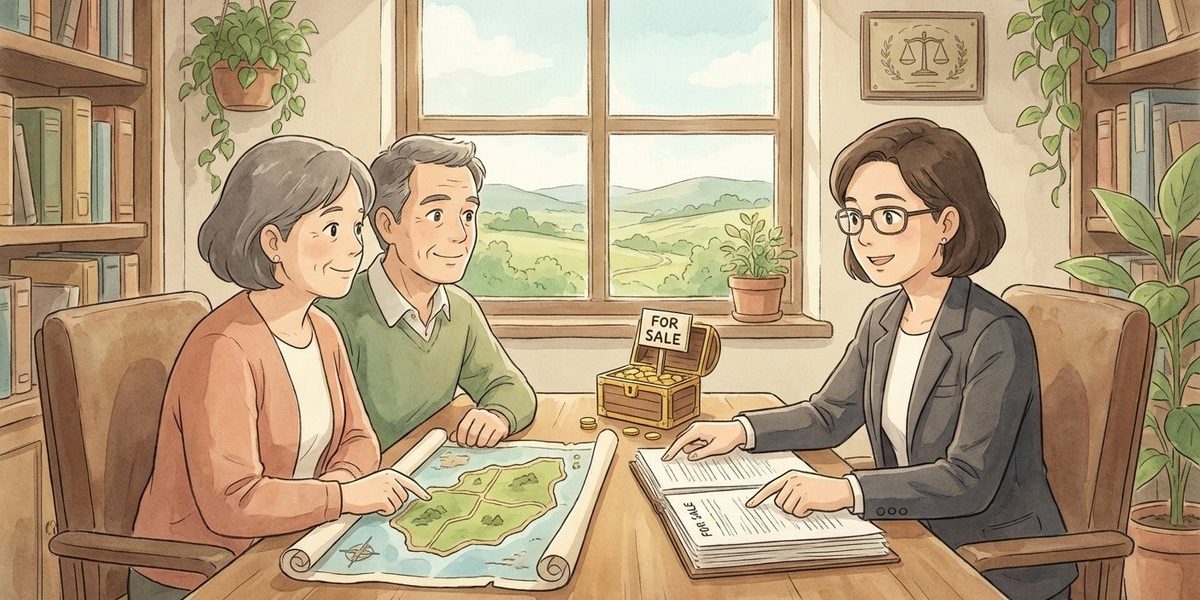
What is the difference between dividing inherited land into separate portions versus selling it and splitting the proceeds? – North Carolina
Short Answer
In North Carolina, dividing inherited land into separate portions is usually called a partition in kind, where each co-owner ends up with a separate tract. Selling the land and splitting the money is usually called a partition by sale, where the property is sold under court supervision and the net proceeds are divided based on each co-owner’s share. The practical difference is whether the co-owners keep land (but must accept boundaries and value differences) or convert the land to cash (but must go through a sale process and related costs and timing).
Understanding the Problem
In North Carolina, when multiple heirs inherit the same parcel, the key question is whether the co-owners can end the shared ownership by physically dividing the land into separate pieces or whether the situation calls for selling the land and dividing the sale proceeds. The decision point is whether the property can be fairly split into separate portions that match each person’s ownership share, or whether a sale is the more workable way to reach a fair result.
Apply the Law
North Carolina partition law provides a court process to end co-ownership of real estate when co-owners cannot agree. The case is typically handled through the Clerk of Superior Court in the county where the land is located. The court can order either (1) a division of the land into separate tracts (partition in kind) or (2) a court-supervised sale with proceeds divided among the co-owners (partition by sale). If a sale is ordered, the sale generally follows North Carolina’s judicial sale procedures, including the possibility of an upset bid period after a reported sale.
Key Requirements
- Co-ownership exists: The land is owned by two or more people (often heirs) as co-owners, and the ownership interests must be identified so the court knows how to divide land or money.
- A fair method is chosen: The court must use a method that fairly accounts for each co-owner’s share—either by creating separate tracts that are as proportionate in value as practical, or by converting the property to cash through a sale.
- Court-supervised procedure is followed: Whether dividing or selling, the process must follow required court steps (appointments, notices, reports, and deadlines), and the Clerk of Superior Court oversees key decisions.
What the Statutes Say
- N.C. Gen. Stat. § 46A-76 (Sale procedure) – Provides that partition sales generally follow North Carolina judicial sale procedures and includes specific notice requirements for public sales.
- N.C. Gen. Stat. § 1-339.25 (Upset bid on real property) – Sets the basic upset-bid rules and the 10-day upset-bid period after a sale report (with required deposit rules).
- N.C. Gen. Stat. § 1-339.26 (Public sale by auction in parts; separate upset bids) – Explains that if property is sold in parts at public auction, each part can have its own upset-bid process.
- N.C. Gen. Stat. § 1-339.65 (Separate upset bids when real property sold in parts) – Addresses separate upset bids when real property is sold in parts and how the clerk may treat each part as a separate sale.
Analysis
Apply the Rule to the Facts: In the inherited-land setting, the first issue is confirming that multiple heirs are co-owners and what percentage each heir owns. If the land can be divided into separate tracts that are reasonably comparable in value to each heir’s share (or can be made comparable through adjustments the court approves), a partition in kind may be workable. If dividing the land would create unfairness (for example, one tract would contain the only road access or the only buildable area), a partition by sale may be the more practical way to divide value fairly.
Process & Timing
- Who files: A co-owner (often an heir). Where: The partition proceeding is typically handled through the Clerk of Superior Court in the North Carolina county where the land sits. What: A partition petition/complaint requesting partition in kind or partition by sale (specific local forms, if any, vary by county). When: Timing depends on service and the court calendar; if a sale is ordered, the upset-bid timeline becomes a key part of the schedule.
- If the court orders a sale: A commissioner conducts the sale under court supervision and provides required notice. After the sale is reported, the sale generally remains open for upset bids for 10 days, and additional upset bids can extend the process in successive 10-day periods. See N.C. Gen. Stat. § 1-339.25.
- End point: The Clerk of Superior Court confirms the final result (a confirmed division for partition in kind, or a confirmed sale and distribution of net proceeds for partition by sale), and the paperwork is recorded so title matches the outcome.
Exceptions & Pitfalls
- “Equal acres” is not the same as “equal value”: A partition in kind focuses on fair value, not just matching acreage. Differences in road frontage, utilities, timber, soil, or buildability can make a simple split unfair.
- Access and easements can drive the outcome: If a proposed division would leave a tract landlocked or dependent on disputed access, the court may be less likely to approve a physical split without a workable access plan.
- Sale timing can be longer than expected: A partition by sale can take longer because of notice requirements and the upset-bid process, which can extend the timeline beyond the initial sale date.
- Costs reduce the amount to split: A sale typically involves commissioner fees, court costs, and other sale-related expenses that come out of the proceeds before distribution.
- Disagreements about ownership shares can stall everything: If heirs dispute who owns what percentage (or whether someone has an interest), that issue often must be resolved before a clean division of land or proceeds can happen. For more on related issues, see ownership interests are disputed or unclear.
Conclusion
In North Carolina, dividing inherited land into separate portions (partition in kind) means each co-owner ends up owning a separate tract, while selling the land and splitting the proceeds (partition by sale) converts the property to cash and divides the net proceeds by ownership share. The main practical difference is whether the land can be divided fairly by value without creating access or value problems. If a sale is ordered, the 10-day upset-bid period can control the timeline. A common next step is to file a partition petition with the Clerk of Superior Court in the county where the land is located.
Talk to a Partition Action Attorney
If co-owners are stuck between dividing inherited land and selling it to split the proceeds, our firm has experienced attorneys who can help explain the options, the court process, and the timelines that often control the case. Call us today at [919-341-7055].
Disclaimer: This article provides general information about North Carolina law based on the single question stated above. It is not legal advice for your specific situation and does not create an attorney-client relationship. Laws, procedures, and local practice can change and may vary by county. If you have a deadline, act promptly and speak with a licensed North Carolina attorney.

