
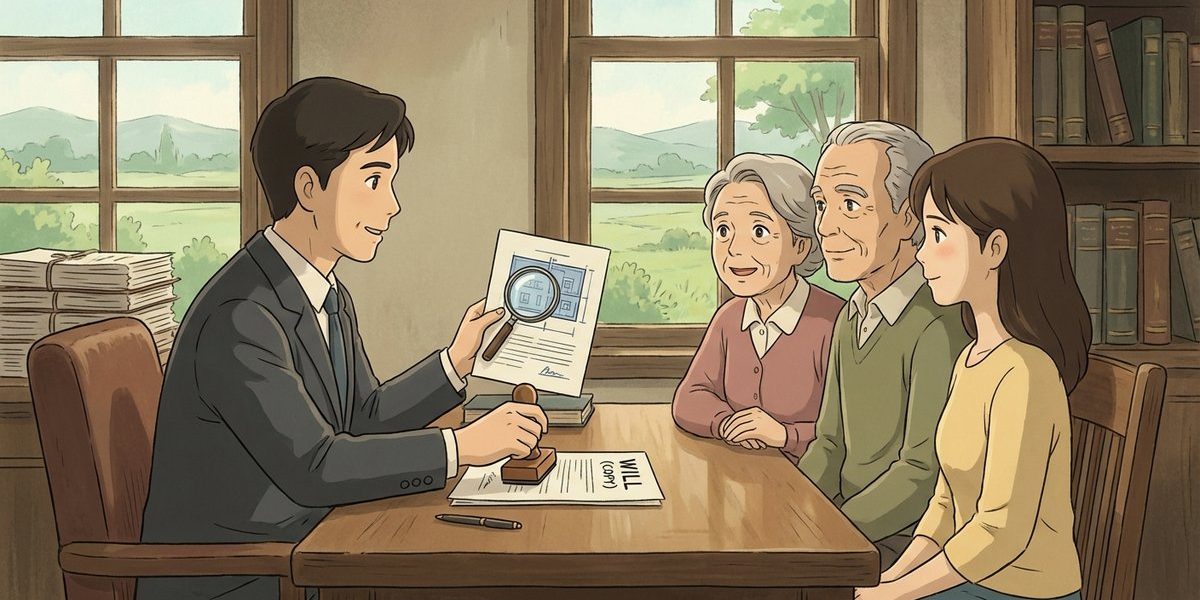
What if I only have a copy of the will and not the original—can it still be accepted and how does that affect the case? – North Carolina
Short Answer
Sometimes. In North Carolina, a copy of a will can be accepted in probate in limited situations, but the court usually needs a clear legal basis and reliable proof before it will treat a copy as controlling. In a partition case, the key issue is whether the will has been properly admitted to probate (or otherwise legally established) so it can be used to prove who owns what share. If the will is not accepted, the partition case typically proceeds based on the ownership shown in the public land and estate records, and expense reimbursement issues are handled through the partition accounting rules.
Understanding the Problem
In a North Carolina partition action involving inherited real estate, can a person rely on a copy of a deceased relative’s will (instead of the original) to change the ownership shares alleged in the petition, and what happens to the case if the will cannot be accepted? The practical decision point is whether the will can be treated as legally effective through the Clerk of Superior Court’s probate process, because the partition court generally divides sale proceeds based on legally recognized title and ownership interests.
Apply the Law
In North Carolina, wills are handled through the estate process before the Clerk of Superior Court (the clerk acts as the probate judge for most estate matters). A will generally needs to be admitted to probate to be used to establish who inherited a property interest. If only a copy exists, the ability to use it depends on why the original is missing and whether North Carolina law provides a procedure to accept a copy or otherwise establish the will’s contents. In a partition case, the Superior Court (and often the clerk for certain partition steps) will look to the legally recognized ownership interests when ordering a sale and distributing proceeds, including any credits for certain expenses.
Key Requirements
- Probate status matters: A will typically must be admitted to probate (or otherwise legally established) before it can be relied on to prove title and inheritance shares.
- Proof of the will’s validity and contents: When the original will is missing, the court may require additional proof that the document reflects the decedent’s will and what it said, and the process can become contested.
- Partition proceeds follow recognized ownership, with accounting adjustments: Even when everyone agrees the property should be sold, the case can still turn on (a) the correct ownership percentages and (b) whether a cotenant is entitled to contribution/credits for carrying costs, taxes, repairs, or improvements.
What the Statutes Say
- N.C. Gen. Stat. § 98-4 (Copy of lost will may be probated) – Allows probate of a copy in certain “lost or destroyed records” situations, with specific proof requirements.
- N.C. Gen. Stat. § 98-5 (Copy of lost will as evidence; letters to issue) – Provides that a properly certified copy/record of probate can be used as evidence, and letters may issue when a copy is admitted to probate.
- N.C. Gen. Stat. § 31-32 (Caveat) – Sets a general three-year window (with limited exceptions) for an “interested party” to challenge a will after probate in common form.
- N.C. Gen. Stat. § 46A-27 (Carrying costs; improvements; right to contribution) – In a partition, allows a cotenant to seek contribution for carrying costs and certain improvements; limits property tax contribution to taxes paid in the 10 years before the partition petition (plus interest at the legal rate).
- N.C. Gen. Stat. § 41-86 (Reimbursement of a cotenant) – Addresses contribution for necessary repairs, improvements (in partition), and taxes/interest, with important limits when a cotenant had exclusive possession.
Analysis
Apply the Rule to the Facts: Here, a partition petition alleges certain ownership interests in a residential property, but a deceased relative’s will (possibly only available as a copy) appears to allocate the interests differently. If the will has not been properly admitted to probate (or cannot be accepted as a copy under an available procedure), the partition case may proceed using the ownership interests shown by the current public record and estate filings, even if the copy suggests a different split. Separately, the fact that a cotenant paid repairs, taxes, and other carrying costs can support a request for contribution/credits from sale proceeds, but the timing and “exclusive possession” facts can change what is allowed.
How a “copy of a will” can affect a North Carolina partition case
A partition case is not the same thing as a probate proceeding. Partition is about dividing or selling property owned by cotenants; probate is about proving the will and transferring the decedent’s property to the correct heirs/devisees. When a will changes who inherited the property (or the percentages), the cleanest way to make that will control is to have the will recognized in the estate file before the Clerk of Superior Court. Without that step, the partition court often has limited ability to treat an unprobated copy as the final word on title.
That is why a “copy-only will” issue often leads to one of two paths: (1) the estate/probate issue gets addressed first (or in parallel) so the ownership shares are clarified, or (2) the partition moves forward based on the ownership currently recognized in the record, while the parties fight about whether the will can be established and whether the partition should pause.
Process & Timing
- Who files: Typically, an interested person in the estate (or a party in the partition who claims a different ownership share) raises the will/probate issue; a cotenant seeking reimbursement raises contribution/credit issues. Where: Probate issues are handled in the decedent’s estate file with the Clerk of Superior Court in the county where the estate is administered; the partition action is filed in Superior Court in the county where the property is located. What: The probate side may require an application/petition to admit the will (or a copy) and supporting proof; the partition side typically requires a motion/application in the partition case to assert contribution/credits for carrying costs and improvements. When: In a partition sale, a cotenant may assert the right to contribution at any time during the partition proceeding under G.S. 46A-27(b); property tax contribution is generally limited to taxes paid in the 10 years before the partition petition under G.S. 46A-27(c).
- Next step: If the will copy is disputed or the original is missing, the clerk may require additional evidence and notice to interested persons; if someone challenges the will, a caveat can move the dispute into a more formal litigation posture. North Carolina allows a caveat within three years after probate in common form in many situations. See G.S. 31-32.
- Final step: Once the court determines the correct ownership shares (through probate/title proof) and resolves contribution/credit claims, the partition sale proceeds are distributed according to those shares, adjusted for allowed costs and credits.
Exceptions & Pitfalls
- A copy is not automatically accepted just because it exists: If the original will cannot be located, the court may require a specific statutory pathway and proof. Some statutes about probating copies focus on lost/destroyed court records, not every situation where a family only has a photocopy. If the correct procedure is not available or the proof is not strong enough, the copy may not control title.
- Will challenges can change the timeline: If an interested person files a caveat, the dispute can delay final resolution of ownership shares, which can affect settlement leverage and whether the partition should pause.
- Expense reimbursement is not “everything spent”: North Carolina partition law distinguishes between carrying costs (like taxes, insurance, and certain repairs) and improvements. Improvements are often credited based on the lesser of cost or value added, and “exclusive possession” can limit reimbursement for certain items. See G.S. 41-86 and G.S. 46A-27.
- Documentation problems reduce recoveries: Reimbursement claims usually rise or fall on proof (receipts, invoices, tax bills, insurance declarations, proof of payment, and a clear timeline). Missing records can lead to smaller credits or disputes about whether an item was “necessary” versus optional.
Conclusion
In North Carolina, a copy of a will may be accepted only in specific circumstances and with proper proof through the Clerk of Superior Court, and a partition court generally relies on legally recognized title and ownership shares when dividing sale proceeds. If the will copy cannot be established in probate, the partition may proceed based on the ownership shown in the record. A cotenant seeking reimbursement should assert contribution/credit claims during the partition case and track the 10-year limit on property tax contribution under G.S. 46A-27.
Talk to a Partition Action Attorney
If a partition case involves inherited property and a missing original will, the ownership shares and the reimbursement credits can turn on tight procedural steps and proof. Our firm has experienced attorneys who can help explain options, coordinate probate and partition issues, and present contribution claims for taxes, repairs, and other carrying costs. Call us today at 919-341-7055.
Disclaimer: This article provides general information about North Carolina law based on the single question stated above. It is not legal advice for your specific situation and does not create an attorney-client relationship. Laws, procedures, and local practice can change and may vary by county. If you have a deadline, act promptly and speak with a licensed North Carolina attorney.

