
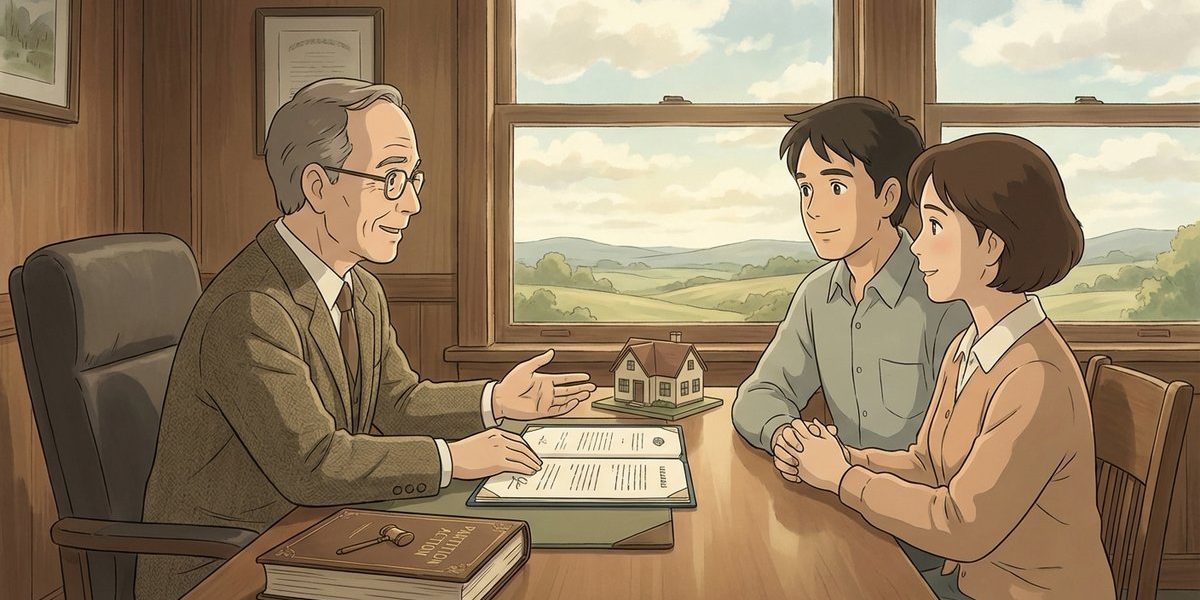
What happens to a jointly owned house when one owner dies and there’s a will involved? – North Carolina
Short Answer
In North Carolina, what happens to a jointly owned house after one owner dies depends first on how the deed is titled. If the deed creates a right of survivorship (such as a joint tenancy with right of survivorship, or a tenancy by the entirety for spouses), the surviving owner typically takes the deceased owner’s share automatically, and the will usually does not control that share. If the deed is a tenancy in common, the deceased owner’s share becomes part of the estate and can pass under the will—often creating a new co-ownership dispute that may lead to a partition action.
Understanding the Problem
In a North Carolina family dispute over a jointly owned house, the key question is whether a deceased co-owner’s will can control what happens to that co-owner’s share. The answer turns on a single decision point: what type of co-ownership appears on the recorded deed (for example, “tenants in common” versus “with right of survivorship”). This matters because it determines whether the house interest transfers outside the estate at death or becomes an estate asset that the executor must handle under the will.
Apply the Law
North Carolina treats co-owned real estate differently depending on whether the deed creates survivorship rights. By default, a deed to two or more people creates a tenancy in common unless the deed clearly states an intent to create a joint tenancy with right of survivorship (or the owners are spouses holding as tenants by the entirety). If survivorship applies, the deceased owner generally has no “descendable” share to pass by will. If survivorship does not apply, the deceased owner’s share can pass through the estate under the will, and the living co-owner may end up co-owning with the estate or the will beneficiary—often setting up a partition action in Superior Court.
Key Requirements
- Deed controls the starting point: The recorded deed language usually determines whether the co-ownership is tenancy in common, joint tenancy with right of survivorship, or (for married couples) tenancy by the entirety.
- Survivorship can override the will: If the deed includes survivorship, the deceased owner’s interest typically transfers to the surviving owner at death, leaving little or nothing for the will to give away as to that interest.
- Tenancy in common can pull the will into the dispute: If the deed is tenancy in common, the deceased owner’s share can pass under the will to heirs/beneficiaries, which can create new co-owners and increase the likelihood of a partition action.
What the Statutes Say
- N.C. Gen. Stat. § 41-71 (Creation of a joint tenancy with right of survivorship) – A conveyance to two or more people is generally a tenancy in common unless the instrument expresses an intent to create survivorship.
- N.C. Gen. Stat. § 41-64 (Tenancy by the entirety; effect of death) – When spouses hold property as tenants by the entirety, the surviving spouse generally owns the property by survivorship at the other spouse’s death.
- N.C. Gen. Stat. § 41-73 (Termination of joint tenancy with right of survivorship) – A joint tenancy with survivorship can be terminated in certain ways, including by filing a petition to partition.
- N.C. Gen. Stat. § 46A-21 (Who may file partition; parties) – A cotenant may petition for partition in Superior Court, and in some situations a deceased cotenant’s personal representative may also petition.
Analysis
Apply the Rule to the Facts: Here, the dispute involves siblings who jointly own a house and have discussed filing a partition action. If the deed is tenants in common, a deceased sibling’s share can pass under the will to a beneficiary, which may leave the surviving sibling co-owning the property with the beneficiary (or the estate during administration). If the deed includes right of survivorship, the surviving sibling may take the deceased sibling’s share automatically, and the will generally cannot redirect that share—though deed language and any prior termination steps matter.
Neutral example (one variable: deed language): If the deed says “A and B, tenants in common,” and B dies with a will leaving everything to C, then C may step into B’s shoes as a new co-owner with A. If the deed instead says “A and B, with right of survivorship,” then A typically becomes the sole owner at B’s death, even if B’s will tries to leave the house to C.
Process & Timing
- Who files: A living cotenant (such as a sibling on the deed) may file; in some situations the deceased cotenant’s personal representative may file as part of estate administration. Where: Superior Court in the county where the real property is located. What: A partition petition naming and serving all cotenants and other interested parties (such as lienholders). When: Often after confirming the deed type and, if a cotenant died, confirming whether the estate has an interest that must be joined.
- Next step: The court determines the proper parties and the ownership interests for purposes of moving the case forward. If ownership is disputed or unclear, the case can still proceed toward partition while those disputes are sorted out.
- Final step: The court orders a method of partition (division in kind, sale, or a combination), and the proceeds or parcels are distributed according to the determined ownership interests.
Exceptions & Pitfalls
- Assuming the will controls without checking the deed: A will does not automatically control a jointly owned house. The deed’s survivorship language can control instead.
- Confusing “joint” ownership with survivorship: Many families say “jointly owned” when the deed is actually tenants in common. The deed wording matters.
- Not joining the right parties: If a co-owner died and the deed is tenants in common, the estate and/or will beneficiaries may need to be joined in any partition case to avoid delays.
- Overlooking termination rules for survivorship deeds: Some actions can terminate a survivorship arrangement (including filing a partition petition), but the timing and paperwork details can be outcome-determinative.
For more context on clearing title issues when co-owners have died, see get clear ownership of a property when multiple people are on the deed and some co-owners have passed away.
Conclusion
In North Carolina, a will affects a jointly owned house only if the deceased owner’s share is part of the estate—most commonly when the deed is a tenancy in common. If the deed creates a right of survivorship (including tenancy by the entirety for spouses), the surviving owner typically takes the deceased owner’s share at death and the will usually cannot change that result. The practical next step is to obtain the recorded deed and confirm the co-ownership type before filing a partition petition in Superior Court.
Talk to a Partition Action Attorney
If you’re dealing with a dispute over a jointly owned house after a co-owner’s death and a will is involved, our firm has experienced attorneys who can help explain the deed language, the estate issues, and the partition timeline. Call us today at [919-341-7055].
Disclaimer: This article provides general information about North Carolina law based on the single question stated above. It is not legal advice for your specific situation and does not create an attorney-client relationship. Laws, procedures, and local practice can change and may vary by county. If you have a deadline, act promptly and speak with a licensed North Carolina attorney.

