
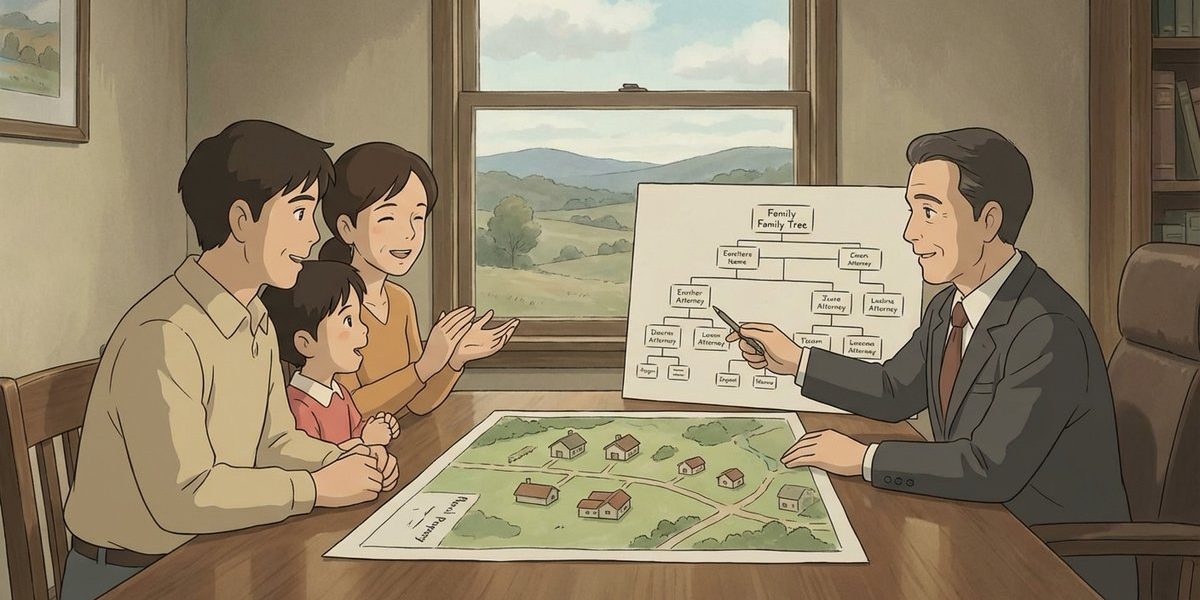
What family-relationship information do you need from a client to complete the partition petition? – North Carolina
Short Answer
In a North Carolina partition case, the petition must name and join all current co-owners, and sometimes other people whose ownership rights flow through family relationships. To draft the petition correctly, the firm typically needs a simple family tree tied to the property: who owned the property, who died, who their spouse and children were, and whether any heirs are minors, unknown, or not yet born. This information helps identify the necessary parties, how each person claims an interest, and how the court can give binding relief.
Understanding the Problem
In a North Carolina partition action, the court can only divide or order a sale of co-owned real estate if the correct owners and other required parties are included in the case. The practical question is: what family-relationship details must be gathered from a client so the petition can identify everyone who may have inherited or otherwise holds an interest through a family member. This usually comes up when the property passed through one or more deaths, when the deed lists family members, or when there may be heirs who are minors, unknown, or not yet identified.
Apply the Law
North Carolina treats partition as a special proceeding filed in Superior Court. The petition must identify and join all tenants in common and joint tenants (the current co-owners). Family-relationship information matters because it often explains how a person became a co-owner (for example, by inheritance) and whether additional parties must be joined or represented (such as minors, unknown heirs, or unborn/“not in being” interest holders in certain future-interest situations). If some co-owners are unknown or their title is disputed, North Carolina allows the case to move forward while grouping unknown shares together, but the petition still needs enough detail to show why unknown parties may exist and what interest is at issue.
Key Requirements
- Identify all current owners (cotenants): The petition must name and join every person who currently holds an ownership share, which often requires tracing ownership through family relationships when someone died.
- Explain each person’s claimed interest: The petition should connect each party to the property (for example, “heir of,” “devisee under will,” or “grantee on deed”) so the court can see why that person belongs in the case.
- Flag parties who need special handling: If an owner is a minor, incompetent adult, unknown/unlocatable, or a person “not in being” tied to a contingent future interest, the case may require representation such as a guardian ad litem so the judgment binds everyone.
What the Statutes Say
- N.C. Gen. Stat. § 46A-1 (Partition is a special proceeding) – Partition is handled as a special proceeding in Superior Court, with procedures largely drawn from Chapter 1 unless modified by Chapter 46A.
- N.C. Gen. Stat. § 46A-21 (Necessary and proper parties; joinder) – The petitioner must serve and join all tenants in common and joint tenants; other interest holders may also be joined. Spouses are not required parties unless they are also cotenants.
- N.C. Gen. Stat. § 46A-52 (Unknown cotenants or title disputed) – The court can proceed even if some cotenants are unknown or title is disputed, with unknown shares handled together for partition purposes.
- N.C. Gen. Stat. § 46A-25 (Contingent future interests; representation) – When contingent future interests are involved, certain parties must be included and certain categories (including minors, unknown/unlocatable parties, and parties not in being) must be represented by a guardian ad litem for the judgment to bind them.
- N.C. Gen. Stat. § 46A-2 (Summons; notice included in petition) – The petition must include specific notice language and the summons answer period is set by statute.
Analysis
Apply the Rule to the Facts: Here, the firm is preparing a North Carolina partition petition for co-owned property. To ensure all required parties are joined, the firm needs family-relationship details that explain how each co-owner obtained their share and whether any additional heirs or future-interest holders exist. If the ownership came through one or more deaths, the family tree helps identify every person who may now be a tenant in common or joint tenant and highlights any minors, unknown heirs, or unlocatable relatives who may require special handling.
Process & Timing
- Who files: A cotenant (or sometimes a personal representative of a deceased cotenant). Where: Superior Court (as a special proceeding) in the county where the property is located in North Carolina. What: A partition petition that names all cotenants and includes the required statutory notice language; summons is issued for respondents. When: Early in the case, before filing, the family-relationship intake should be completed so the petition can list and serve the correct parties.
- Service and responses: After filing, the petitioner must serve the named respondents. The time to answer is controlled by statute in partition proceedings, and local practice can affect scheduling.
- Case moves forward: The court addresses whether partition in kind or partition by sale is appropriate and issues orders that bind the parties who were properly joined and represented.
Exceptions & Pitfalls
- Missing an heir who is actually a cotenant: If a deceased owner’s interest passed to multiple heirs, leaving one out can create delays, extra service costs, or challenges to whether the final order binds everyone.
- Assuming a spouse must be named (or assuming a spouse never matters): North Carolina does not require joining spouses unless the spouse is also a cotenant, but a spouse may still appear on deeds or estate documents. The family tree should still identify spouses so the title story can be checked against the deed and estate record.
- Unknown or unlocatable relatives: If the client cannot identify or locate all heirs, the petition should clearly describe the missing branch of the family and what is known. North Carolina has tools for unknown cotenants, but the case still needs careful pleading and service planning.
- Minors or incompetent adults: If any owner is under 18 or lacks capacity, the case may require a guardian ad litem or other representation so the result is binding.
- Future-interest situations: If the deed or estate plan created life estates, remainders, or other contingent future interests, the family-relationship details must identify who holds present interests and who could take in the future, because additional parties and representation rules can apply.
Conclusion
To complete a North Carolina partition petition, the key family-relationship information is whatever is needed to identify and join every current co-owner and to explain how each person claims an interest in the property. A usable “family tree” usually includes prior owners, dates of death, spouses, children, and any deceased children’s descendants, plus notes on minors, unknown/unlocatable relatives, and any future-interest holders. The next step is to provide the firm a written family tree tied to each deceased owner before the petition is filed in Superior Court.
Talk to a Partition Action Attorney
If you’re dealing with a co-owned property partition and the petition requires tracing ownership through family relationships, our firm has experienced attorneys who can help organize the necessary party information and keep the case moving. Call us today at (919) 341-7055.
Disclaimer: This article provides general information about North Carolina law based on the single question stated above. It is not legal advice for your specific situation and does not create an attorney-client relationship. Laws, procedures, and local practice can change and may vary by county. If you have a deadline, act promptly and speak with a licensed North Carolina attorney.

