
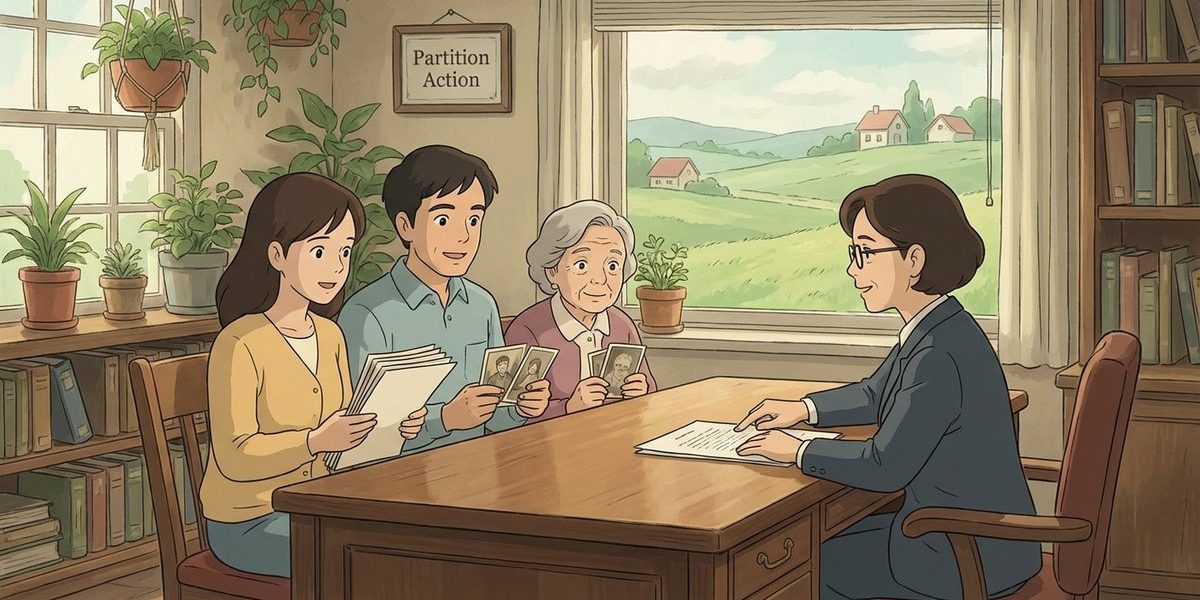
What documents should I bring to an attorney meeting about dividing or selling inherited properties? – North Carolina
Short Answer
For a North Carolina attorney meeting about dividing or selling inherited real estate, the most helpful documents are (1) anything that shows who owns the property and in what shares, (2) anything that shows the property’s value and debts, and (3) anything that shows who has been paying expenses or collecting income. If the dispute is trust- or estate-related, bring the trust and estate paperwork too, because it often explains how title should pass and who has authority to act. If some documents are missing, an attorney can often obtain them, but bringing what is available can save time and reduce costs.
Understanding the Problem
In North Carolina, what documents matter most for a meeting about dividing or selling inherited properties when co-owners disagree about whether to split the land, sell it, or how to divide the proceeds? The decision point is whether the situation is ready for a partition case in Superior Court (a court process to divide property or order a sale) or whether the dispute can be resolved through a voluntary agreement once ownership, debts, and contributions are documented.
Apply the Law
North Carolina treats partition as a special proceeding in Superior Court. In general, the court can order an “actual partition” (a physical division) or a “partition sale” (a court-ordered sale with proceeds divided), depending on what the evidence shows and what method the law allows for the type of property and ownership involved. The practical reality is that the documents brought to the first attorney meeting usually determine how quickly an attorney can confirm title, identify all necessary parties, and evaluate whether a sale is likely to be requested and supported.
Key Requirements
- Proof of ownership and shares: Documents that show who is on title now (or who should be on title after the death) and each person’s percentage interest.
- Property and financial picture: Documents showing value, mortgages, liens, taxes, insurance, and major expenses tied to the property.
- Co-owner conduct and accounting: Records showing who has possessed the property, collected rent or other income, paid carrying costs, or made improvements—because those facts often drive settlement and court requests.
What the Statutes Say
- N.C. Gen. Stat. § 46A-1 (Partition is a special proceeding) – Partition cases are handled as a special proceeding in North Carolina, generally in Superior Court.
- N.C. Gen. Stat. § 46A-26 (Methods of partition) – The court can order different methods, including physical division, sale, or a mix, depending on what fits the case.
- N.C. Gen. Stat. § 46A-75 (Sale in lieu of actual partition) – A sale may be ordered if a physical division cannot be made without “substantial injury,” and the party seeking a sale must prove that.
- N.C. Gen. Stat. § 46A-52 (Partition where cotenants unknown or title disputed) – A partition case can still move forward even if some interests are disputed or some co-owners are unknown, with certain issues addressed later.
Analysis
Apply the Rule to the Facts: The facts describe a trust-related dispute where a relative resists splitting or selling shared real estate, and the likely next step is a court-ordered sale or division. That makes ownership-and-authority documents (deeds, trust instruments, probate filings) the first priority, because they identify the correct parties and the shares at issue. Next, value-and-debt documents matter because North Carolina partition decisions often turn on whether the property can be divided fairly or whether a sale is more practical. Finally, contribution and income records matter because they shape negotiations and any request to account for expenses, rents, or improvements when proceeds are divided.
Process & Timing
- Who files: A co-owner (or someone claiming a co-ownership interest). Where: Superior Court in the county where the real property is located in North Carolina. What: A partition petition (and supporting exhibits) identifying the property, the parties, and the requested method (division or sale). When: There is not one universal “days-after-death” deadline for partition, but delays can create practical problems (missed payments, deteriorating property, escalating conflict), so early document collection matters.
- Next step: The case must include and serve all necessary parties with an ownership claim, including people whose interests may be unclear. Title work and estate/trust paperwork often drive how quickly that can happen.
- Final step: If the court orders a division or a sale, the process ends with an order implementing that method and a distribution of proceeds consistent with ownership interests and any approved adjustments.
Exceptions & Pitfalls
- Missing or outdated title documents: A deed from years ago may not reflect the current ownership after deaths or trust transfers. Bringing any prior deeds, recorded documents, and estate/trust paperwork helps an attorney identify what must be cleaned up before or during a partition.
- Not identifying all owners and claimants: Partition cases can stall if a necessary party is left out. A family tree, death certificates, and probate/trust filings can be as important as the deed.
- No paper trail for expenses and income: If one side has been paying taxes, insurance, mortgage, or repairs—or collecting rent—lack of records makes it harder to negotiate a fair split and can increase litigation costs.
Document Checklist for the First Meeting
- Ownership and title
- Most recent deed(s) for each property (or whatever is available).
- Any recorded documents affecting title (easements, right-of-way agreements, restrictive covenants, boundary agreements).
- Property tax card and parcel ID number(s) from the county tax office.
- Any title policy, prior closing file, or settlement statement from when the property was bought or refinanced.
- Estate and trust paperwork (since the dispute is trust-related)
- The trust document and all amendments/restatements.
- Any certificate or summary of trust (if one exists) and any written trustee acceptance.
- Death certificate(s) for the deceased owner(s) tied to the inheritance.
- Probate filings if an estate was opened (letters, inventories, accountings, closing documents), even if a separate estate/trust attorney is handling that side.
- Any written communications about proposed distributions, buyouts, or authority to sell.
- Mortgages, liens, and debts
- Mortgage statements and payoff information.
- Home equity line statements.
- Any lien notices (judgment liens, HOA liens, contractor liens) and collection letters.
- Value and condition
- Recent appraisals, broker price opinions, or market analyses (if any).
- Photos showing current condition and any damage.
- Repair estimates, invoices, and contractor proposals.
- Survey, plat map, or boundary sketches (especially if a physical split is being discussed).
- Carrying costs and contributions (for a fair accounting)
- Property tax bills and proof of payment.
- Insurance declarations pages and proof of premium payments.
- Utility bills if utilities are in someone’s name.
- Receipts for repairs, maintenance, and major improvements, with dates and who paid.
- Income and possession
- Lease agreements, rent ledgers, and proof of rent deposits.
- Short-term rental statements (if applicable) and expense summaries.
- Any written agreements among co-owners about use, rent, or expense sharing.
- People and communications
- A list of all known co-owners/heirs with contact information and relationship to the deceased owner.
- Key emails/texts/letters showing refusal to sell, conditions for a buyout, or disputes about shares.
- A timeline of major events (death, trust administration steps, who moved in, who paid what, major repairs).
For readers looking for more background on the court process, it can help to review force the sale of inherited land when some co-owners refuse to sell and how North Carolina handles situations where ownership interests are disputed or unclear.
Conclusion
For a North Carolina meeting about dividing or selling inherited properties, the most important documents are the ones that prove ownership and authority (deeds, trust and estate papers), show the property’s financial picture (mortgages, liens, taxes, insurance, value), and document who paid expenses or received income. Partition is handled in Superior Court as a special proceeding, and the court may order a physical division or a sale depending on the evidence. The next step is to gather these records and provide them to counsel so a partition petition can be evaluated and prepared if needed.
Talk to a Partition Action Attorney
If you’re dealing with inherited property where a co-owner is resisting a split or sale, our firm has experienced attorneys who can help explain options, document needs, and likely timelines for a North Carolina partition case. Call us today at [919-341-7055].
Disclaimer: This article provides general information about North Carolina law based on the single question stated above. It is not legal advice for your specific situation and does not create an attorney-client relationship. Laws, procedures, and local practice can change and may vary by county. If you have a deadline, act promptly and speak with a licensed North Carolina attorney.

