
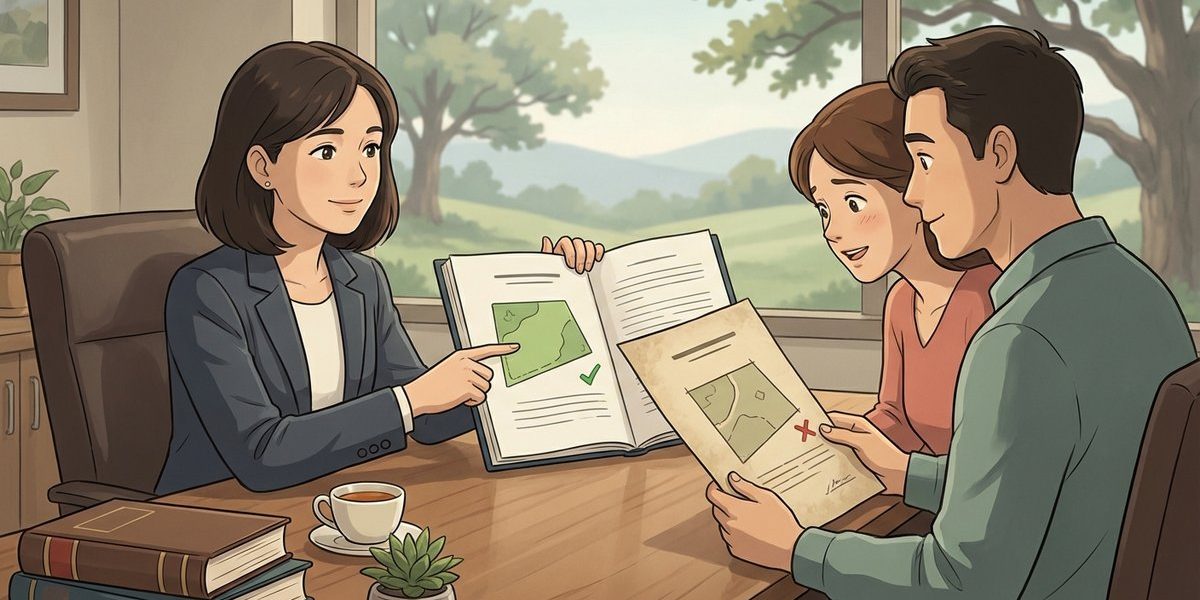
What can I do if the petition to sell the property lists the wrong land or an incorrect property description? – NC
Short Answer
In North Carolina, a co-owner can object if a partition petition describes the wrong land or uses an incorrect legal description. The court can require the property description to be corrected before the case moves forward, and a wrong description can affect notice, the scope of the case, and any later sale order. In the same proceeding, the court may also consider contribution and adjustment issues between co-owners, including certain mortgage, tax, insurance, and similar carrying costs, depending on the proof and the type of expense.
Understanding the Problem
In a North Carolina partition action, the main question is whether the court is being asked to divide or sell the correct parcel of real property. When one co-owner files to force a sale, the petition must identify the land at issue clearly enough for the clerk and the parties to know what property is actually before the court. If the petition points to the wrong tract, the wrong lot, or a mistaken legal description, the first decision point is whether that error should be challenged and corrected before the case proceeds further.
Apply the Law
North Carolina partition proceedings for real property are filed in the county where the property is located, usually before the Clerk of Superior Court. The court may order a sale only for the real property described in the petition, and the party asking for a sale has the burden to show that actual partition cannot be made without substantial injury. A correct legal description matters because it defines the land the court can act on, supports notice and any lis pendens filing, and helps avoid a sale order that reaches the wrong parcel. North Carolina law also allows courts to adjust shares to account for contribution orders and other equitable adjustments between co-owners, which can matter when one side claims reimbursement for carrying costs tied to the property.
Key Requirements
- Correct property identification: The petition should match the deed, plat reference, prior deed reference, tax parcel information, and county records closely enough to identify the right land.
- Proper forum and notice: The proceeding must be filed in the county where the property sits, and any notice tied to the case should point to the same parcel the court is being asked to partition or sell.
- Proof for adjustments between co-owners: If one co-owner seeks credits or reimbursement, that party usually needs records showing what was paid, when it was paid, and why the expense benefited the commonly owned property rather than only one owner personally.
What the Statutes Say
- N.C. Gen. Stat. § 46A-20 (Venue in partition) – A partition case must be started in the county where the property is located.
- N.C. Gen. Stat. § 46A-75 (Sale in lieu of actual partition) – The court may order a sale of the real property described in the petition only after the required findings are made.
- N.C. Gen. Stat. § 46A-51 (Commissioners; owelty; adjustments) – In an actual partition, commissioners may adjust shares and account for contribution orders and other court-ordered adjustments.
- N.C. Gen. Stat. § 1-408.1 (Survey in proceedings involving sale or partition of land) – The clerk may order a survey when it would benefit the parties in a land sale or partition proceeding.
- N.C. Gen. Stat. § 47-36.2 (Cure of obvious description errors in recorded instruments) – Some obvious description errors in recorded title instruments can be corrected through a statutory curative process, though that is separate from fixing the court petition itself.
Analysis
Apply the Rule to the Facts: Here, the reported problem is not just a disagreement about value or whether the home should be sold. The stated issue is that the petition appears to list the wrong land or an incorrect property description. In that situation, the immediate response is usually to raise the defect in the partition case and ask that the petition be corrected, clarified, or challenged before the court enters orders affecting title or sale of the property. If the deed, plat book reference, parcel number, or prior deed book do not line up with the home jointly owned by the parties, that mismatch should be documented and presented directly to the clerk or court.
The additional facts about emptied accounts, cash, vehicle titles, and one party paying household or mortgage expenses do not usually fix a wrong legal description by themselves, but they may matter as separate claims or as requests for contribution and offsets tied to the co-owned property. In a partition sale setting, North Carolina law allows the court to consider adjustments between co-owners in some circumstances, especially for expenses that preserved or carried the property, such as mortgage payments, taxes, insurance, and similar necessary costs. Claims about removed cash, bank funds, or vehicle titles may require separate pleading or even a separate civil claim if they are not directly part of the real-property accounting.
That distinction matters. A payment that reduced the mortgage principal on the jointly owned home may support a request for credit from sale proceeds, while a dispute over personal property or withdrawn funds from a joint account may not automatically be resolved through the partition order itself. For a related discussion of expense credits in this setting, see credit for mortgage payments, taxes, and other expenses.
Process & Timing
- Who files: the responding co-owner, usually through an answer, objection, motion, or request for relief in the partition proceeding. Where: before the Clerk of Superior Court in the North Carolina county where the property is located. What: a filing that points out the incorrect legal description, attaches the correct deed or plat information if available, and asks the court to require correction before moving forward. If the description problem may come from the recorded chain of title itself, counsel may also evaluate a separate curative step under county land records procedures. When: as early as possible after service of the petition and before any order of partition, sale, or confirmation based on the wrong description.
- Next, the clerk or court may set the matter for hearing, require amended pleadings, compare the petition to the deed and register of deeds records, or order a survey if that would help identify the correct parcel. County practice can vary, especially if the mistake is minor on paper but creates real uncertainty about what land is before the court.
- Final, the court may allow the case to proceed on a corrected description, limit the case to the properly identified parcel, or delay substantive relief until the land is accurately described. If the case later results in partition or sale, the court can then address any properly raised requests for contribution, offsets, or allocation of sale proceeds.
Exceptions & Pitfalls
- A small clerical mistake may be fixable, but a description that points to a different tract, lot, or deed reference can be a serious defect that should not be ignored.
- Do not assume every financial dispute between co-owners will be netted out automatically in partition. Courts often distinguish between property-related carrying costs and separate claims involving personal property or withdrawn funds.
- Notice and record issues can create problems if a lis pendens, deed reference, plat reference, or parcel identifier does not match the actual property. If the underlying recorded instrument also contains an obvious description error, a separate title-curative process may need to be considered.
Conclusion
If a North Carolina partition petition lists the wrong land or an incorrect property description, the co-owner named in the case can object and ask the court to require a corrected description before any sale order moves forward. The key threshold is whether the petition accurately identifies the parcel the court has authority to partition or sell. The most important next step is to file a prompt response with the Clerk of Superior Court in the county where the property is located and attach the correct deed or plat information.
Talk to a Partition Action Attorney
If a co-owner filed a partition case using the wrong property description or there are disputes about credits from a future sale, our firm has experienced attorneys who can help explain the options and timelines. Call us today at [919-341-7055].
Disclaimer: This article provides general information about North Carolina law based on the single question stated above. It is not legal advice for your specific situation and does not create an attorney-client relationship. Laws, procedures, and local practice can change and may vary by county. If you have a deadline, act promptly and speak with a licensed North Carolina attorney.

