
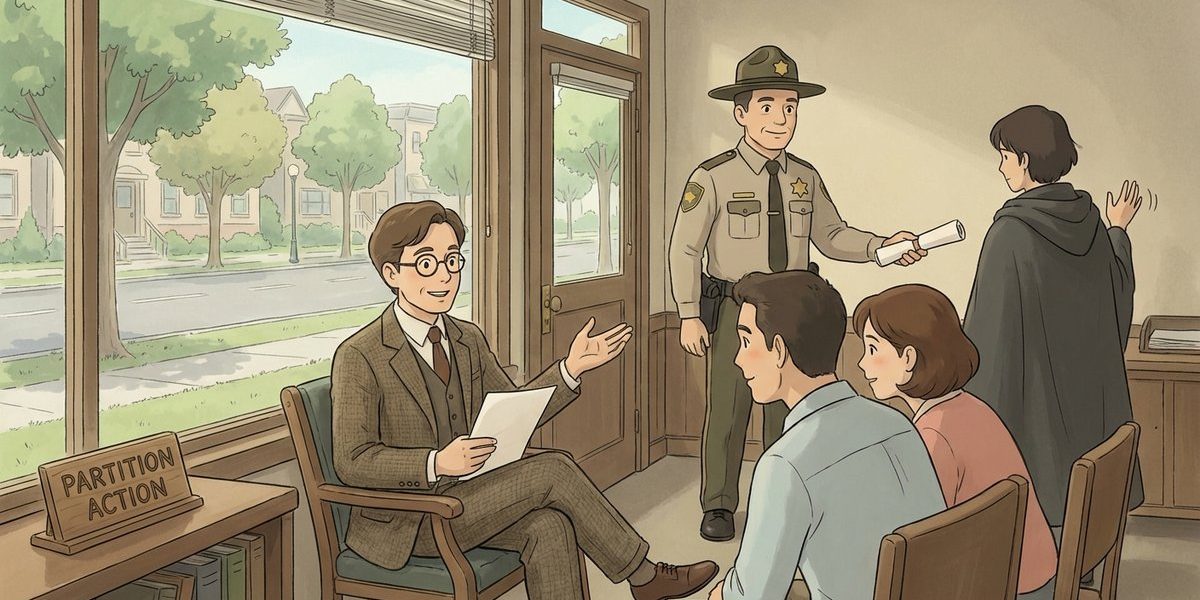
How does sheriff service work, and can someone still be served if they say they don’t want the papers? – North Carolina
Short Answer
In North Carolina, a sheriff’s deputy (or other authorized process server) usually serves a civil summons by personally delivering the summons and complaint, or by leaving them at the person’s home with a responsible resident. A person generally cannot defeat service just by refusing to take the papers or saying they “don’t want them.” If personal delivery is not successful, North Carolina law allows other methods—like substituted service at the home, service by certified mail, or in some cases service by publication—so the case can still move forward.
Understanding the Problem
In a North Carolina partition action (a court case to force the sale or division of co-owned real property), the court cannot usually take action against a co-owner until that co-owner is properly served with the summons and the filed paperwork. The practical question is: can a co-owner avoid being brought into the case by refusing to accept the papers when the sheriff tries to serve them, or by saying they do not want to be served?
Apply the Law
North Carolina civil cases generally use Rule 4 of the North Carolina Rules of Civil Procedure for service of process. The summons and complaint (or petition, depending on the filing) must be served using an authorized method, and the proof of service must be filed so the court can rely on it. Service is about giving legally recognized notice—not about getting the person’s permission or cooperation.
Key Requirements
- Use an authorized method: Common methods include personal delivery by the sheriff, substituted service at the dwelling with a suitable resident, or service by certified mail/approved delivery service.
- Serve the correct documents: Typically this means the summons plus the complaint/petition and any required attachments that must go with initial service.
- Meet the timing rules: In most civil cases, personal or substituted personal service must be completed within 60 days after the summons is issued, or the plaintiff must keep the case alive with an endorsement or an alias/pluries summons within the required time windows.
What the Statutes Say
- N.C. Gen. Stat. § 1A-1, Rule 4 (Process) – Lists who may serve a summons, the allowed methods (personal delivery, leaving at the dwelling with a suitable resident, certified mail, designated delivery service, etc.), and key timing rules (including the 60-day service period and how to extend the summons).
- N.C. Gen. Stat. § 1-75.10 (Proof of service) – Explains what proof must be filed to show valid service (including an officer’s return for sheriff service and affidavits/receipts for mail or delivery service).
Analysis
Apply the Rule to the Facts: In a partition case, multiple co-owners must be served so the court can determine everyone’s rights in the property and enter orders that bind all owners. If a co-owner refuses to take papers from the sheriff, that refusal usually does not stop service if the deputy can still complete service in a legally permitted way (for example, by leaving the papers at the person’s dwelling with a suitable resident). If the sheriff cannot complete personal or substituted service, the serving party may need to use another Rule 4 method (like certified mail or, in limited situations, publication) and then file the required proof with the clerk.
Process & Timing
- Who files: The party starting the partition case (the petitioner/plaintiff). Where: The Clerk of Superior Court in the county where the property is located (partition cases are commonly handled through the clerk as a special proceeding). What: A summons issued by the clerk plus the filed petition/complaint and required attachments. When: Service generally must be completed within 60 days after the summons is issued, or the summons must be kept alive by endorsement or alias/pluries summons within the Rule 4 deadlines.
- Service attempt: The sheriff in the county where the co-owner is located attempts service. If the co-owner refuses to cooperate, the deputy documents what happened and completes service if a permitted method is available (for example, leaving the papers with a suitable resident at the dwelling).
- Proof filed: The return of service (for sheriff service) or an affidavit/receipt (for mail or delivery service) is filed with the clerk so the court can treat the co-owner as properly served and move the case forward.
Exceptions & Pitfalls
- “Refusing the papers” vs. “no valid method completed”: A co-owner can make service harder, but service is only valid if the deputy (or other server) actually completes a method allowed by Rule 4 and documents it properly.
- Wrong address or outdated location information: If the address is wrong, the sheriff may be unable to complete personal or substituted service. That often leads to delays and extra costs while locating the correct residence or using another method.
- Mail service problems: Certified mail and delivery-service methods can fail if the address is wrong or if the proof does not meet the technical requirements. Proof of service rules matter, especially if a default is later requested.
- Service by publication is not automatic: Publication is typically a last resort and requires showing that the person cannot be served with due diligence by other methods, plus strict notice and affidavit steps.
- Summons deadlines: If the summons is not served in time and the chain is not properly extended (endorsement or alias/pluries), the case can be discontinued as to that unserved party, which may force re-service and can affect strategy and scheduling.
For more on this issue in the partition context, see our article on what happens if a co-owner refuses to accept the summons or won’t sign for it.
Conclusion
In North Carolina, sheriff service in a partition case usually means a deputy serves the summons and filed paperwork by personal delivery or by a legally permitted substitute method at the person’s dwelling. A co-owner generally cannot stop service just by refusing to take the papers or saying they do not want them, as long as service is completed using a method allowed by Rule 4 and the proof of service is properly filed. The key timing issue is the 60-day service window; the next step is to ensure the summons is served (or timely extended) and the return is filed with the clerk.
Talk to a Partition Action Attorney
If a partition case involves multiple co-owners and service is getting delayed by avoidance or refusal, our firm has experienced attorneys who can help explain the service options, deadlines, and next steps to keep the case moving. Call us today at (919) 341-7055.
Disclaimer: This article provides general information about North Carolina law based on the single question stated above. It is not legal advice for your specific situation and does not create an attorney-client relationship. Laws, procedures, and local practice can change and may vary by county. If you have a deadline, act promptly and speak with a licensed North Carolina attorney.

