
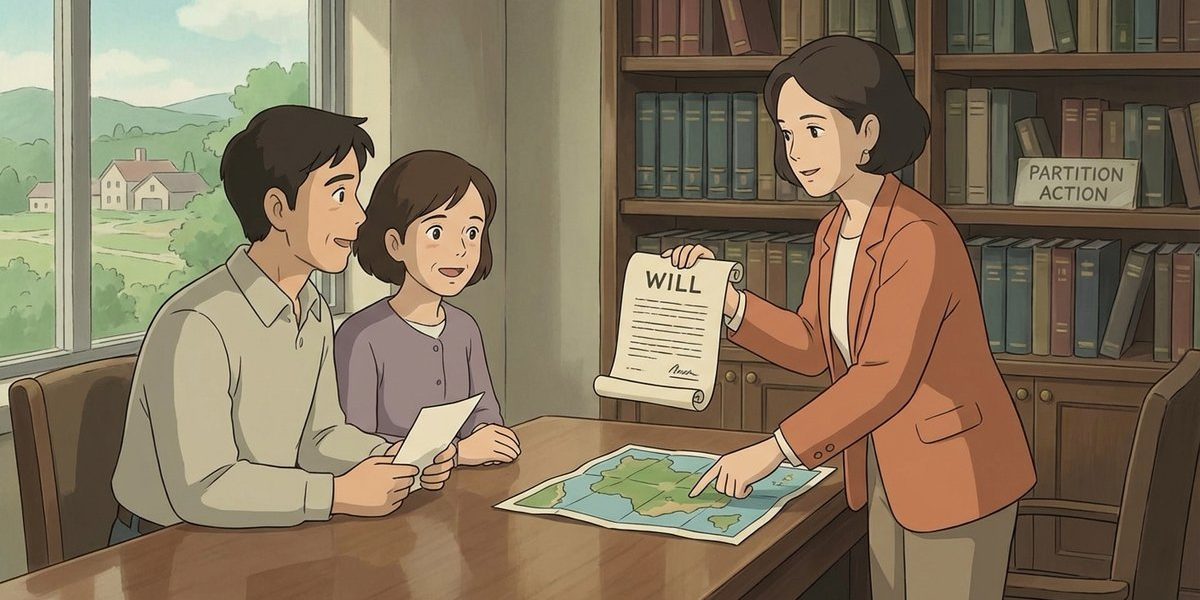
How do we confirm whether there was a valid will and how it affects who owns what share of the property? – North Carolina
Short Answer
In North Carolina, the usual way to confirm whether there was a valid will is to check the county estate records where the person lived at death to see whether a will was filed and admitted to probate. If a will was admitted, it generally controls who inherited the decedent’s share of the land and in what percentages, unless a later court order changes that result. If no will was admitted, North Carolina’s intestate succession rules usually control who inherited and the ownership shares.
Understanding the Problem
In a North Carolina partition action involving family land, the key decision point is whether the deceased owner’s interest passed under a valid will or under intestate succession. That decision affects who should be named as cotenants in the partition case and what undivided share each person owns. The issue often comes up when relatives disagree about heirship, when a petition lists the wrong people, or when names are misspelled and the court still expects a timely response to the partition petition.
Apply the Law
North Carolina partition cases are filed in Superior Court, and the court can move the case forward even if family members dispute title or disagree about who owns a particular share. A will typically affects ownership by changing who inherits the deceased person’s interest and in what proportions, but the will usually matters for land ownership only if it is properly handled through the estate process (commonly called probate). In a partition case, the court focuses on whether the parties are cotenants and what interests are claimed; disputes about the exact shares can be addressed during the case or in a separate proceeding, depending on what is contested.
Key Requirements
- Confirm whether a will was admitted to probate: A will that was filed and accepted in the estate process is the starting point for determining who inherited the decedent’s interest.
- Identify the correct current owners (cotenants): The partition petition should name and serve the people who currently hold title as tenants in common or joint tenants, including those who inherited through a will or intestacy.
- Address disputed or unknown interests without stopping the partition case: North Carolina law allows the court to proceed with partition even when some ownership shares are disputed or some cotenants are unknown, with the disputed interests grouped and resolved later.
What the Statutes Say
- N.C. Gen. Stat. § 46A-21 (Who may file; required parties) – Requires the petitioner to join and serve all cotenants and allows joining others who claim an interest.
- N.C. Gen. Stat. § 46A-52 (Unknown cotenants; title disputed) – Lets the court move forward even if names are unknown or shares are disputed, and allows disputes to be decided later.
- N.C. Gen. Stat. § 46A-26 (Methods of partition) – Authorizes partition in kind, partition by sale, or a mixed approach depending on the case.
Analysis
Apply the Rule to the Facts: The family’s immediate problem is that a distant relative filed a partition petition and the petition may list the wrong heirs or misspell names. Under North Carolina partition law, the petitioner must join and serve all cotenants, but the court can still proceed even if some interests are disputed or some cotenants are unknown, with disputed shares grouped together and sorted out later. That makes it important to quickly confirm whether a will was admitted (which can change who the cotenants are) and then raise corrections and disputes in the partition case in a timely way.
Process & Timing
- Who checks for the will: Any interested family member (and often an attorney or title professional). Where: The Clerk of Superior Court in the county where the decedent lived at death (estate records) and the Register of Deeds for recorded deeds affecting the land. What: Request the estate file (to see if a will was filed and admitted) and review deeds for how title is currently held. When: As soon as the partition petition is served, because the response deadline in civil court can be short and missing it can limit options.
- How the will affects shares: If an admitted will leaves the decedent’s interest to specific beneficiaries (or in specific percentages), those beneficiaries are typically the cotenants for partition purposes. If no will was admitted, the heirs under intestate succession are typically the cotenants, and the shares depend on the family tree and whether there is a surviving spouse.
- How to address wrong names and missing parties in the partition case: File a timely response and raise issues about misidentified parties, missing cotenants, and disputed shares. If needed, ask the court to require joinder of additional parties and to treat disputed interests as disputed under the partition statutes while the ownership questions get resolved.
Exceptions & Pitfalls
- Assuming a “family will” controls without probate: A document that was never filed and admitted in the estate process may not control title, and relying on it can lead to the wrong party list and wrong shares in the partition case.
- Confusing “heirs” with “cotenants”: Partition focuses on current titleholders. If the estate was administered and deeds were recorded, the deed records may show ownership differently than family assumptions.
- Letting misspellings and omissions linger: Name errors and missing parties can create service problems, delay distributions, and increase the chance that disputed interests get lumped together and decided later under the partition statutes.
- Not addressing unknown or unlocatable owners correctly: North Carolina law allows unknown or disputed interests to be handled in the case, but the court may require specific steps to protect those interests, which can affect timing and strategy.
Conclusion
In North Carolina, confirming whether there was a valid will usually means checking the decedent’s estate file with the Clerk of Superior Court to see whether a will was filed and admitted to probate, because that typically determines who inherited the decedent’s share and in what proportions. In a partition case, all cotenants should be joined and served, but the court can still proceed even if some shares are disputed. The next step is to file a timely response in Superior Court and raise any missing parties, misspellings, and share disputes.
Talk to a Partition Action Attorney
If a partition petition was filed over family land and there are questions about whether a will exists, who the heirs are, or whether the party list and ownership shares are wrong, our firm has experienced attorneys who can help explain the process and deadlines and help protect ownership claims. Call us today at (919) 341-7055.
Disclaimer: This article provides general information about North Carolina law based on the single question stated above. It is not legal advice for your specific situation and does not create an attorney-client relationship. Laws, procedures, and local practice can change and may vary by county. If you have a deadline, act promptly and speak with a licensed North Carolina attorney.

