
How do I respond to a partition lawsuit when I believe I paid for the home and the other co-owner didn’t contribute to the mortgage or bills? – North Carolina
Short Answer
In North Carolina, a co-owner generally has the right to file a partition case in Superior Court even if the other co-owner paid most (or all) of the mortgage and household expenses. The practical response is to (1) file a timely Answer, and (2) affirmatively ask the court to credit or reimburse the paying co-owner for qualifying “carrying costs” and certain improvements as part of the partition case. Those credits can change how sale proceeds are divided or how the property is split.
Understanding the Problem
In North Carolina, when one co-owner files a partition lawsuit in Superior Court, the key question is not only whether a partition can happen, but also whether the paying co-owner can require an adjustment for mortgage payments, insurance, taxes, and repairs that preserved the property. The decision point is whether the response to the lawsuit includes a clear request for contribution/credits so the court can account for unequal payments when dividing the property or the sale proceeds. The goal is to address ownership and fairness issues inside the partition case rather than treating the case as only about selling the home.
Apply the Law
North Carolina partition cases are governed primarily by Chapter 46A of the North Carolina General Statutes and are filed in the Superior Court. A co-owner’s payment history does not automatically stop partition, but North Carolina law allows a co-owner to seek contribution for certain expenses that preserved the property (including payments on a purchase loan) and, in limited ways, for improvements. These issues are typically raised by filing an Answer and an application/motion in the partition case asking the court to account for contribution when it divides the property or distributes sale proceeds.
Key Requirements
- Respond on time and contest what is wrong: The response should admit what is true (for example, that both names are on the deed) and deny or explain what is disputed (for example, the claimed ownership percentages or whether a sale is necessary).
- Affirmatively request contribution/credits: If one co-owner paid “carrying costs” (like mortgage payments, property taxes, insurance, and necessary repairs), North Carolina law allows a request for contribution from the other co-owner within the partition proceeding.
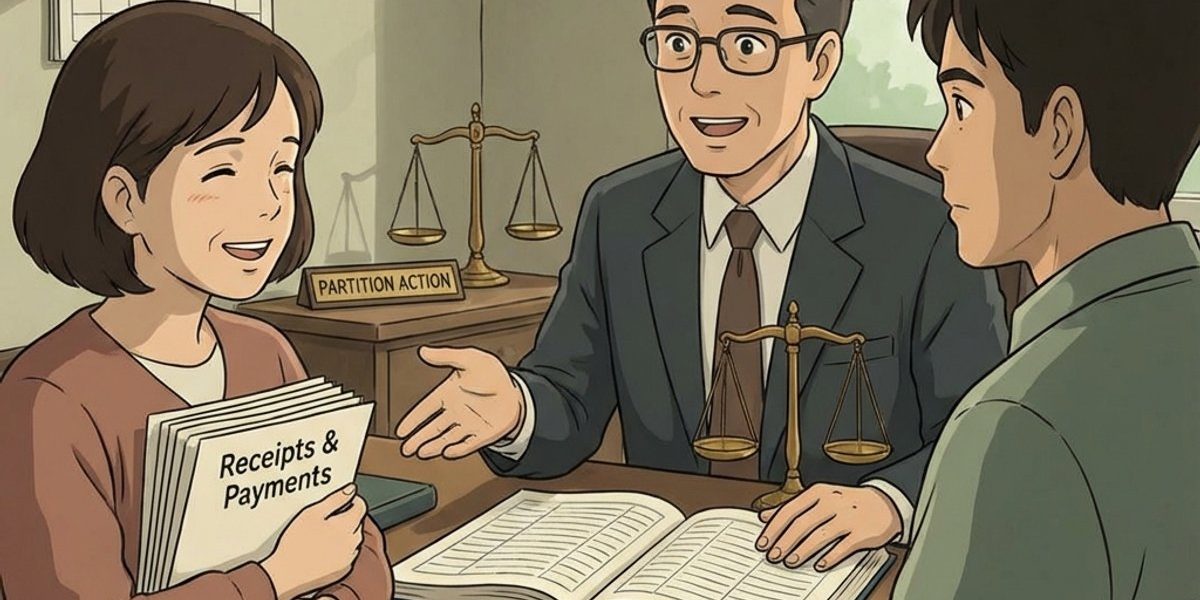
- Document the payments and categorize them correctly: The court typically needs proof (loan statements, canceled checks, bank records, insurance and tax bills, repair invoices) and a clear explanation of which payments preserved the property versus optional upgrades.
What the Statutes Say
- N.C. Gen. Stat. § 46A-21 (Who may file; parties) – Allows a tenant in common or joint tenant to petition for partition in Superior Court and requires joining other co-owners.
- N.C. Gen. Stat. § 46A-27 (Carrying costs; improvements; contribution) – Gives a co-owner a right to contribution for “carrying costs” (including payments on a loan to acquire the property) and for certain improvements, with a 10-year lookback limit for property taxes.
- N.C. Gen. Stat. § 46A-75 (Sale in lieu of actual partition) – Requires the party seeking a sale to prove an actual split would cause “substantial injury,” and requires specific findings if the court orders a sale.
- N.C. Gen. Stat. § 46A-51 (Owelty; accounting for contribution orders) – Allows adjustments (including owelty payments) and permits commissioners to account for contribution orders when making an equitable partition.
Analysis
Apply the Rule to the Facts: Here, the former partner filed a partition case even though the other co-owner says they paid the mortgage and household bills. Under North Carolina law, the filing can still move forward because a co-owner generally can seek partition. The paying co-owner’s strongest legal response is usually to raise contribution/credit issues in the case and support them with records showing payments for qualifying “carrying costs” (including the purchase loan) and any qualifying improvements, so the court can adjust the final division or sale proceeds.
Process & Timing
- Who files: The responding co-owner (the defendant/respondent). Where: North Carolina Superior Court in the county where the property is located. What: An Answer to the partition petition/complaint, and (when appropriate) an application/motion in the partition case requesting contribution/credits for carrying costs and qualifying improvements under North Carolina law. When: The deadline to answer depends on how service was made and the date of service; missing it can lead to default and loss of leverage.
- Build the contribution record: Gather the deed, closing documents (if available), mortgage statements, proof of each payment, tax bills, insurance bills, and repair invoices. Separate “carrying costs” (preserving the property) from discretionary upgrades, and be prepared to show dates and amounts.
- Litigate the partition method and the accounting: The court decides the method of partition (actual split vs. sale) and can address contribution/credits as part of the proceeding. If the property is sold, the accounting typically affects how net proceeds are distributed after liens, costs, and court-ordered adjustments.
Exceptions & Pitfalls
- Assuming payment history blocks partition: Paying the mortgage and bills may support reimbursement/credits, but it usually does not stop the other co-owner from pursuing partition.
- Failing to request contribution in the partition case: North Carolina law allows contribution claims to be asserted during the partition proceeding. If the response does not raise the issue clearly and early, the court may proceed without a full accounting.
- Mixing “carrying costs” with personal or optional expenses: The strongest claims are typically for costs that preserved the property (for example, purchase-loan payments, taxes, insurance, and necessary repairs). Vague household spending or undocumented cash payments are harder to credit.
- Property tax lookback limit: North Carolina limits contribution for property taxes under the partition statute to taxes paid during the 10 years before the partition petition was filed, plus interest at the legal rate.
- Title and percentage disputes may not stop the case: North Carolina law allows the court to move forward with partition even if co-owners dispute interests, with some disputes resolved later. That makes it important to raise disputes and preserve evidence early.
Conclusion
In North Carolina, a co-owner can usually pursue partition even when the other co-owner paid the mortgage and most property expenses. The way to protect the paying co-owner’s position is to file a timely Answer in Superior Court and request contribution/credits for qualifying “carrying costs” (including payments on the loan used to acquire the home) and certain improvements, supported by clear documentation. The most important next step is to file the Answer by the service-based deadline and include the contribution request in the partition case.
Talk to a Partition Action Attorney
If a former partner filed a North Carolina partition lawsuit and the paying co-owner needs the court to account for mortgage payments, taxes, insurance, or repairs, our firm has experienced attorneys who can help explain options, required filings, and timelines. Call us today at (919) 341-7055.
Disclaimer: This article provides general information about North Carolina law based on the single question stated above. It is not legal advice for your specific situation and does not create an attorney-client relationship. Laws, procedures, and local practice can change and may vary by county. If you have a deadline, act promptly and speak with a licensed North Carolina attorney.

