
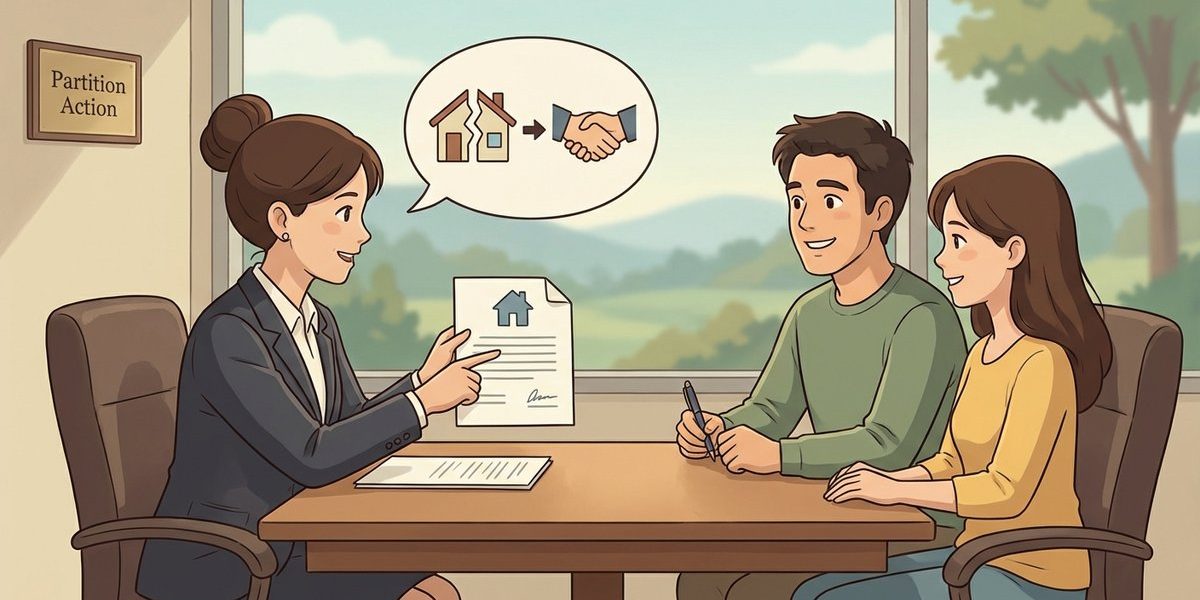
How do I make sure I’m not still responsible for the mortgage if my co-owner buys me out of the house? – North Carolina
Short Answer
In North Carolina, a buyout and deed transfer can remove a co-owner from the title, but it usually does not remove that person from the mortgage note. To stop personal responsibility for the loan, the lender typically must approve a refinance, a loan assumption with a release, or another written lender-approved change that takes the departing co-owner off the note. A written buyout agreement and a properly recorded deed are still important, but they do not, by themselves, end mortgage liability.
Understanding the Problem
In North Carolina, when one co-owner buys out another co-owner of a house, the key question is: can the departing co-owner transfer the ownership interest and also stop being personally responsible for the mortgage debt. The decision point usually turns on whether the departing co-owner signed the mortgage note (the promise to repay) and whether the lender will agree to remove that person from that promise as part of the buyout timing.
Apply the Law
North Carolina law treats the ownership of real estate (title) and the personal promise to repay a loan (the note) as separate issues. A deed can transfer title from one co-owner to the other, but the lender is not automatically bound by that private deal. If a co-owner remains on the note, the lender can still pursue that co-owner if payments stop, even after the deed is transferred. In a partition context, North Carolina also allows co-owners to seek credits for certain “carrying costs” (including mortgage payments, taxes, insurance, and certain repairs) when the parties are working out a buyout or sale.
Key Requirements
- Get off the note (not just the deed): A refinance into the remaining co-owner’s name, or a lender-approved assumption/release, is the usual way to end personal mortgage liability.
- Transfer title correctly: The departing co-owner should sign a deed that matches the agreed buyout terms and is recorded with the county Register of Deeds.
- Document the buyout and the accounting: A written agreement should address the buyout price, how credits for mortgage/taxes/insurance/repairs are handled, and what happens if the lender will not release the departing co-owner.
What the Statutes Say
- N.C. Gen. Stat. § 46A-27 (Carrying costs; improvements; right to contribution) – In a partition proceeding, a cotenant may seek contribution/credit for defined carrying costs, including payments on a loan used to acquire the property, plus other preservation costs.
- N.C. Gen. Stat. § 41-86 (Reimbursement of a cotenant) – Addresses reimbursement rules for necessary repairs, taxes, and interest on an encumbrance, with important limits tied to exclusive possession.
- N.C. Gen. Stat. § 45-36.11 (Satisfaction of security instrument: form) – Provides a statutory form for recording a satisfaction when a deed of trust/mortgage is paid off; this is relevant when a refinance or payoff occurs as part of the buyout.
Analysis
Apply the Rule to the Facts: Here, one co-owner no longer lives in the home and the other co-owner has been paying ongoing expenses and wants credit for those costs in a buyout or sale. Even if the parties agree on a buyout number and record a deed transferring the departing co-owner’s interest, that does not automatically remove the departing co-owner from the mortgage note if the note is in both names. A clean exit usually requires the remaining co-owner to refinance or obtain a lender-approved assumption/release, while the written buyout agreement addresses credits for carrying costs (such as mortgage payments, taxes, insurance, and certain repairs) consistent with North Carolina’s partition accounting concepts.
Process & Timing
- Who files: The remaining co-owner typically applies with the lender for a refinance (or, if available, a loan assumption) to remove the departing co-owner from the note. Where: With the mortgage lender/servicer; the title transfer is recorded at the Register of Deeds in the county where the property is located. What: Lender payoff/refinance package (varies by lender) and a signed deed prepared for the agreed transfer; the closing attorney/title company usually handles recording. When: Ideally, the deed is delivered/recorded at the same closing where the refinance/assumption is completed, so the departing co-owner is not left off title but still on the debt.
- Document the buyout terms: The parties sign a written buyout agreement that (a) states the buyout price and how it was calculated, (b) lists which expenses are credited (mortgage payments, taxes, insurance, repairs) and the time period covered, and (c) states whether realtor fees are included or excluded (often they are excluded in a direct buyout, but the agreement can address any agreed “sale-like” costs).
- Confirm payoff/release evidence: If the loan is paid off or replaced, the closing should result in the lender recording a satisfaction of the deed of trust/mortgage in the public records. North Carolina statutes provide forms used for those recorded satisfactions, which helps confirm that the old lien has been terminated of record.
Exceptions & Pitfalls
- Deed transfer without lender release: A common mistake is signing a deed and assuming the mortgage responsibility transfers automatically. Without a refinance/assumption and release, the departing co-owner may still be liable if the loan goes into default.
- “Indemnity” is not the same as a release: A buyout agreement can require the remaining co-owner to pay the mortgage and reimburse losses, but that promise does not stop the lender from pursuing the departing co-owner if payments stop.
- Carrying-cost credits can change the buyout number: North Carolina partition statutes recognize contribution claims for “carrying costs,” including payments on a purchase loan, and also address reimbursement rules for repairs/taxes/interest with limits that can depend on exclusive possession. If the parties do not define which costs count and the proof required, the buyout negotiations often stall.
- Realtor-fee confusion: In a private buyout, there may be no realtor commission at all. If the parties want to discount the buyout as if a sale were happening, the agreement should say so clearly and specify the percentage/amount used.
- Recording and title cleanup: If the deed is not recorded promptly, title can remain unclear. If the loan is refinanced/paid off, the public record should also reflect a satisfaction of the old security instrument.
Conclusion
In North Carolina, a co-owner buyout can transfer ownership of the house, but it usually does not end personal responsibility for the mortgage unless the lender removes the departing co-owner from the note through a refinance or a lender-approved assumption/release. The buyout should be documented in writing, address credits for carrying costs like mortgage payments and taxes, and be completed with a properly recorded deed. The most practical next step is to schedule a closing that includes a refinance (or approved assumption) so the departing co-owner is taken off the loan at the same time the deed is recorded.
Talk to a Partition Action Attorney
If a co-owner buyout is being negotiated and the goal is to avoid staying on the mortgage, our firm has experienced attorneys who can help explain options, documents, and timelines and coordinate with the closing process. Call us today at (919) 341-7055.
Disclaimer: This article provides general information about North Carolina law based on the single question stated above. It is not legal advice for your specific situation and does not create an attorney-client relationship. Laws, procedures, and local practice can change and may vary by county. If you have a deadline, act promptly and speak with a licensed North Carolina attorney.

