
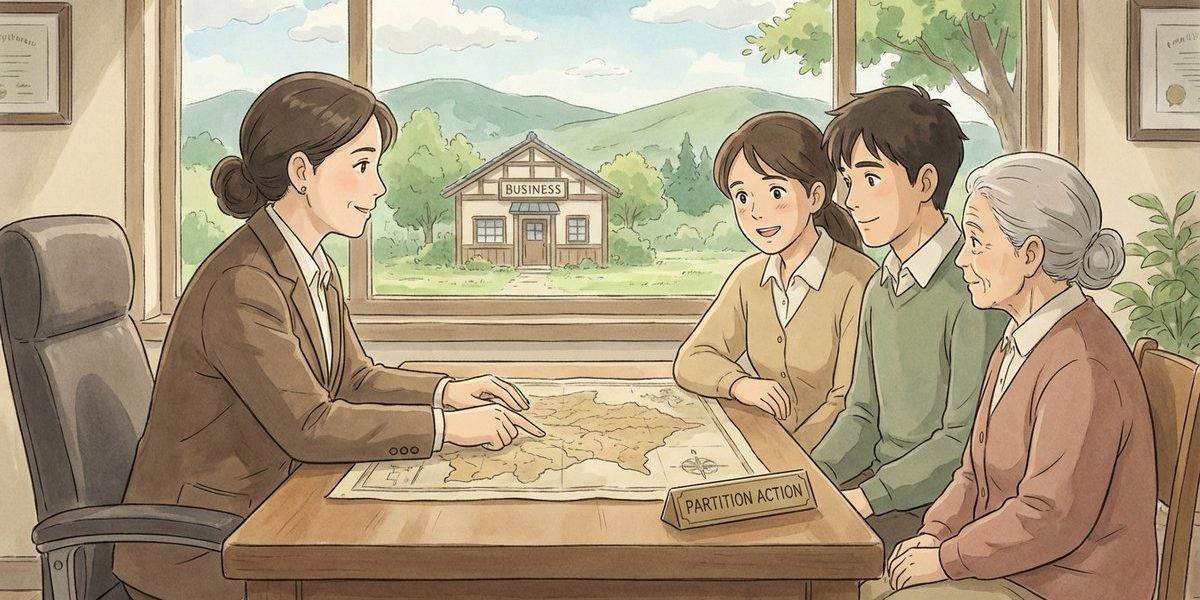
Do I need to take legal action to protect the property where my business is located if other relatives may also have an interest? – NC
Short Answer
Maybe. In North Carolina, if the business property is part of family land and other relatives may own a share, a partition action may be the legal tool that protects the property interest by forcing the ownership issue into court. The first step is usually to confirm whether the property is actually co-owned, because a partition case only works if the parties hold the land as cotenants, such as tenants in common or joint tenants.
Understanding the Problem
In North Carolina, the key question is whether a person who is operating a business on family land must file a court action when a deceased parent’s ownership is unclear and other relatives may also claim an interest in the same parcel. The decision point is narrow: if the parcel is co-owned, the issue becomes whether court action is needed to separate, sell, or otherwise protect that ownership interest. The answer depends on whether the parent actually held a record or inherited interest, whether that interest passed to heirs, and whether the parcel can be divided without harming the parties’ rights.
Apply the Law
North Carolina partition law applies when real property is owned by cotenants. A person claiming the property as a tenant in common or joint tenant may file a partition proceeding in superior court, and all known cotenants should be joined. The court can order an actual division of the land, a sale, a mixed approach, or leave part of the property in cotenancy, but it cannot force a cotenant to remain in cotenancy over objection. If the dispute involves unknown heirs or disputed shares, the case can still move forward without resolving every ownership dispute at the start.
Key Requirements
- Cotenancy: The parcel must be owned by two or more people with undivided interests, such as heirs who inherited the same land.
- Proper parties: The petition should include all known cotenants, and other people with recorded interests, leases, liens, or deeds of trust may also need to be joined.
- Type of relief: The court must decide whether the land can be fairly divided in kind or whether a sale is necessary because division would cause substantial injury.
What the Statutes Say
- N.C. Gen. Stat. § 46A-21 (Petition by cotenant; necessary parties) – A person claiming land as a tenant in common or joint tenant may petition in superior court and must join the other cotenants.
- N.C. Gen. Stat. § 46A-26 (Methods of partition) – The court may order actual partition, partition sale, a mixed result, or partition of only part of the property.
- N.C. Gen. Stat. § 46A-52 (Unknown cotenants or disputed title) – A partition case may proceed even when some cotenants are unknown or some ownership shares are disputed.
- N.C. Gen. Stat. § 46A-75 (Sale in lieu of actual partition) – A sale may be ordered only if actual division cannot be made without substantial injury, and the party seeking sale must prove that point by a preponderance of the evidence.
- N.C. Gen. Stat. § 46A-76 (Sale procedure) – If the court orders a public sale, notice rules apply, including first-class mailed notice at least 20 days before the sale to all parties previously served pursuant to Rule 4(j).
Analysis
Apply the Rule to the Facts: The facts suggest several family parcels, multiple generations of possible heirs, and uncertainty about whether the deceased parent actually owned record interests in the home, farmland, or other land. That matters because a partition action protects only an existing ownership interest; it does not create one. If title research shows that the parent held an undivided share in the parcel where the business operates, then a partition case may be the practical way to bring all claimants into one proceeding and prevent the property from remaining tied up by unclear family ownership. If title research instead shows the parcel was transferred away earlier or never passed to the parent, a different title or estate procedure may be needed before partition becomes available.
North Carolina law is also useful when the family tree is incomplete. A partition case does not always have to stop just because some heirs are unknown or because two relatives claim the same share. That can matter in inherited land cases where old deeds, intestate succession, and informal family arrangements left the record unclear. For related title issues, see clear ownership of a property when multiple people are on the deed and some co-owners have passed away and who all the co-owners or heirs are before filing a partition case.
Process & Timing
- Who files: a person claiming to be a cotenant, or in some situations a personal representative tied to the deceased owner’s estate. Where: the Superior Court division in the North Carolina county where the land is located. What: a petition for partition identifying the parcel, the claimed ownership interests, and the known cotenants. When: there is no single statewide filing deadline built into the partition statute, but delay can make heir identification, service, and title proof harder.
- If the court determines the petitioner is entitled to relief, it may appoint commissioners to divide the property, or it may hear evidence on whether actual partition would cause substantial injury and whether a sale should be ordered instead. If some heirs are unknown or their shares are disputed, the court can still move the case forward while reserving those disputes for later resolution.
- The final step is either a confirmed division of the land, an order directing sale procedures, or another order defining how the parcel will be handled. If a public sale is ordered, first-class mailed notice must go out at least 20 days before the sale to parties previously served pursuant to Rule 4(j).
Exceptions & Pitfalls
- A partition action may not help if the business parcel is not actually co-owned or if the deceased parent never held a legal interest that passed to heirs.
- A common mistake is filing before completing deed research, estate review, and heir tracing. That can lead to missing parties, service problems, or a challenge to standing.
- Unrecorded deeds, informal family transfers, and unknown heirs can complicate notice. Even though North Carolina allows partition to proceed with disputed or unknown interests, service and title issues still need careful handling.
Conclusion
In North Carolina, legal action may be necessary to protect the property where a business operates if the parcel is family land and other relatives may own an undivided share. The controlling issue is whether the deceased parent actually held a cotenant interest that passed to heirs. The next step is to confirm title and heirship, then file a partition petition in Superior Court if co-ownership exists. If a sale is later ordered, watch the 20-day first-class mailed notice requirement for parties previously served pursuant to Rule 4(j).
Talk to a Partition Action Attorney
If a business is operating on family land and ownership may be split among relatives or heirs, an attorney can help sort out title, identify the proper parties, and explain whether a partition case is the right next step. Call us today at 919-341-7055.
Disclaimer: This article provides general information about North Carolina law based on the single question stated above. It is not legal advice for your specific situation and does not create an attorney-client relationship. Laws, procedures, and local practice can change and may vary by county. If you have a deadline, act promptly and speak with a licensed North Carolina attorney.

