
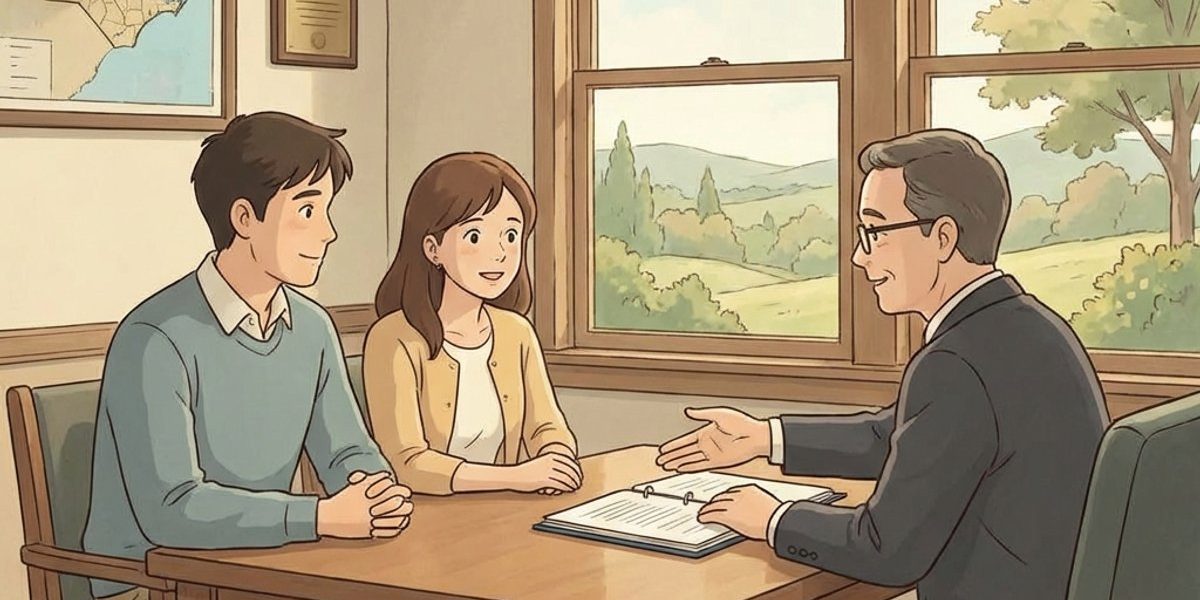
Do I have to deal with heirs if a deceased co-owner had no spouse or children? – North Carolina
Short Answer
Usually, yes. In North Carolina, if a co-owner dies without a spouse or children, that person’s ownership interest typically passes to other relatives under the state’s intestate succession rules (often parents first, then siblings, then more distant family). To get clear ownership or complete a partition, the case generally must include whoever inherited that deceased co-owner’s share—even if that means locating and serving multiple heirs or using procedures for unknown heirs.
Understanding the Problem
In North Carolina, when a co-owner of real estate dies with no spouse and no children, the key question is whether the deceased co-owner’s share still belongs to someone else as an “heir,” and whether that heir must be included to resolve shared ownership through a partition action or other title-clearing step. The decision point is simple: did the deceased co-owner leave heirs under North Carolina law (even if they are not immediate family), or did the ownership interest truly have no heirs at all?
Apply the Law
North Carolina has a default inheritance system (intestate succession) that controls when someone dies without a valid will. If there is no surviving spouse and no descendants (children, grandchildren), the deceased person’s real estate interest generally passes down a family “ladder,” starting with parents, then siblings (and the children of deceased siblings), and then more distant relatives. In a partition case, the Superior Court (as a special proceeding) generally requires that all co-owners be joined and served, which often means naming and serving the heirs who inherited the deceased co-owner’s share.
Key Requirements
- Identify who inherited the deceased co-owner’s share: If there is no will (or no deed survivorship feature that controls), North Carolina’s intestate succession rules determine which relatives became the new co-owners.
- Join and serve all current co-owners in the partition: A partition petition generally must include all tenants in common and joint tenants as parties so the court can enter an order that binds everyone’s interests.
- Address unknown or disputed interests without stopping the case: North Carolina partition law allows the case to move forward even when some co-owners are unknown or when heirs dispute who owns what share, with those interests grouped and sorted out later.
What the Statutes Say
- N.C. Gen. Stat. § 29-15 (Intestate succession when there is no surviving spouse) – Lists who inherits when there is no surviving spouse, including parents, siblings (and their descendants), and then more distant relatives.
- N.C. Gen. Stat. § 46A-21 (Partition petition; necessary parties) – Allows a cotenant to file for partition in superior court and requires joining and serving all co-owners.
- N.C. Gen. Stat. § 46A-52 (Unknown cotenants or disputed title) – Lets a partition proceed even if some cotenants are unknown or ownership shares are disputed, with those interests handled together and resolved later.
- N.C. Gen. Stat. § 116B-2.2 (Escheat when there are no heirs) – Describes what can happen when someone dies leaving no heirs at all (property may escheat to the State), and notes procedures involving unknown heirs/claimants in that context.
Analysis
Apply the Rule to the Facts: The facts describe multiple parcels (including a small adjacent strip/partial parcel) with shared ownership shown on recorded deeds. If a listed co-owner has died with no spouse and no children, North Carolina law usually does not treat the interest as “ownerless.” Instead, that deceased co-owner’s share commonly passed to parents, then siblings, or other relatives under intestate succession, meaning those heirs likely became co-owners who must be addressed to secure clear ownership or complete a partition. If the heirs cannot be identified right away, North Carolina partition procedure can still allow the case to move forward while treating unknown/disputed interests in a structured way.
Process & Timing
- Who files: A current cotenant (a person listed on the deed) may file. Where: Superior Court in the county where the land is located (partition is a special proceeding). What: A partition petition naming all known co-owners/heirs and describing the parcels (including any partial strips) as shown in the deeds. When: There is no single “one size fits all” filing deadline for partition, but delays can create practical problems (missing heirs, clouded title, and harder service).
- Identify and serve heirs/co-owners: The petitioner typically investigates the deceased co-owner’s family tree and estate records to determine who inherited. If some heirs are unknown or cannot be located, the case may still proceed while those interests are treated as unknown/disputed, and the court can require additional notice steps.
- Partition method and order: The court will decide the method (division in kind, sale, or a combination) and enter an order that allocates or sells the property and distributes proceeds according to ownership interests, including the deceased co-owner’s inherited share.
Exceptions & Pitfalls
- Assuming “no spouse or kids” means “no heirs”: In North Carolina, parents, siblings, nieces/nephews, and more distant relatives may still inherit under intestate succession.
- Confusing deed language with inheritance: Some deeds create survivorship rights that change what happens at death. If the deed did not create survivorship, the deceased co-owner’s share usually passes through heirs/estate instead.
- Not joining the right parties: A partition order is meant to bind all co-owners. Missing heirs can create a lingering cloud on title and can undermine the goal of “clear ownership.”
- Unknown heirs and service problems: When heirs cannot be found, the case often turns on whether the petitioner used reasonable steps to identify and notify them. Skipping those steps can cause delay or require re-service.
- Multiple parcels and small strips: A small adjacent strip/partial parcel can carry its own chain of title issues. Treating it as an afterthought can leave a gap even if the main parcel is resolved.
For more detail on the practical work of identifying co-owners and heirs before filing, see figuring out who all the co-owners or heirs are. If ownership shares are unclear among family members, it can also help to review how a case can proceed when ownership interests are disputed or unclear.
Conclusion
In North Carolina, a deceased co-owner who had no spouse or children often still has heirs, and those heirs typically inherit the deceased person’s ownership share under intestate succession. Because a partition case generally must include all current co-owners, the heirs usually must be identified and joined (or handled as unknown/disputed parties when appropriate) to resolve shared ownership and clear title. The next step is to file a partition petition in the Superior Court where the land is located and promptly begin the heir-identification and service process.
Talk to a Partition Action Attorney
If you’re dealing with shared property where a co-owner has died and it is unclear which heirs now own that share, our firm has experienced attorneys who can help explain the process, identify the right parties, and map out realistic timelines. Call us today at [919-341-7055].
Disclaimer: This article provides general information about North Carolina law based on the single question stated above. It is not legal advice for your specific situation and does not create an attorney-client relationship. Laws, procedures, and local practice can change and may vary by county. If you have a deadline, act promptly and speak with a licensed North Carolina attorney.

