
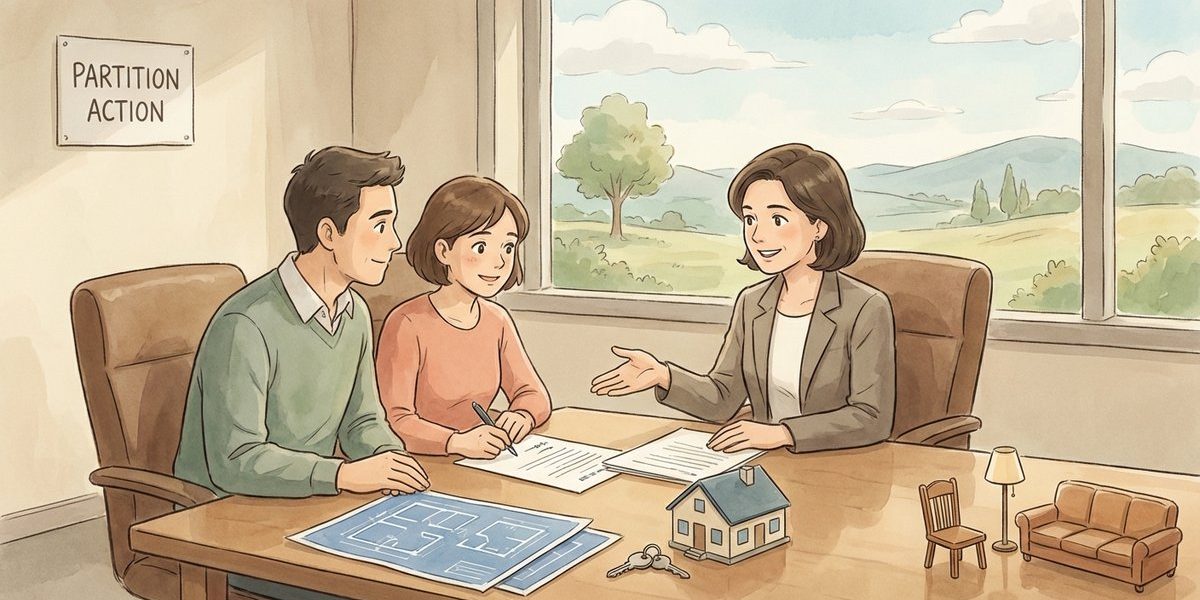
Can we settle the house buyout in a partition case even if we still disagree about furniture and other household items? – North Carolina
Short Answer
Yes. In North Carolina, co-owners can settle the real-estate part of a partition case (including a buyout and deed transfer) even if they still disagree about furniture and other household items. The key is to put the buyout terms in a written settlement that clearly states what is resolved and what is not, and how any remaining personal-property disputes will be handled. With a hearing less than a month away, timing matters because the court can keep the partition case moving if no agreement is filed.
Understanding the Problem
In a North Carolina partition action between co-owners/former partners, can the co-owners resolve the buyout of the jointly owned home while leaving disagreements about furniture and other household items for later? The decision point is whether the settlement can be limited to the real property (the house and land) even though personal property inside the home remains disputed. The practical trigger is an upcoming partition hearing, where the Clerk of Superior Court may move the case forward if the real-estate issues are not resolved.
Apply the Law
Partition is primarily a real-property case. In North Carolina, the partition proceeding is handled through the Clerk of Superior Court, and the court’s focus is the co-owned real estate: who owns what share, and whether the property should be physically divided or sold. Co-owners are generally free to settle all or part of a civil case, including settling only the buyout/transfer of the home while reserving disputes about personal property (like furniture) for a separate agreement, a later negotiation, or a different legal process. If the case proceeds to a court-ordered sale instead of a buyout, North Carolina’s partition sale procedures generally track the judicial sale rules, including notice requirements and the upset-bid process.
Key Requirements
- Clear separation of “real property” vs. “personal property”: The settlement should state that it resolves the buyout and transfer of the home (real estate) and does not resolve household items unless specifically listed.
- Complete buyout terms: The agreement should cover the purchase price/credits, who pays the mortgage and carrying costs through closing, the deadline to sign a deed, and what happens if the buyout does not close on time.
- A plan for the remaining items dispute: The agreement should say how furniture/household goods will be divided (inventory list, pickup dates, neutral mediator, or a separate claim), so the real-estate settlement does not unravel later.
What the Statutes Say
- N.C. Gen. Stat. § 46A-76 (Sale procedure) – Provides that partition sales generally follow North Carolina’s judicial sale procedures, with specific partition-related requirements.
- N.C. Gen. Stat. § 46A-75 (Sale in lieu of actual partition) – Explains when the court may order a sale instead of dividing the property, and requires findings to support a sale order.
- N.C. Gen. Stat. § 1-339.25 (Upset bid on real property) – Sets the basic upset-bid rules and the 10-day upset-bid period after a report of sale is filed.
- N.C. Gen. Stat. § 1-339.36 (Private sale; upset bid) – Addresses upset bids in private sales conducted under the judicial sale statutes.
Analysis
Apply the Rule to the Facts: Here, the dispute is over a buyout of a jointly owned home in a North Carolina partition case, with a hearing coming up soon. The buyout and deed transfer concern real property, which is the core subject of the partition proceeding, so those terms can be settled and presented to the Clerk of Superior Court even if the parties still disagree about furniture and other household items. The main risk is practical: if the settlement does not clearly reserve the personal-property dispute and set ground rules for access and removal, the unresolved items can trigger new conflict that delays closing or leads to additional litigation.
Process & Timing
- Who files: Either party (typically through counsel) can present a signed settlement or consent order. Where: The Clerk of Superior Court in the county where the partition case is pending. What: A written settlement agreement and, when appropriate, a proposed consent order/dismissal or other filing that tells the Clerk what issues are resolved and what relief is requested. When: Before the scheduled hearing date, with enough time for review and signature logistics.
- Real-estate closing steps: The agreement should set a short timeline for (a) signing the deed, (b) paying the buyout funds, and (c) recording the deed. If the buyout is financed, the agreement should address what happens if the loan approval or closing is delayed.
- Handling the household items: The agreement should set a firm date range for an inventory and pickup, identify who can be present, and address access (keys/entry) and condition of the home. If the parties cannot agree, the agreement can require mediation or reserve the issue for a separate claim, while still completing the real-estate transfer.
Exceptions & Pitfalls
- “Furniture” can be tied to the real estate: Some items that look like household goods may be treated as part of the home (for example, built-in fixtures). A settlement should define what stays with the house and what can be removed.
- Access and move-out disputes can derail a closing: If one co-owner still occupies the home, the buyout agreement should address possession, keys, and a move-out/pickup schedule to avoid last-minute conflict.
- Unclear credits and expenses: Buyouts often involve credits for mortgage payments, taxes, insurance, repairs, or occupancy. If the agreement does not address these, the “house is settled” may not actually be settled.
- Hearing momentum: If no agreement is filed, the partition case may continue toward a sale process that can involve statutory notice and upset-bid procedures, which can add time and uncertainty.
Conclusion
Yes—under North Carolina partition practice, the buyout and transfer of the jointly owned home can be settled even if furniture and other household items remain disputed, as long as the written settlement clearly separates the real-estate terms from the personal-property issues and sets a workable plan for the remaining items dispute. With a hearing less than a month away, the most important next step is to reduce the buyout terms to a signed written agreement and file the appropriate paperwork with the Clerk of Superior Court before the hearing date.
Talk to a Partition Action Attorney
If a co-owner/former partner dispute is close to a partition hearing and the goal is to lock in a house buyout while other issues (like household items) remain contested, our firm has experienced attorneys who can help explain options, draft settlement terms, and protect timelines. Call us today at (919) 341-7055.
Disclaimer: This article provides general information about North Carolina law based on the single question stated above. It is not legal advice for your specific situation and does not create an attorney-client relationship. Laws, procedures, and local practice can change and may vary by county. If you have a deadline, act promptly and speak with a licensed North Carolina attorney.

