
Can someone else speak to the attorney for me about my partition case, and what permission is needed? – North Carolina
Short Answer
Yes, in many North Carolina partition matters an attorney can speak with a trusted third party (like a spouse, adult child, or caregiver) for scheduling and general updates, but the attorney typically cannot discuss confidential legal advice or case strategy without the client’s clear permission. The safest approach is a written authorization that identifies who may receive information and what topics the attorney may discuss. If the third party needs to make decisions or sign documents, more formal authority (such as a power of attorney or court appointment) may be required.
Understanding the Problem
In a North Carolina partition action, a co-owner may receive a letter or court papers and want a family member or another trusted person to talk with the attorney to help understand what is happening. The decision point is whether someone else can communicate with the attorney about the partition case, and what permission is needed for that communication to include case details rather than only scheduling. Timing can matter because partition cases move through Superior Court and may include deadlines to respond to a summons.
Apply the Law
Partition cases in North Carolina are filed in Superior Court and involve co-owners (cotenants) of real property. North Carolina law requires that all cotenants be served and joined in the case, and the summons in a partition proceeding has an answer period set by statute. Separately, attorneys must protect client confidentiality, so an attorney generally needs the client’s permission before sharing non-public information with a third party. In practice, the permission should be clear about who can receive information and what the attorney is allowed to discuss.
Key Requirements
- Clear authorization to share information: The client should clearly identify the person allowed to speak with the attorney and what information the attorney may share (for example, “status updates and documents,” but not “settlement authority”).
- Limits on decision-making: Permission to talk is not the same as permission to make decisions. If the third party needs to instruct the attorney, accept a settlement, or sign filings, the attorney may need proof of legal authority (often a power of attorney or a court appointment).
- Watch the court deadlines: Even if a third party helps communicate, the party named in the lawsuit still must protect response deadlines and court dates in the partition case.
What the Statutes Say
- N.C. Gen. Stat. § 46A-21 (Who can file; who must be joined and served) – A cotenant may petition for partition in Superior Court, and the petitioner must serve and join all cotenants.
- N.C. Gen. Stat. § 46A-2 (Summons; notice; answer period) – Partition proceedings use a statutory answer period for the summons and require notice that a party may seek legal advice.
Analysis
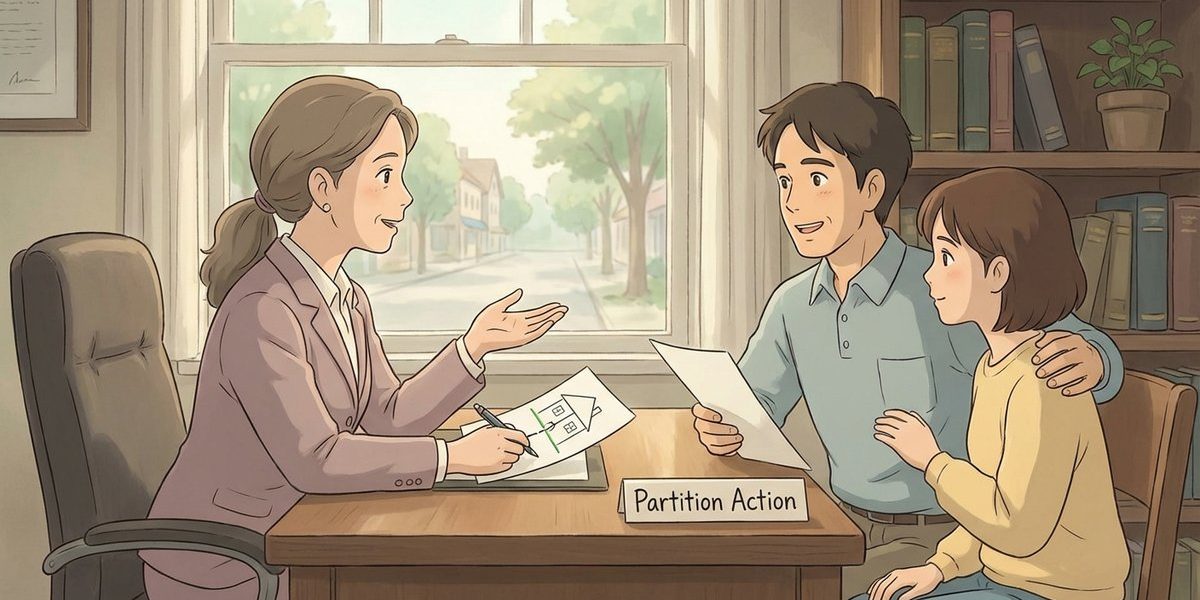
Apply the Rule to the Facts: Here, a letter related to a North Carolina partition action caused confusion, and a phone appointment was arranged for the client to speak with the attorney. A trusted third party can often help by joining the call or communicating basic information, but the attorney will usually need the client’s permission before discussing confidential details about the partition case. Because partition cases are filed in Superior Court and can involve a summons with an answer deadline, the safest plan is to give authorization early so communications do not delay a timely response.
Process & Timing
- Who files: The client (the property co-owner) provides permission. Where: With the attorney handling the North Carolina partition matter (the court case itself is in Superior Court). What: A written authorization (often a short “permission to speak” letter or email) naming the third party, listing contact information, and stating the scope (for example, “may discuss the letter, pleadings, deadlines, and scheduling”). When: As soon as possible after receiving the letter or any summons so the attorney can communicate without delay and protect response deadlines.
- Confirm the scope: The attorney typically confirms whether the third party may (a) receive documents, (b) participate in calls, and (c) relay information, and whether the client must be present for legal advice discussions.
- If decisions are needed: If the third party must make binding decisions (such as giving settlement instructions or signing), the attorney may request documentation showing legal authority before acting on those instructions.
Exceptions & Pitfalls
- Assuming “family can handle it” without permission: Even close relatives usually cannot receive confidential case information unless the client authorizes it.
- Confusing “permission to talk” with “permission to decide”: A simple authorization may allow discussion and document sharing, but it may not allow the third party to direct the attorney or sign agreements.
- Missing the summons answer deadline: A third party helping with calls does not stop court deadlines. If papers were served, the response timeline still runs.
- Overbroad sharing: Allowing a third party to receive all communications can create privacy problems or misunderstandings. Narrow, written limits often prevent conflict later.
Conclusion
In North Carolina partition cases, someone else can often speak with the attorney to help with scheduling and understanding the process, but the attorney generally needs clear client permission before discussing confidential case details. Partition actions proceed in Superior Court and can include a summons with a required answer period, so delays can matter. The most practical next step is to provide a written authorization naming the person allowed to communicate and the topics the attorney may discuss, and to do it promptly after receiving any court papers.
Talk to a Partition Action Attorney
If a co-owned property partition letter or lawsuit has arrived and a trusted family member needs to help communicate with counsel, our firm has experienced attorneys who can help explain the process, protect confidentiality, and identify deadlines. Call us today at (919) 341-7055.
Disclaimer: This article provides general information about North Carolina law based on the single question stated above. It is not legal advice for your specific situation and does not create an attorney-client relationship. Laws, procedures, and local practice can change and may vary by county. If you have a deadline, act promptly and speak with a licensed North Carolina attorney.

