
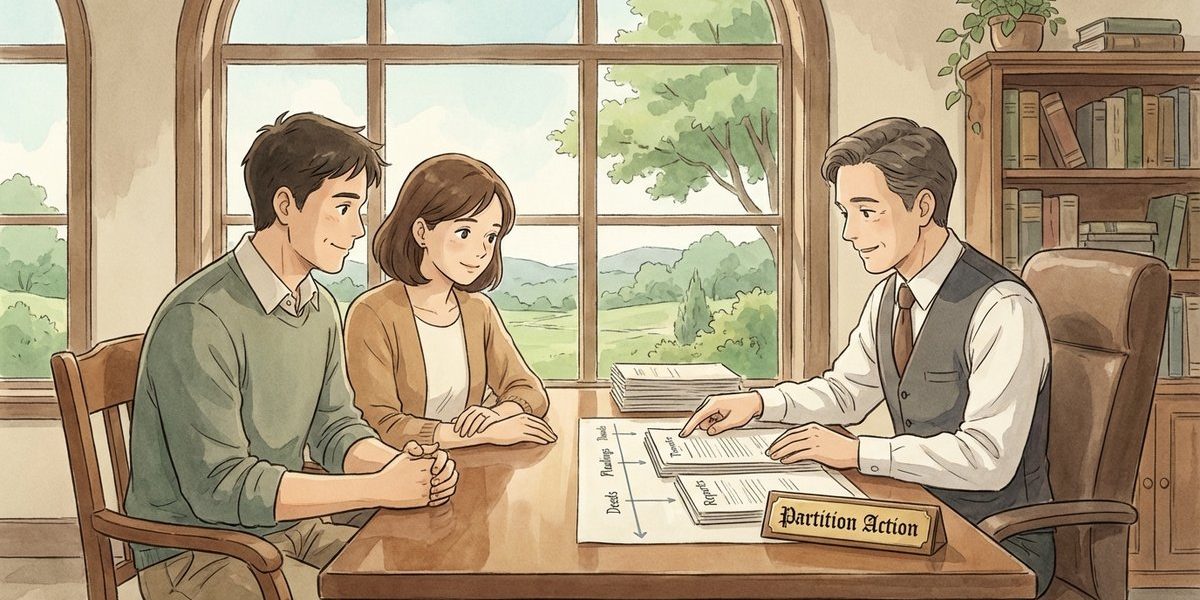
Can I get a second opinion from a new attorney when my case has already been going on for a long time? – North Carolina
Short Answer
Yes. Under North Carolina law, a property co-owner can consult a new attorney for a second opinion at any point in a long-running partition case, including after an offer is on the table. A second-opinion review can focus on whether the case is on the right track, whether deadlines or procedural steps were missed, and whether the proposed outcome is consistent with how partition cases typically work. The key is moving quickly if there is a hearing date, a sale date, or a deadline to respond to an offer or court filing.
Understanding the Problem
In a North Carolina partition action involving co-owned real property, can a co-owner hire a new attorney for a second opinion after the case has been pending for a long time and an offer has been presented that seems unfair? Can the co-owner share documents and a timeline in a video meeting so the new attorney can review whether the process and likely outcome make sense for the type of partition proceeding involved?
Apply the Law
North Carolina partition cases are governed by statute and local court practice, and they often move in stages (pleadings, appointment of a commissioner or referee in some cases, valuation/sale steps, reports, objections, and confirmation). A second-opinion attorney can review the court file, the ownership documents, and the case timeline to evaluate whether the matter is procedurally on track and whether the current proposal aligns with the options the court can order in a partition case. Many partition proceedings are handled through the Clerk of Superior Court, and the specific steps can depend on whether the case is a partition by division (splitting the land) or partition by sale (selling and dividing proceeds).
Key Requirements
- Access to the record: The reviewing attorney needs the key documents (deeds, pleadings, orders, reports, offers, and correspondence) and a clear timeline to understand what has happened and what is next.
- Clarity on the decision point: The second opinion should identify the immediate choice (for example, whether to accept an offer, object to a report, request a different sale process, or change counsel) and what happens if no action is taken.
- Time sensitivity: Partition cases can involve short windows to object, respond, or request a hearing. A second opinion is most useful when obtained before the next deadline or court event.
What the Statutes Say
- N.C. Gen. Stat. Chapter 46 (Partition) – North Carolina’s partition statutes; many provisions were recodified into Chapter 46A for newer cases, so the controlling section can depend on when the proceeding began.
Analysis
Apply the Rule to the Facts: The matter involves co-owned property and has been pending for an extended period, and an offer has been received that does not feel fair. A second-opinion review can focus on (1) what type of partition track the case is on (division vs. sale), (2) whether the court file shows the expected steps were completed in the right order, and (3) whether the offer fits the stage of the case and the court’s available remedies. If the offer is tied to a pending hearing, a commissioner’s report, or a confirmation step, timing becomes the main risk, because missing an objection or response deadline can limit options.
For example, if the case is approaching a sale/confirmation stage, the practical question is often whether the offer should be evaluated against the process the court is using to determine value and sell the property. If instead the case is still early (ownership disputes, pleadings, or appointment issues), the second opinion may focus more on whether the case strategy matches the relief being requested and whether the file supports it.
Process & Timing
- Who requests the second opinion: Any co-owner who is a party to the partition case. Where: A video/web meeting with the new attorney, plus review of the public court file from the Clerk of Superior Court (and, if applicable, the civil file in Superior Court). What: A document packet and timeline (deeds, pleadings, orders, reports, offers, and a list of upcoming dates). When: As soon as possible, and ideally before any scheduled hearing, sale date, or objection/response deadline.
- Record review: The attorney typically compares the timeline to what the court has ordered so far, identifies what stage the case is in, and flags any immediate deadlines, missing documents, or procedural steps that may affect leverage or options.
- Decision and next step: Depending on the second opinion, the next step may be (a) staying with current counsel but changing strategy, (b) hiring new counsel and filing a substitution/notice of appearance as required by local practice, or (c) taking a targeted action in the case (such as responding to a filing, requesting a hearing, or objecting to a report) consistent with the court’s current stage.
Exceptions & Pitfalls
- Waiting until the last minute: A second opinion is less useful if it happens after a key deadline passes or right before a hearing when there is no time to act.
- Incomplete documents: Partition outcomes often turn on the deed history, party status, prior orders, and any reports in the file. Missing even one key order or report can change the analysis.
- Confusing “second opinion” with “substitution of counsel”: A second opinion can be limited to advice and risk assessment. Changing attorneys mid-case may require additional steps and time, and it should be coordinated so the case does not miss deadlines.
- Offer terms that do not match the court process: Some offers look attractive or unfair depending on whether they account for costs, liens, credits/adjustments, or the stage of the sale/confirmation process.
Conclusion
Yes—North Carolina law allows a party in a long-running partition case to consult a new attorney for a second opinion, including by video meeting, to review the court file, documents, and timeline and assess whether the process and proposed outcome make sense for the case’s current stage. The most important practical issue is timing: the review should happen before the next court event or response deadline. A clear next step is to gather the key filings, orders, and the current offer and schedule the review before any pending hearing or objection deadline.
Talk to a Partition Action Attorney
If an ongoing co-ownership property case has dragged on and an offer now feels unfair, a second-opinion review can help clarify what stage the partition case is in, what options still exist, and what deadlines matter most. Our firm has experienced attorneys who can help you understand your options and timelines. Call us today at [919-341-7055].
Disclaimer: This article provides general information about North Carolina law based on the single question stated above. It is not legal advice for your specific situation and does not create an attorney-client relationship. Laws, procedures, and local practice can change and may vary by county. If you have a deadline, act promptly and speak with a licensed North Carolina attorney.

