
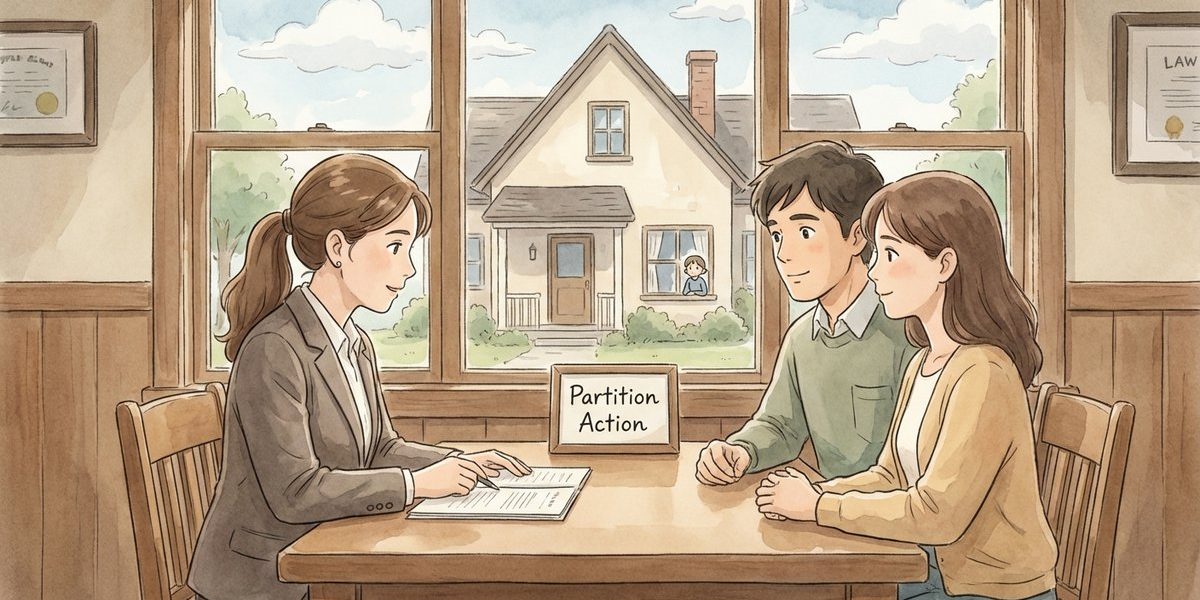
Can I file a partition action to force the sale of a co-owned house even if there is a tenant living there under an active lease? – North Carolina
Short Answer
Yes. In North Carolina, a co-owner can file a partition proceeding in Superior Court to end co-ownership, even if the property is currently rented under an active lease. The lease does not automatically stop the case, but it can affect how the sale is handled and what a buyer receives at closing. In many situations, the property may be sold subject to the tenant’s existing rights, and the court process must account for possession and notice issues.
Understanding the Problem
In North Carolina, can a co-owner of a house use a partition action to force a sale when the house is occupied by a tenant under an active lease? The decision point is whether the existence of a current landlord-tenant relationship prevents the court from ordering partition (including a partition sale) of co-owned real estate. The issue commonly comes up after an inheritance when multiple relatives become owners, one side wants to cash out, and the property is already being rented to a third party.
Apply the Law
North Carolina partition law allows a cotenant (co-owner) to ask the court to divide the property (actual partition) or, if dividing it would cause substantial injury, to order a partition sale and divide the proceeds. The case is typically handled in the Superior Court in the county where the property is located, often with the clerk of superior court overseeing key steps. A tenant’s lease generally does not eliminate a cotenant’s right to seek partition, but it can affect practical issues like marketing, showings, and whether the buyer takes title subject to the lease.
Key Requirements
- Co-ownership interest: The person filing must have an ownership interest (for example, as a tenant in common after an inheritance) in the real property to be partitioned.
- Proper method of partition: The court must choose an appropriate method (actual partition, partition sale, or a combination) based on the facts and what the law allows.
- Sale requires proof of “substantial injury” if division is possible: If a party asks for a sale instead of a physical division, that party generally must prove that dividing the property would cause substantial injury, and the court must make findings supporting a sale.
What the Statutes Say
- N.C. Gen. Stat. § 46A-26 (Methods of partition) – Directs the court to order an appropriate method of partition, including actual partition or partition sale if the legal requirements are met.
- N.C. Gen. Stat. § 46A-75 (Sale in lieu of actual partition) – Allows a partition sale only if the court finds actual partition cannot be made without substantial injury, and places the burden of proof on the party seeking a sale.
- N.C. Gen. Stat. § 46A-85 (Confirmation; effect of deed) – Explains when a confirmation order becomes final and that the deed conveys the title and estate the parties to the proceeding had in the property.
Analysis
Apply the Rule to the Facts: Here, [CLIENT] and at least one other relative co-own an inherited home in North Carolina, and the home is currently rented under an active lease. Co-ownership is the trigger that allows a partition filing, and the tenant’s occupancy does not erase that right. If the home cannot be fairly divided into separate pieces without harming the owners’ interests, the court can order a partition sale under the substantial-injury standard. The active lease is likely to affect the sale logistics and what a purchaser is willing to pay, which can become part of the evidence and negotiation in the case.
Process & Timing
- Who files: Any cotenant who wants to end the co-ownership. Where: Superior Court in the North Carolina county where the property is located (often handled through the clerk of superior court for key partition steps). What: A partition petition describing the property, the owners, and the requested method (actual partition or sale). When: There is not a single universal “days-to-file” deadline for partition itself, but timing matters if a sale is desired before a lease ends or before disputes escalate.
- Case development: The court identifies the parties and ownership interests, and the parties present evidence on whether the property should be physically divided or sold. If a sale is requested, the party seeking sale typically must prove substantial injury from actual partition.
- Sale and closing steps: If the court orders a partition sale, a sale process occurs and then the court confirms the sale. After confirmation becomes final, the purchaser can complete the purchase, and proceeds are distributed among the cotenants based on their shares.
Exceptions & Pitfalls
- Lease and possession issues: A tenant’s right to occupy under a valid lease can affect access for inspections and showings and may reduce the pool of buyers. In some cases, a buyer may take the property subject to the lease rather than receiving immediate vacant possession, depending on the lease terms and how the sale is structured.
- Authority to lease in the first place: If only one co-owner signed the lease without the others’ agreement, that can create disputes about whether the lease binds all owners, whether rent should be shared, and what relief the court should order while the case is pending.
- Proving a sale is necessary: Wanting cash-out is not always enough by itself; the party seeking a sale should be ready to present evidence showing why a physical division would cause substantial injury under the statute.
- Rent accounting and expenses: Partition cases often involve disagreements about who collected rent, who paid taxes/insurance/repairs, and whether any credits or reimbursements should be applied when proceeds are divided.
- Notice and party identification: Missing an owner (including heirs) or misidentifying shares can delay the case and complicate the sale process.
Conclusion
In North Carolina, a cotenant can generally file a partition action to end co-ownership even when a tenant is living in the house under an active lease. The court can order actual partition or, if actual partition would cause substantial injury, a partition sale with proceeds divided among the owners. The lease usually affects possession and sale terms rather than blocking the case. Next step: file a partition petition in the Superior Court in the county where the property is located and be prepared to address the lease and the substantial-injury standard if requesting a sale.
Talk to a Partition Action Attorney
If a co-owned house is rented under an active lease and the co-owners do not agree on whether to sell, our firm has experienced attorneys who can help explain the partition process, likely timelines, and how tenant occupancy can affect a court-ordered sale. Call us today at 919-341-7055.
Disclaimer: This article provides general information about North Carolina law based on the single question stated above. It is not legal advice for your specific situation and does not create an attorney-client relationship. Laws, procedures, and local practice can change and may vary by county. If you have a deadline, act promptly and speak with a licensed North Carolina attorney.

