
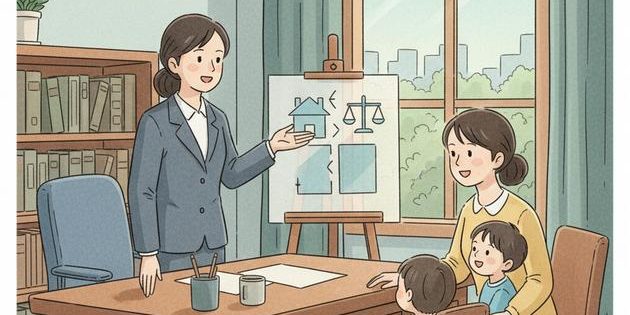
Can child-support arrears or other liens be taken out of the co-owner’s share when the jointly owned home is sold? – North Carolina
Short Answer
Yes, in North Carolina, valid liens against one co-owner (such as a docketed child-support lien or a money judgment lien) can reduce or be paid from that co-owner’s share of the net sale proceeds when a jointly owned home is sold. The lien generally does not come out of the other co-owner’s share unless that co-owner is also liable for the debt or the lien attaches to that co-owner’s interest. In a court-supervised sale (like many partition sales), the clerk of superior court can hold the funds and require liens and competing claims to be resolved before distributing the co-owners’ shares.
Understanding the Problem
In North Carolina, when two co-owners cannot agree to sell a jointly owned home, a sale may happen anyway, including through a partition proceeding. The key decision point is whether child-support arrears or other liens against one co-owner can be paid from that co-owner’s portion of the sale proceeds. This question comes up most often when one co-owner has been living in the property, paying the mortgage and utilities, and refusing to list the home or agree to a buyout, while the other co-owner wants the equity divided fairly.
Apply the Law
Under North Carolina law, many debts become enforceable against real estate only after the creditor takes the legal steps required to create and perfect a lien. Once a lien attaches to a co-owner’s interest (for example, by being docketed on the county judgment docket), it typically must be satisfied or otherwise addressed before that co-owner can receive clear proceeds attributable to that interest. In court-supervised distributions, the clerk of superior court may pay out sale costs first and then distribute remaining proceeds to the persons legally entitled, holding funds if there are disputed claims.
Key Requirements
- A lien must exist and be properly perfected: Child-support arrears and many other debts do not automatically “come out of the sale.” The creditor usually must perfect a lien (often by docketing/indexing it) so it attaches to real property.
- The lien must attach to the debtor co-owner’s real-property interest: A lien against one co-owner generally attaches only to that co-owner’s share or interest in the property, not the entire property as against the non-debtor co-owner.
- Sale proceeds must be distributed through the proper forum and priority: When a sale is handled through a court process (or when a closing attorney identifies recorded liens), proceeds are typically applied to required sale expenses and superior liens first, and the debtor co-owner receives only what remains after liens that attach to that owner’s interest are addressed.
What the Statutes Say
- N.C. Gen. Stat. a7 44-86 (Child-support lien) – Creates a lien for past-due court-ordered child support and explains how the lien is perfected and attaches to real property when docketed and indexed.
- N.C. Gen. Stat. a7 44-87 (Discharge of child-support lien) – Lists ways a child-support lien can be discharged, including filing an acknowledgment after satisfaction or depositing funds with the clerk while contesting validity.
- N.C. Gen. Stat. a7 1-234 (Judgment docketing; lien) – Provides that a properly docketed judgment becomes a lien on the debtor’s real property in the county where it is docketed (generally for 10 years from entry, subject to certain exceptions).
- N.C. Gen. Stat. a7 1-339.70 (Disposition of proceeds; surplus) – Explains how proceeds from an execution sale are applied and that the clerk may hold surplus funds if entitlement is unclear or adverse claims exist.
Analysis
Apply the Rule to the Facts: In the stated scenario, the uncooperative co-owner has an ownership share that could be subject to recorded liens such as a child-support lien or a docketed money judgment. If a lien has been properly perfected so it attaches to that co-owner’s real-property interest, it can be paid or satisfied from that co-owner’s portion of the net proceeds when the home is sold. The other co-owner’s share is usually not reduced by the uncooperative co-owner’s personal liens, unless that other co-owner is also a debtor on the lien or the lien otherwise legally attaches to that other co-owner’s interest.
Process & Timing
- Who files: In a partition case, a co-owner (tenant in common or joint tenant) typically starts the special proceeding. Where: Office of the Clerk of Superior Court in the county where the property is located. What: A partition petition (and related notices) that asks the clerk to partition the property, often by sale if division is not practical. When: As soon as there is an impasse on sale or buyout and there is a need to preserve equity or stop ongoing disputes.
- Identify liens and claims to proceeds: Before closing or before distribution of court-held funds, recorded liens are identified (commonly through a title search and/or court records). If there is a child-support lien, it typically exists because a verified statement of delinquency was docketed and indexed on the judgment docket.
- Distribution after sale: Sale expenses and superior claims are addressed first. Then the remaining funds are distributed to the persons legally entitled. If there are adverse claims or uncertainty (for example, competing lien claims or a dispute over what portion belongs to each co-owner), the clerk can hold the disputed funds until the issue is resolved through the proper procedure.
Exceptions & Pitfalls
- No perfected lien: Some debts (including support arrears in some situations) may exist but not be perfected as a real-property lien in the county where the home sits. If no lien attaches, a closing attorney or the clerk may not have authority to “just deduct it” from proceeds without a legal basis.
- Wrong county or indexing problems: Judgment and child-support liens generally depend on docketing and indexing. If the lien is not docketed in the property’s county (or not properly indexed), enforcement against that real property can become disputed.
- Joint debt versus individual debt: If both co-owners signed a mortgage, deed of trust, or other obligation, that is not “one co-owner’s lien.” It is a shared debt and is usually paid off before either co-owner receives proceeds.
- Competing claims within partition: Separate from third-party liens, co-owners often argue about credits and reimbursements (for example, one co-owner paying the mortgage, taxes, insurance, or repairs). Those claims can change what each co-owner receives, even if no outside lien exists.
- Support lien contest and discharge steps: Child-support liens have specific statutory procedures for contesting and discharging them, including timelines and, in some cases, depositing funds with the clerk while the dispute is heard.
Conclusion
In North Carolina, child-support arrears and other recorded liens can usually be satisfied from the debtor co-owner’s share of sale proceeds when a jointly owned home is sold, including in a partition sale, as long as the lien is properly perfected and attaches to that co-owner’s real-property interest. The non-debtor co-owner’s share is typically not reduced for the other co-owner’s personal liens. A practical next step is to order a title search and lien check early so lien priority and payoff issues can be addressed before distribution.
Talk to a Partition Action Attorney
If someone is blocking the sale of a jointly owned home and there are concerns about child-support arrears, judgment liens, or other liens affecting what each co-owner will receive, an attorney can help map out options, likely timelines, and the steps needed for a court-supervised sale and distribution. Call us today at (919) 341-7055.
Disclaimer: This article provides general information about North Carolina law based on the single question stated above. It is not legal advice for your specific situation and does not create an attorney-client relationship. Laws, procedures, and local practice can change and may vary by county. If you have a deadline, act promptly and speak with a licensed North Carolina attorney.

