
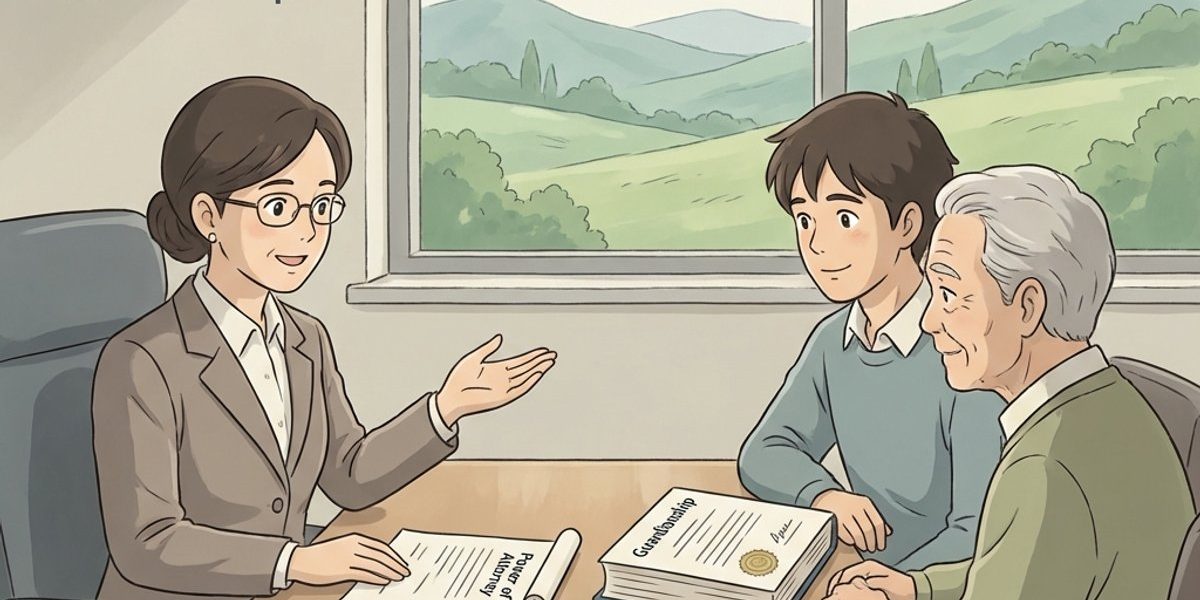
What is the difference between guardianship and a power of attorney, and which one do I need? – North Carolina
Short Answer
In North Carolina, a power of attorney is a private document where a competent adult gives someone authority to act for them, usually without court involvement. Guardianship is a court process where the clerk of superior court first finds an adult incompetent and then appoints a guardian with court-supervised authority. A power of attorney is often the simpler tool when the person can still sign and understand the document. Guardianship is usually needed when the person cannot make or communicate decisions and no workable power of attorney is in place (or it is being misused).
Understanding the Problem
Under North Carolina guardianship law, the decision usually turns on one question: can the adult still legally sign a power of attorney that matches the help needed, or is a court appointment required because the adult cannot manage personal or financial decisions. The issue comes up when a family member needs authority to handle medical decisions, pay bills, manage benefits, or protect property, and it is unclear whether a signed document is enough or whether the clerk of superior court must step in.
Apply the Law
In North Carolina, guardianship is a court-supervised relationship created after an incompetency proceeding. The clerk of superior court has original jurisdiction over adult incompetency and guardianship matters, and the clerk retains ongoing oversight after a guardian is appointed. A power of attorney, by contrast, is authority granted by the person (the “principal”) to an “agent” (also called an attorney-in-fact) and generally avoids court unless a dispute arises. In practice, guardianship is more intrusive but can be necessary when the person cannot validly grant authority or when third parties require court authority.
Key Requirements
- Capacity to grant authority: A power of attorney depends on the adult being competent enough at signing to understand what authority is being given and to whom.
- Court finding of incompetence (for guardianship): Guardianship generally requires a formal incompetency process and an order before anyone gets guardianship powers.
- Matching the tool to the need (person vs. money): Guardianship can be tailored (guardian of the person, guardian of the estate, or general guardian), while powers of attorney are typically separated into financial authority and health care authority.
What the Statutes Say
- N.C. Gen. Stat. § 35A-1203 (Clerk jurisdiction over guardianship) – gives the clerk of superior court original jurisdiction to appoint guardians for incompetent adults and to supervise the case after appointment.
- N.C. Gen. Stat. § 35A-1102 (Exclusive procedure for adjudicating incompetence) – sets guardianship-related incompetency determinations into a specific statutory procedure.
- N.C. Gen. Stat. § 35A-1210 (Application for appointment of guardian) – describes what information is typically included when asking the clerk to appoint a guardian.
- N.C. Gen. Stat. § 47-28 (Recording powers of attorney for real property) – requires recording a power of attorney (or certified copy) before an agent transfers real estate under that authority.
- N.C. Gen. Stat. § 32A-23 (Health care power of attorney statute framework) – places health care powers of attorney under a separate statutory scheme.
Analysis
Apply the Rule to the Facts: The facts indicate a caller wants help with a North Carolina guardianship case, which usually means the concern is that the adult cannot sign valid documents or that existing documents are not solving the problem. If the adult can still understand and sign a power of attorney, that route may avoid a court incompetency finding. If the adult cannot understand what is being signed, or if institutions will not accept the document, a guardianship filing with the clerk of superior court is often the path to obtain clear legal authority.
Process & Timing
- Who files: typically a family member or other interested person. Where: the Clerk of Superior Court in the county where the respondent lives. What: a petition to adjudicate incompetence and an application to appoint a guardian (often filed together). When: as soon as there is a real need for decision-making authority and no workable power of attorney is in place.
- Hearing and appointment: the clerk schedules an incompetency hearing and, if incompetence is found, decides what type of guardianship is needed (guardian of the person, guardian of the estate, or general guardian) and who should serve.
- Ongoing supervision: after appointment, the clerk continues to supervise the guardianship, and the guardian must follow court rules and orders, especially when handling money or property.
Exceptions & Pitfalls
- Assuming a power of attorney works after capacity is gone: if the adult cannot understand the document at signing, the power of attorney may be challenged or rejected, pushing the case toward guardianship.
- Using the wrong tool for the job: a health care power of attorney and a financial power of attorney cover different decisions; gaps can remain even when one document exists.
- Real estate problems: even with a valid power of attorney, transferring real property can require recording the power of attorney with the register of deeds under North Carolina law.
- Overreaching requests: asking for broader guardianship powers than necessary can create conflict and delay; courts generally focus on the least intrusive arrangement that still protects the adult.
- Family disputes and allegations of misuse: when relatives disagree or suspect financial exploitation, guardianship may be used to create court oversight, but the process can become contested and slower.
Conclusion
In North Carolina, a power of attorney is a private authorization signed by a competent adult, while guardianship is a court-supervised appointment that usually follows an incompetency finding by the clerk of superior court. If the adult can still understand and sign the right documents, a power of attorney may be enough. If the adult cannot validly sign or the situation needs court oversight, guardianship is often required. The next step is to file the incompetency petition and guardianship application with the Clerk of Superior Court as soon as authority is needed.
Talk to a Guardianship Attorney
If a family is trying to decide between a power of attorney and a court guardianship in North Carolina, an attorney can help evaluate capacity, identify the right type of authority (medical vs. financial), and explain what the clerk of superior court will require. Call us today at [CONTACT NUMBER].
Disclaimer: This article provides general information about North Carolina law based on the single question stated above. It is not legal advice for your specific situation and does not create an attorney-client relationship. Laws, procedures, and local practice can change and may vary by county. If you have a deadline, act promptly and speak with a licensed North Carolina attorney.

