
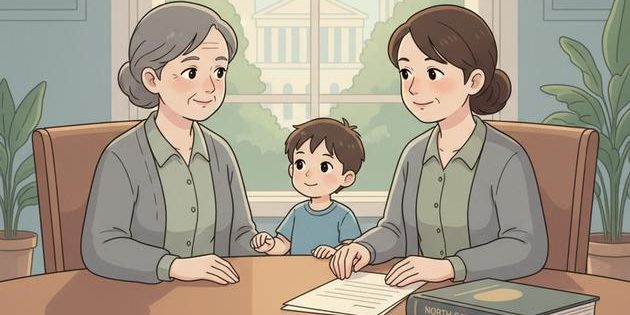
What happens if my grandchild is living with a non-parent caregiver but there is no court-appointed guardian? – North Carolina
Short Answer
In North Carolina, a non-parent caregiver can physically care for a child day-to-day without a court order, but that caregiver may not have the legal authority needed for bigger decisions like enrolling the child in school, consenting to medical treatment, or signing forms for benefits. If there is no surviving parent with legal custody (a “natural guardian”), a guardian can be appointed through the Clerk of Superior Court, and the clerk’s decision centers on the child’s best interests. If safety is a concern, a separate juvenile court process through the county department of social services may apply.
Understanding the Problem
In North Carolina, what happens when a minor child is living with a non-parent caregiver after a parent dies, but no court has appointed a guardian? Who has the legal right to make decisions for the child, and what steps can be taken to create legal authority for school, medical care, and other paperwork that often comes up after a parent’s death? The decision point is whether a court needs to appoint a guardian because the child has no parent with legal authority to act.
Apply the Law
North Carolina handles most “ordinary” minor guardianships through the Clerk of Superior Court under Chapter 35A. A clerk can appoint a guardian of the person (for care and decision-making), a guardian of the estate (for money or property), or a general guardian (both), but the clerk may appoint a guardian of the person or a general guardian only when the minor has no “natural guardian.” The clerk holds a hearing, can consider a wide range of evidence (including affidavits and documents), and must base the appointment on the child’s best interests.
Key Requirements
- No natural guardian (or a limited need): Appointment of a guardian of the person (or a general guardian) generally requires that no parent with legal authority is available to serve as the child’s natural guardian.
- Proper application to the clerk: A guardianship starts with an application filed with the Clerk of Superior Court that includes core identifying information, the parent’s death information, interested persons, and the reasons guardianship is needed.
- Best-interests determination after a hearing: The clerk must receive enough information to decide what type of guardian is needed and who should serve, using a best-interests standard.
What the Statutes Say
- N.C. Gen. Stat. § 35A-1221 (Application before clerk) – Allows an interested person to apply to the Clerk of Superior Court to appoint a guardian for a minor and lists what the application should include.
- N.C. Gen. Stat. § 35A-1223 (Hearing before clerk) – Requires a hearing where the clerk receives evidence about whether a guardian is needed and who should serve.
- N.C. Gen. Stat. § 35A-1224 (Criteria for appointment of guardians) – Explains when the clerk may appoint different types of guardians and emphasizes the child’s best interests.
- N.C. Gen. Stat. § 7B-2001 (Jurisdiction) – Addresses the district court’s exclusive, original jurisdiction over abuse, neglect, dependency, termination of parental rights, and related juvenile matters.
Analysis
Apply the Rule to the Facts: Here, a parent has died and the child is staying with a non-parent caregiver, with no known court-appointed guardian. If no other parent with legal authority is available, that situation often triggers the need for a Chapter 35A guardianship so someone has clear authority to make education and medical decisions and to complete required applications and forms. Even if the deceased parent left no assets, a guardian of the person may still be needed because decision-making authority is separate from whether the child has property.
Process & Timing
- Who files: Any interested person (often a relative or the current caregiver). Where: The Clerk of Superior Court in the child’s North Carolina county of residence. What: A written guardianship application that includes the child’s identifying information, the deceased parent’s death information, and the reasons guardianship is needed. When: As soon as decision-making authority is needed for school, medical care, insurance, or benefit-related paperwork.
- Hearing and evidence: The clerk schedules a hearing. The clerk can consider testimony and documents (including written statements) to decide whether a guardian is required, what type, and who should serve.
- Appointment and proof of authority: If the clerk appoints a guardian, the court issues documentation of the appointment (often called “letters” in practice) that schools, doctors, and agencies commonly request as proof of authority.
Exceptions & Pitfalls
- A surviving parent may change the analysis: If another parent is living and has not lost parental rights, that parent may be the child’s natural guardian, which can limit whether a clerk can appoint a guardian of the person or general guardian.
- Guardianship vs. “physical care”: A caregiver can provide day-to-day supervision without being a guardian, but schools, doctors, and agencies often require proof of legal authority for major decisions or releases of records.
- Using the wrong court process: Chapter 35A guardianship goes through the Clerk of Superior Court. Safety concerns involving abuse, neglect, or dependency may require involvement of the county department of social services and district court under Chapter 7B instead of (or in addition to) a clerk guardianship.
- Incomplete interested-person information: The application must list parents (if living) and other interested persons to the extent known. Missing names or addresses can slow the case and create notice problems.
Conclusion
In North Carolina, when a child lives with a non-parent caregiver and no guardian has been appointed, the caregiver may lack legal authority for major decisions even if the day-to-day living arrangement is stable. If the child has no natural guardian, an interested person can apply to the Clerk of Superior Court for appointment of a guardian, and the clerk decides what type of guardian is needed based on the child’s best interests. The practical next step is to file a guardianship application with the Clerk of Superior Court in the child’s county as soon as decision-making authority is needed.
Talk to a Guardianship Attorney
If a grandchild is living with a non-parent caregiver and there is no court-appointed guardian, our firm’s experienced attorneys can help explain which court process fits the situation and what documents and timelines matter. Call us today at (919) 341-7055.
Disclaimer: This article provides general information about North Carolina law based on the single question stated above. It is not legal advice for your specific situation and does not create an attorney-client relationship. Laws, procedures, and local practice can change and may vary by county. If you have a deadline, act promptly and speak with a licensed North Carolina attorney.

