
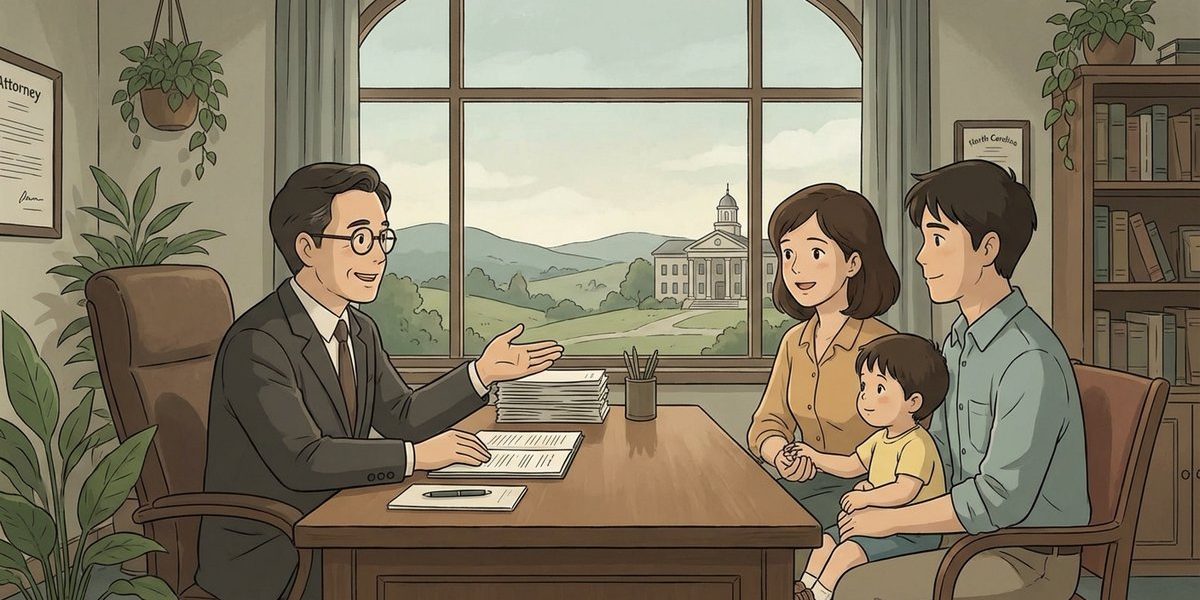
What do I need to prove to the court to get guardianship approved? – North Carolina
Short Answer
In North Carolina, guardianship is approved by the Clerk of Superior Court after a hearing where evidence shows a guardian is required and the proposed guardian is the right fit for the child’s needs. For a minor, the court focuses on the child’s best interest and whether the type of guardianship requested is legally available (for example, a guardian of the person is generally only available if the child has no “natural guardian”). The applicant should be prepared to prove why guardianship is needed, what decisions must be made, and why the proposed guardian can safely and responsibly make them.
Understanding the Problem
In North Carolina guardianship cases involving a child, the central question is: what must be shown to the Clerk of Superior Court to approve a guardianship appointment. The actor is the person asking to be appointed guardian, and the decision-maker is the Clerk of Superior Court in the county where the child lives. The action requested is an order appointing a guardian (of the person, of the estate, or both). The key trigger is the filing of a guardianship application and the court’s determination at the hearing that a guardianship is required and that the appointment serves the child’s best interest.
Apply the Law
North Carolina treats a minor guardianship as a special proceeding handled in the Office of the Clerk of Superior Court. At the hearing, the clerk receives evidence needed to decide (1) whether a guardian is required, (2) what type of guardianship is needed (person, estate, or general), and (3) who should serve, based on the child’s best interest. The clerk can consider testimony and documents the clerk finds helpful, including written materials, affidavits, and records.
Key Requirements
- A legally available type of guardianship: The request must match what North Carolina law allows for that child (for example, a guardian of the person or a general guardian is generally limited to a minor who has no natural guardian).
- A real need for a guardian: Evidence must show why a guardianship is required (what decisions cannot be made without a court-appointed guardian, and what risks exist without one).
- Best interest and suitability of the proposed guardian: Evidence must support that the proposed guardian is appropriate and that the appointment fits the child’s needs, including practical ability to care for the child and handle any property or benefits involved.
What the Statutes Say
- N.C. Gen. Stat. § 35A-1203 (Clerk’s jurisdiction over guardianships) – Gives the Clerk of Superior Court original jurisdiction over minor guardianships (including guardians of the estate for minors and, in limited situations, guardians of the person/general guardians for minors).
- N.C. Gen. Stat. § 35A-1221 (What the application must include) – Requires the application to list basic identifying information, interested persons (including parents), the reason guardianship is sought, the type requested, and (if relevant) assets and liabilities.
- N.C. Gen. Stat. § 35A-1223 (Hearing and evidence; best interest) – Directs the clerk to receive evidence needed to decide whether a guardian is required and who should serve, and allows consideration of testimony and documents the clerk finds necessary to determine the minor’s best interest.
- N.C. Gen. Stat. § 35A-1224 (Criteria for appointment) – Explains when different types of guardians may be appointed for a minor and emphasizes that the appointment must be based on the minor’s best interest.
Analysis
Apply the Rule to the Facts: The known facts are limited: a parent is asking about guardianship for a child who lives separately, but the reason guardianship is needed is not yet clear. Under North Carolina law, the clerk will still expect evidence of a concrete need for guardianship (what decisions must be made and why a court order is necessary), and the clerk will evaluate whether the requested type of guardianship is legally available given the child’s parental situation. The clerk will also focus on best interest factors and whether the proposed guardian can meet the child’s day-to-day and (if applicable) financial needs.
Neutral examples: If the issue is mainly day-to-day care and consent for services, the evidence usually focuses on the child’s living situation and why a guardian of the person (if available) is needed. If the issue is mainly money (for example, a settlement, inheritance, or benefits payable to the child), the evidence often focuses on the child’s assets and why a guardian of the estate is needed to receive and manage funds under court supervision.
Process & Timing
- Who files: Any qualified person (including a parent) may file. Where: Office of the Clerk of Superior Court in the child’s county of residence in North Carolina. What: An application that includes the child’s identifying information, the parents and other interested persons, the reason guardianship is sought, the type of guardianship requested, and (if relevant) a general statement of assets and liabilities. When: North Carolina law does not set a single universal “file by” deadline for minor guardianships; timing usually depends on the urgency of the child’s needs and the clerk’s calendar.
- Hearing and evidence: The clerk schedules a hearing and receives evidence to decide whether a guardian is required and who should be appointed. Evidence often includes sworn testimony and practical documents that show the child’s needs, living arrangement, and any financial issues.
- Appointment: If the clerk approves the petition, the clerk enters an order appointing the appropriate guardian (person, estate, or general) and sets any required conditions (which can include reporting and, for estate guardianships, financial safeguards).
Exceptions & Pitfalls
- Requesting the wrong type of guardianship: In North Carolina, a guardian of the person or a general guardian is generally only available for a minor who has no natural guardian. If a parent still has legal authority as a natural guardian, the clerk may view a “person” guardianship request as a mismatch and may require a different approach or different relief.
- Not explaining the “why” clearly: The application must state the reasons guardianship is sought. A vague reason (or no reason) often leads to delays, continuances, or denial because the clerk must be able to find that a guardian is required.
- Overlooking financial details: If the child has money or property, the clerk will typically expect basic information about assets, liabilities, and the child’s needs, and may require additional safeguards for management of funds.
- Ignoring existing custody or court orders: If there is an existing custody order or prior guardianship, the clerk will want to see it and understand how the requested guardianship fits with (or conflicts with) that order.
- Assuming guardianship is the same as custody: Guardianship and custody can overlap in day-to-day effect, but they are different legal tools with different courts, procedures, and ongoing oversight. Mixing the two can cause filing in the wrong place or asking for relief the clerk cannot grant.
For readers also looking for the practical filing side, see what paperwork and court steps are required and what documents and information are needed.
Conclusion
To get a minor guardianship approved in North Carolina, the Clerk of Superior Court must receive evidence that a guardianship is required, that the type of guardianship requested is legally available for the child’s situation, and that appointing the proposed guardian is in the child’s best interest. The most important next step is to file a complete guardianship application with the Clerk of Superior Court in the child’s county of residence, including a clear statement of the reason guardianship is needed and (if applicable) basic information about the child’s assets.
Talk to a Guardianship Attorney
If a child is living separately and a court order is needed so an adult can make decisions for the child or manage the child’s money, our firm has experienced attorneys who can help explain options and timelines in North Carolina. Call us today at [919-341-7055].
Disclaimer: This article provides general information about North Carolina law based on the single question stated above. It is not legal advice for your specific situation and does not create an attorney-client relationship. Laws, procedures, and local practice can change and may vary by county. If you have a deadline, act promptly and speak with a licensed North Carolina attorney.

