
Are there any options to require inpatient treatment if an adult is not safe but keeps checking themself out? – North Carolina
Short Answer
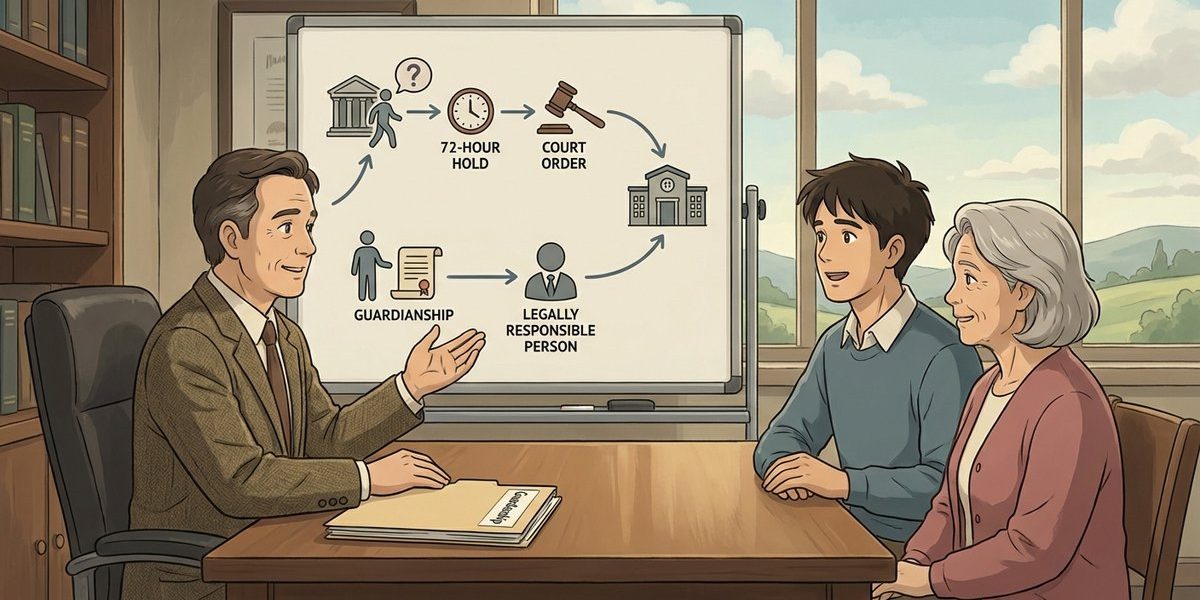
Yes. In North Carolina, an adult who voluntarily admits themself to a 24-hour facility generally has the right to request discharge, but the facility can hold the person for up to 72 hours after a written discharge request while the team seeks a court order to hold the person under involuntary commitment procedures. Separately, if the adult lacks capacity and is legally “incompetent,” a legally responsible person (often a guardian) may be able to consent to admission and treatment decisions, with court review required in certain locked or highly restrictive settings. Which option fits depends on whether the issue is immediate dangerousness (commitment) or longer-term inability to make safe decisions (guardianship/capacity).
Understanding the Problem
In North Carolina guardianship situations, the recurring problem is often this single decision point: can an adult relative be kept in a 24-hour inpatient setting when the person is not safe, but keeps leaving treatment settings after admission? The issue usually comes up after repeated crisis calls, emergency responder involvement, and short inpatient stays that end because the adult signs out or demands discharge. The legal options turn on whether the adult is in a voluntary status with discharge rights, whether the treatment team can convert the situation into a court-supervised hold, or whether a separate capacity-based process is needed so someone else can make admission and treatment decisions.
Apply the Law
North Carolina has two main legal pathways that can address repeated “check-outs” from inpatient care. First, under the mental health statutes, a voluntary patient in a 24-hour facility can request discharge, but the facility may hold the person for a short window (up to 72 hours after a written request) to seek a court order to hold the person under involuntary commitment procedures. Second, if the adult is legally “incompetent,” an authorized decision-maker (often a guardian or other legally responsible person) can act for the adult in applying for admission and consenting to treatment, and the court may review and authorize continued admission in certain restrictive settings for a defined period.
Key Requirements
- Voluntary vs. court-ordered status: A voluntary admission usually comes with a discharge right; a court-ordered hold requires a separate legal process.
- Capacity and legal authority: If the adult lacks capacity and has been adjudicated incompetent, a legally responsible person may be able to make admission and treatment decisions on the adult’s behalf.
- Timing triggers: A written discharge request from a 24-hour facility can start a short “hold” window while the facility seeks a court order; restrictive admissions of an incompetent adult can trigger a court hearing within a set timeframe.
What the Statutes Say
- N.C. Gen. Stat. § 122C-212 (Discharges) – A voluntary patient who requests discharge from a 24-hour facility generally must be discharged, but the facility may hold the person for up to 72 hours after a written discharge request.
- N.C. Gen. Stat. § 122C-217 (Discharge of individuals determined to be incapable) – When a person admitted as “incapable” regains capacity or requests discharge, the facility may hold up to 72 hours, but must release unless an order is obtained under the involuntary commitment parts of the statute.
- N.C. Gen. Stat. § 122C-231 (Admissions of incompetent adults) – For an incompetent adult, the legally responsible person acts for the adult in applying for admission, consenting to treatment when consent is required, and receiving notices.
- N.C. Gen. Stat. § 122C-232 (Judicial determination for certain restrictive admissions) – When an incompetent adult is admitted to certain restrictive 24-hour facilities, the district court must hold a hearing within 10 days, and the court may authorize continued admission for up to 180 days if the legal standard is met.
- N.C. Gen. Stat. § 35A-1102 (Incompetency procedure) – Chapter 35A provides the exclusive procedure to have an adult adjudicated incompetent (a common gateway to guardianship authority).
- N.C. Gen. Stat. § 108A-106 (Emergency intervention for disabled adults) – DSS may seek a court order for emergency protective services for a disabled adult in an emergency when the adult lacks capacity and no authorized person is available and willing to consent, but this is not a mental health commitment process.
Analysis
Apply the Rule to the Facts: The facts describe repeated crises with emergency responders and short treatment stays where the adult can check themself out. That pattern often means the adult is being treated as a voluntary patient, which triggers discharge rights and makes long inpatient stays difficult without a court order. Under North Carolina law, one practical “pressure point” is the written discharge request: in a 24-hour facility, the facility can hold up to 72 hours after that request while the treatment team seeks an involuntary commitment order. If the underlying issue is ongoing inability to make safe decisions (not just a single crisis), a guardianship/incompetency track may be needed so a legally responsible person can act for the adult in admission and treatment decisions, with required court review in certain restrictive placements.
Process & Timing
- Who initiates: Often the treating facility (through its responsible professional) initiates the request to keep the person beyond a voluntary discharge window; family members often provide the incident history and safety concerns. Where: The district court process is typically tied to the county where the facility is located for certain hearings, and guardianship/incompetency matters are filed with the Clerk of Superior Court. What: The key practical document in a voluntary 24-hour facility is the written request for discharge, which starts the short hold window.
- Short-term hold decision: After a discharge request, the facility may hold the person for up to 72 hours while it seeks a court order under the involuntary commitment procedures; if no order is obtained, the facility generally must discharge at the end of that window.
- Longer-term authority: If the adult is (or may be) legally incompetent, a guardianship/incompetency case under Chapter 35A can establish who has authority to make decisions. For certain restrictive 24-hour admissions of an incompetent adult, the district court must hold a hearing within 10 days after admission, and the court can authorize continued admission for up to 180 days if the standard is met.
Exceptions & Pitfalls
- “Not safe” is not the same as “court-order eligible”: A family’s safety concern may be real, but the facility still must follow the statutory process and timelines to hold someone beyond voluntary status.
- Guardianship is not an instant fix for a crisis: Guardianship/incompetency can provide longer-term decision-making authority, but it usually does not move as fast as an emergency psychiatric hold situation.
- APS/DSS limits: Adult Protective Services can sometimes seek emergency protective services in extreme situations when the adult lacks capacity and no authorized person is available, but the statute also states that this protective-services process is not a way to commit someone to a mental health facility.
- Paperwork and notice issues: For incompetent-adult admissions, facilities have notice and court-scheduling requirements; missing steps can force discharge or delay continued treatment authorization.
Conclusion
North Carolina law does provide options when an adult repeatedly checks out of inpatient care despite serious safety concerns. A voluntary patient in a 24-hour facility can request discharge, but the facility may hold the person up to 72 hours after a written request while seeking a court order to continue holding the person under involuntary commitment procedures. If the problem is ongoing incapacity, a Chapter 35A incompetency/guardianship case may be the next step so a legally responsible person can act for the adult, with court review required in certain restrictive admissions.
Talk to a Guardianship Attorney
If a family is dealing with an adult relative who is not safe, cycles through crises, and keeps leaving treatment settings, our firm has experienced attorneys who can help explain the North Carolina options, timelines, and court processes that may apply. Call us today at [919-341-7055].
Disclaimer: This article provides general information about North Carolina law based on the single question stated above. It is not legal advice for your specific situation and does not create an attorney-client relationship. Laws, procedures, and local practice can change and may vary by county. If you have a deadline, act promptly and speak with a licensed North Carolina attorney.

