
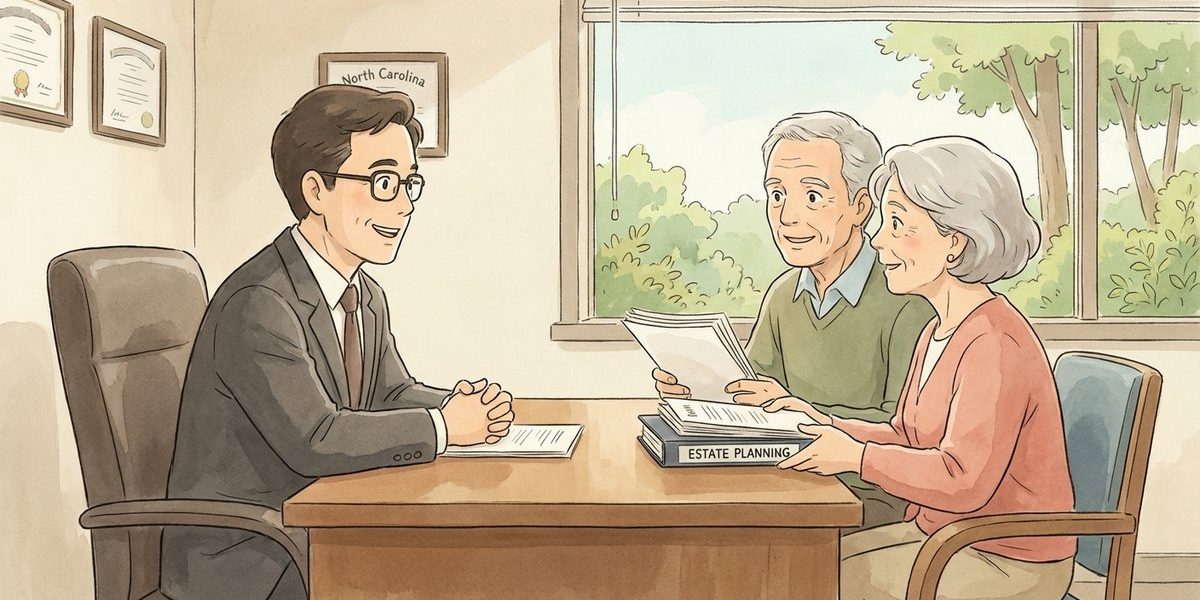
What information and documents should I gather before meeting with a trust attorney? – North Carolina
Short Answer
Before meeting with a North Carolina trust attorney, gather (1) basic family and decision-maker information, (2) a clear list of assets and how each asset is titled, and (3) copies of any existing estate planning documents and beneficiary designations. The goal is to let the attorney confirm what a trust can and cannot control and to draft instructions that match the assets that will actually be placed into the trust. If a phone consultation happens first, most of this can be provided as a simple written summary, with documents sent later.
Understanding the Problem
In North Carolina estate planning, the key question is what information is needed to draft a trust that matches the property involved and the people who will manage and benefit from it. The decision point is whether enough details exist about assets, beneficiaries, and the chosen trustee to allow a trust to be drafted accurately and efficiently. The same preparation helps whether the first meeting is a phone consultation or an in-person signing meeting.
Apply the Law
In North Carolina, a trust is a legal arrangement that separates who manages property (the trustee) from who benefits from it (the beneficiaries). A trust document must clearly identify the people involved and the property intended to be held and managed under the trust’s terms. In practice, trust planning also requires confirming how each asset is owned now, because some assets pass by beneficiary designation or joint ownership rather than by a trust, and many trusts only work as intended after assets are properly transferred into the trust.
Key Requirements
- People and roles are identified: Names and contact information for the person creating the trust, the trustee(s), successor trustee(s), and the beneficiaries.
- Assets and ownership are understood: A list of assets and how each is titled (individual name, joint ownership, business entity, payable-on-death/transfer-on-death, etc.).
- Instructions are clear enough to draft: A plain-English description of what should happen during life (if applicable) and at death, including any special timing or conditions for distributions.
What the Statutes Say
- N.C. Gen. Stat. § 31-47 (Testamentary additions to trusts) – Allows a will to pour assets into a trust identified in the will, which is one reason attorneys often ask for existing wills and trust documents and discuss how assets will be directed into the trust.
- N.C. Gen. Stat. § 33B-2 (Custodial trust; general) – Describes a specific type of trust arrangement created by written transfer or declaration, highlighting why accurate ownership and transfer details matter when setting up trust-based planning.
Analysis
Apply the Rule to the Facts: Here, the goal is to set up a trust and start with a phone consultation, after prior discussions in another jurisdiction. The most useful preparation is a complete asset-and-title summary and copies of any existing planning documents, because those items drive what the North Carolina trust can control and what additional steps may be needed after signing. Bringing prior out-of-state drafts or notes can also help the attorney understand the intended structure, even if the final documents must be tailored to North Carolina law and local practice.
Process & Timing
- Who provides information: The person creating the trust (and often a spouse/partner if planning is coordinated). Where: The attorney’s office (phone consult first is common in North Carolina). What: A written asset list, copies of existing estate planning documents, and a list of proposed trustees/beneficiaries. When: Ideally before the first substantive drafting meeting so the attorney can confirm scope and spot missing items.
- Drafting and review: The attorney prepares a draft trust (and often related documents such as a will and powers of attorney). The draft is reviewed for trustee powers, distribution instructions, and practical administration details.
- Signing and funding steps: After signing, the next step is usually “funding” the trust (retitling assets or updating beneficiary designations where appropriate). The attorney typically provides a funding checklist and coordinates deeds or assignment documents as needed.
Exceptions & Pitfalls
- Missing “how it’s titled” information: A list of assets without ownership details often leads to a trust that does not control key property until additional transfers are done.
- Out-of-date beneficiary designations: Life insurance and retirement accounts commonly pass by beneficiary designation, not by the trust, so the attorney typically needs current statements or confirmation of beneficiaries to avoid conflicts.
- Unclear trustee plan: Naming a trustee without confirming availability, location, and successor choices can create practical problems later; providing full names and contact details helps.
- Not bringing existing documents: Prior wills, trusts, powers of attorney, and prenuptial/postnuptial agreements can affect what the new trust should say and how it should coordinate with the rest of the plan.
- Tax questions handled informally: Trust planning can raise tax issues, but tax advice should come from a qualified tax attorney or CPA; the planning team can coordinate roles to avoid mistakes.
Conclusion
In North Carolina, the most helpful preparation for a trust meeting is a complete picture of (1) the people involved (trustee, successors, and beneficiaries), (2) the assets involved and how each asset is titled, and (3) any existing estate planning documents and beneficiary designations that the new trust must coordinate with. The practical next step is to send the attorney an asset-and-title summary and copies of existing documents before the drafting meeting so the trust can be built around the property that will actually be placed into it.
Talk to a Estate Planning Attorney
If setting up a trust feels detailed or complex, our firm has experienced attorneys who can help organize the information needed, explain options, and map out realistic timelines for drafting and funding. Call us today at [CONTACT NUMBER].
Disclaimer: This article provides general information about North Carolina law based on the single question stated above. It is not legal advice for your specific situation and does not create an attorney-client relationship. Laws, procedures, and local practice can change and may vary by county. If you have a deadline, act promptly and speak with a licensed North Carolina attorney.

