
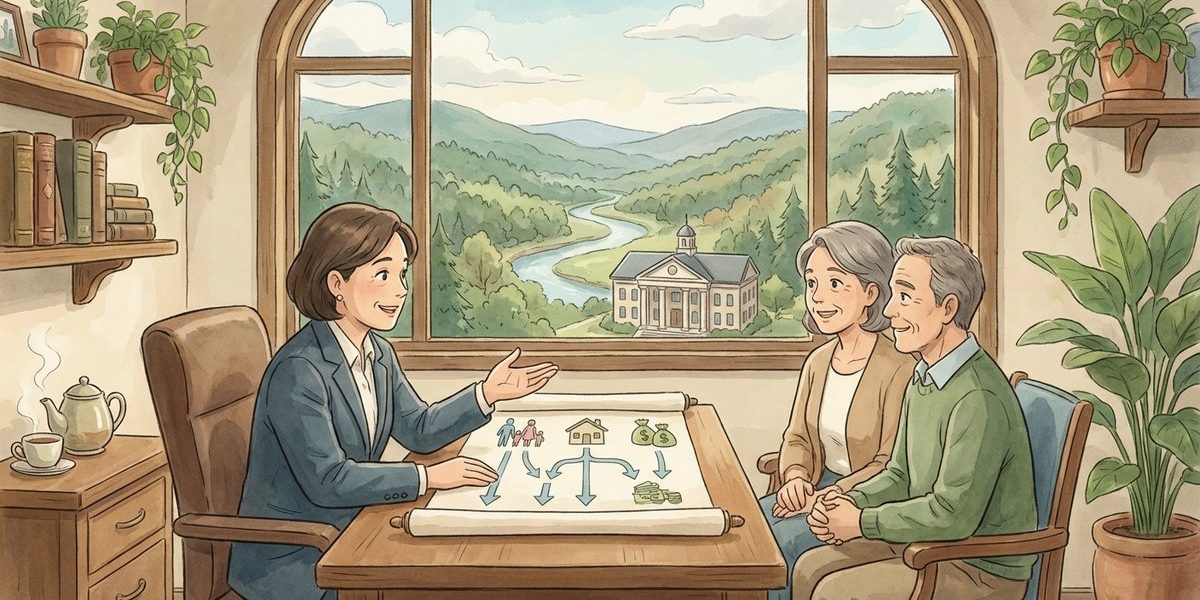
What happens if we don’t have wills and one of us passes away first? – NC
Short Answer
In North Carolina, if a married person dies without a will, the estate does not automatically pass entirely to the surviving spouse. Instead, North Carolina intestacy laws decide who inherits, and the result depends mainly on whether the person who died left children or parents. The surviving spouse may also have separate rights, including a year’s allowance, but those rights still require probate filings and deadlines.
Understanding the Problem
In North Carolina estate planning, the single issue is what happens when one spouse dies first and neither spouse has a will. The decision point is who receives the deceased spouse’s probate estate under North Carolina law, and whether the surviving spouse must share that estate with children or parents. The answer also turns on timing because the estate usually must go through the clerk of superior court in the proper county, and some spouse protections have filing deadlines.
Apply the Law
When a North Carolina resident dies without a valid will, that person dies intestate. The probate estate then passes under the state’s intestate succession rules, not under the couple’s personal wishes. In plain English, the surviving spouse’s share changes based on the family members who survive the person who died, and the estate is usually handled through the estate proceeding before the clerk of superior court in the county where venue is proper. A key timing point is that certain spouse claims, including an elective share in testate estates and a spouse’s allowance after letters issue, have a six-month filing window, while intestate administration itself begins when someone applies to open the estate.
Key Requirements
- Intestacy controls: If there is no valid will, North Carolina statutes decide who inherits the probate estate.
- Family status matters: The surviving spouse may inherit all, one-half, or one-third of certain property depending on whether the deceased spouse left children or parents.
- Probate procedure still applies: The estate usually must be opened with the clerk of superior court, and the surviving spouse may need to file for available protections within the required time.
What the Statutes Say
- N.C. Gen. Stat. § 29-14 (Share of surviving spouse) – explains how much of the intestate real and personal property a surviving spouse receives based on whether the deceased left children or parents.
- N.C. Gen. Stat. § 29-15 (Shares of others than surviving spouse) – explains who inherits the part of the estate that does not pass to the surviving spouse.
- N.C. Gen. Stat. § 30-15 (Spouse’s allowance) – gives a surviving spouse the right to claim a statutory allowance, subject to the filing rules in the statute.
Analysis
Apply the Rule to the Facts: Here, the spouses want simple wills because they want to plan together and avoid the default North Carolina rules. If one spouse dies first without a will, the surviving spouse may not receive everything through the probate estate. For example, if the deceased spouse leaves children, the surviving spouse may have to share the estate with those children; if there are no children but a parent survives, the spouse may still have to share certain property with that parent. That is why a basic will often matters even for married couples who expect everything to go to the surviving spouse first.
Process & Timing
- Who files: usually the surviving spouse or another qualified person. Where: the Estates Division before the Clerk of Superior Court in the proper North Carolina county. What: an application to open the estate and request letters of administration when there is no will. When: after death, as soon as administration is needed; if a spouse’s allowance is sought after letters are issued, the claim generally must be filed within six months after the issuance of letters.
- Next, the personal representative identifies probate assets, gives required notice, pays valid claims and expenses, and determines who inherits under the intestacy statutes. Timing varies by county and by how quickly asset and family information can be confirmed.
- Final step: the estate is distributed to the heirs set by North Carolina law, and the clerk closes the estate after the required filings are completed.
Exceptions & Pitfalls
- Some assets may pass outside the will or outside intestacy, such as jointly owned property with survivorship rights or accounts with valid beneficiary designations, so the probate estate may be only part of the picture.
- A common mistake is assuming marriage alone means the surviving spouse inherits everything. In North Carolina, children or parents can change that result.
- Delay can create problems. If the estate is not opened promptly or a spouse’s allowance claim is not filed on time after letters issue, an important protection can be lost. For related probate issues, see do other family members inherit anything and everything to go to my spouse first and then to our children.
Conclusion
If one spouse dies first without a will in North Carolina, the surviving spouse does not always inherit the entire probate estate. The result depends mainly on whether the deceased spouse left children or parents, and the estate usually must be opened with the clerk of superior court so the intestacy rules can be applied. The key next step is to open the estate in the proper county and, if applicable, file any spouse’s allowance claim within six months after letters are issued.
Talk to a Estate Planning Attorney
If a married couple is dealing with the risk that North Carolina intestacy rules may control who inherits when one spouse dies first, our firm has experienced attorneys who can help explain the options and timelines for simple will planning. Call us today at [919-341-7055].
Disclaimer: This article provides general information about North Carolina law based on the single question stated above. It is not legal advice for your specific situation and does not create an attorney-client relationship. Laws, procedures, and local practice can change and may vary by county. If you have a deadline, act promptly and speak with a licensed North Carolina attorney.

