
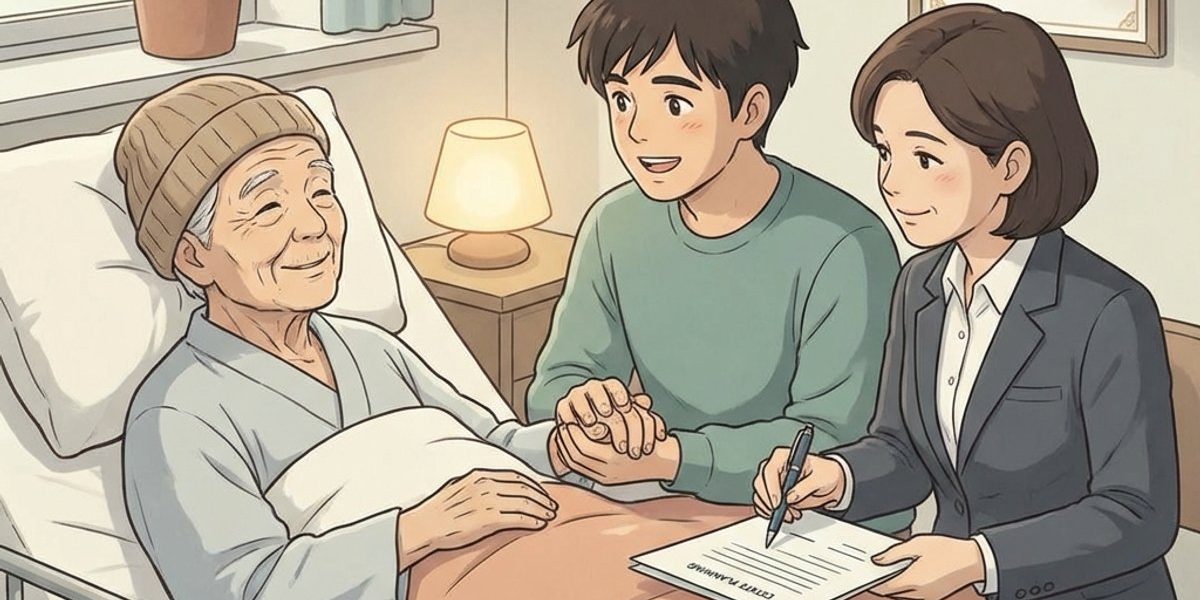
What happens if my grandparent wants a will but becomes unable to communicate before it is finished? – NC
Short Answer
In North Carolina, a will usually must be completed and properly signed while the person still has testamentary capacity and can communicate enough to show intent. If a grandparent becomes unable to communicate before the will is finished and executed, the new will may not be valid. In that situation, any earlier valid will may control, and if there is no valid will, the estate may pass under North Carolina intestacy rules.
Understanding the Problem
In North Carolina estate planning, the key question is whether a hospitalized grandparent can still make and complete a will before losing the ability to communicate. The decision point is narrow: can the person presently understand that the document is a will, decide who should receive property, and communicate that choice clearly enough to complete execution before capacity or communication is lost? Timing matters because a draft alone does not control unless the will is properly finished under North Carolina law.
Apply the Law
North Carolina requires a will to meet statutory execution rules, and the person making the will must be of sound mind when the will is executed. In practical terms, that means the grandparent must be able to understand the nature of making a will, know in a general way what property is being disposed of, and know the natural objects of bounty such as close family members. The main setting is not a court filing at the drafting stage, but the signing process itself, usually before two competent witnesses; notarization is commonly used to make the will self-proved, which can simplify probate later, but notarization does not replace the required execution steps.
Key Requirements
- Testamentary capacity: The grandparent must be of sound mind at the time of signing and able to understand that the document is a will and what it does.
- Clear intent and communication: The grandparent must be able to express, by words or other reliable communication, that the document states final wishes for property at death.
- Proper execution: The will must be signed and witnessed in the manner North Carolina law requires; a draft or unsigned document is not enough.
What the Statutes Say
- N.C. Gen. Stat. § 31-3.1 (Will invalid unless statutory requirements complied with) – A will is not valid unless it follows North Carolina’s required formalities.
- N.C. Gen. Stat. § 31-11.6 (How attested wills may be made self-proved) – A will may be notarized with witness affidavits so probate is easier later, but the will still must be properly executed first.
- N.C. Gen. Stat. § 31-46 (Validity of will; which laws govern) – North Carolina recognizes wills that meet the applicable execution law in certain jurisdictions, depending on where the person was present or domiciled when signing.
- N.C. Gen. Stat. § 31-11 (Depositories in offices of clerks of superior court where living persons may file wills) – After execution, a will may be placed with the clerk of superior court for safekeeping.
Analysis
Apply the Rule to the Facts: Here, the family is trying to arrange an urgent hospital will for a grandparent who may soon be unable to communicate. The most important issue is whether the grandparent can still understand the will and communicate final decisions clearly enough for the document to be completed and executed now. If that ability is present at signing, a North Carolina will may still be valid even in a hospital setting. If communication is lost before the will is finalized and signed with the required formalities, the unfinished will likely does not control.
North Carolina law focuses on the person’s condition at the time of execution, not simply on diagnosis, hospitalization, or general frailty. A person may have a short window of lucidity and still be able to make a valid will if the required understanding and intent are present at that moment. On the other hand, if medication, confusion, or declining condition prevents meaningful communication of testamentary wishes, the risk of invalidity rises sharply.
If no new valid will is completed, the estate plan falls back to whatever valid documents already exist. That may mean an earlier will controls. If there is no earlier valid will, property generally passes under North Carolina intestacy law rather than under the family’s current understanding of what the grandparent wanted.
Families in this situation often also need to think about related documents. A separate article on documents need to be notarized or witnessed to be valid can help explain why execution details matter so much. Another helpful overview is get a will prepared for a family member who wants to leave property to relatives, especially when time is short.
Process & Timing
- Who files: No court filing is usually required to create the will while the grandparent is living. Where: The will is typically signed where the grandparent is located, such as a hospital room in North Carolina. What: A final will, signed by the testator or by another person at the testator’s direction if allowed by the circumstances, with the required witnesses; a self-proving affidavit may also be completed before a notary. When: Before the grandparent loses the ability to understand and communicate testamentary wishes.
- After signing, the original will should be stored safely. In North Carolina, it may be placed with the clerk of superior court for safekeeping, or kept in another secure location where the original can be found after death.
- After death, the person offering the will for probate typically presents the original to the clerk of superior court in the county handling the estate, and a self-proved will can reduce later proof problems.
Exceptions & Pitfalls
- Hospitalization alone does not prevent a valid will, but confusion, sedation, or inability to communicate can.
- A draft, notes, or family instructions are not a substitute for a properly executed will.
- Notarization helps create a self-proved will, but it does not cure missing witnesses or lack of capacity.
- Undue influence concerns often arise in urgent bedside signings, especially if one relative is directing the process or isolating the grandparent.
- If the grandparent cannot communicate choices at the time of execution, a power of attorney cannot sign a will on the grandparent’s behalf as a substitute for the grandparent’s own testamentary intent.
Conclusion
In North Carolina, a grandparent’s will generally must be completed and properly executed while the grandparent still has testamentary capacity and can communicate final intent. If that ability is lost before signing is finished, the new will may fail, and an earlier valid will or intestacy rules may control instead. The most important next step is to have the final will executed with the required witnesses immediately, before communication or capacity is lost.
Talk to a Estate Planning Attorney
If a family is dealing with an urgent hospital will for a grandparent whose ability to communicate may be fading, our firm has experienced attorneys who can help explain the options, execution requirements, and timing issues under North Carolina law. Call us today at 919-341-7055.
Disclaimer: This article provides general information about North Carolina law based on the single question stated above. It is not legal advice for your specific situation and does not create an attorney-client relationship. Laws, procedures, and local practice can change and may vary by county. If you have a deadline, act promptly and speak with a licensed North Carolina attorney.

