
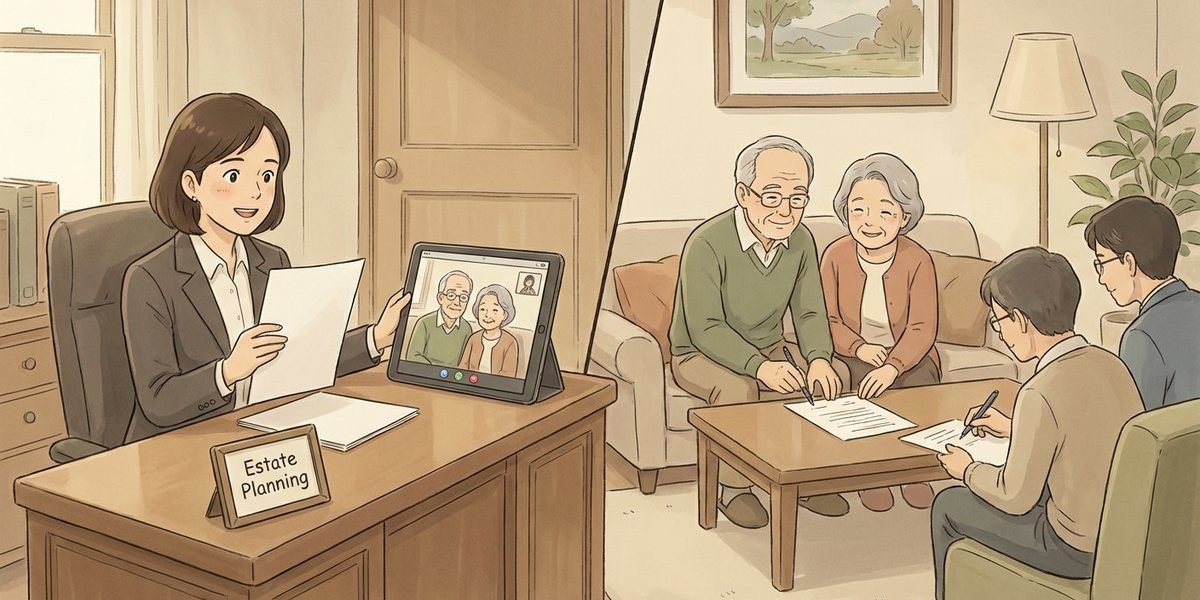
What do I need to do to sign a will properly if I am not going into the office? – North Carolina
Short Answer
In North Carolina, a will usually must be signed by the person making the will and witnessed by at least two competent witnesses. A notary is not required to make the will valid, but a notary is commonly used to add a self-proving affidavit so the witnesses may not need to appear later in probate. If the signing happens remotely, the process must still follow North Carolina witness rules, and any remote witnessing or notarization must comply with current state law and platform requirements.
Understanding the Problem
In North Carolina estate planning, the main question is how a person can properly sign a will without going into a law office. The decision point is whether the will execution process still satisfies the required signing and witnessing formalities when the signer handles the ceremony remotely or from home. The key issue is making sure the testator, the witnesses, and any notary complete the signing steps in the right way at the right time so the will can be admitted to probate later.
Apply the Law
North Carolina treats a will as valid only if it is executed with the required formalities. For a standard attested written will, the testator must sign the will, or direct another person to sign for them, and at least two witnesses must attest the signing in the manner required by state law. A notary does not replace the two witnesses, but a notary can help make the will self-proved, which often simplifies probate because the court can accept the sworn witness statements without later live testimony. If the signing is done outside the office, the main forum later is the Clerk of Superior Court handling the estate, and the safest approach is to complete the execution ceremony in one coordinated session and preserve the original signed will.
Key Requirements
- Testator signature: The person making the will must sign the document, or acknowledge a prior signature, as their will.
- Two witnesses: At least two competent witnesses must sign as witnesses in the manner North Carolina requires; they are still required even if a notary is involved.
- Self-proving step: A notary may take the testator’s and witnesses’ sworn statements so the will becomes self-proved, which can reduce probate problems later.
What the Statutes Say
- N.C. Gen. Stat. § 31-11.6 (Self-Proved Wills) – explains how a will can be made self-proved through sworn statements by the testator and witnesses before an authorized officer.
- N.C. Gen. Stat. § 10B-201 (Emergency Video Witnessing) – allows certain witnessing through real-time audio-video technology when the statute’s conditions are met.
- N.C. Gen. Stat. § 10B-134.9 (Remote Electronic Notarial Acts) – sets the procedures and safeguards for valid remote electronic notarization in North Carolina.
- N.C. Gen. Stat. § 31-11 (Safekeeping of Wills) – allows a living person to file a will with the clerk of superior court for safekeeping.
Analysis
Apply the Rule to the Facts: Here, the individual wants a will for one person only after a spouse’s death and plans to complete the estate planning process remotely in North Carolina. That usually means arranging one signing session where the testator signs the will, two qualified witnesses sign in the required manner, and a notary handles the self-proving affidavit if that extra step is included. If the witnesses are non-family members, that often helps avoid later disputes, although North Carolina’s core rule is proper witnessing rather than a blanket family ban.
If the will is signed remotely, the process must be structured carefully. Real-time audio-video contact matters for remote witnessing, and the record should clearly show where the signer and each witness were physically located if North Carolina’s video-witnessing statute is being used. If a remote notary is used, the notary must follow identity checks, recording rules, and platform requirements under North Carolina law rather than using an informal video call.
North Carolina practice also favors making the will self-proved at the time of signing when possible. That does not make the will itself valid, but it can make probate smoother because the clerk may accept the sworn witness statements without tracking down the witnesses years later. After signing, the original paper will should be stored safely, and some people choose clerk safekeeping; for related questions about logistics, see sign and return the documents if we can’t come into the office.
Process & Timing
- Who files: No court filing is required just to create the will while the testator is living. Where: The signing usually happens wherever the testator is located in North Carolina, with the original later kept in a secure place or deposited with the Clerk of Superior Court. What: The will, plus a self-proving affidavit if used. When: The witnesses should sign as part of the same execution ceremony, and any remote witnessing or notarization should happen in real time under current North Carolina rules.
- Next step with realistic timeframes; the testator and both witnesses complete the signatures, and the notary completes the certificate if the will is being made self-proved. If remote electronic notarization is used, the notary must complete the required identity and recording steps during that session.
- Final step and expected outcome/document: the testator keeps the original signed will, or deposits it for safekeeping with the clerk. At death, the original will is presented to the Clerk of Superior Court for probate, and a self-proved will is generally easier to admit without later witness testimony.
Exceptions & Pitfalls
- A notary does not replace the two witnesses. A will can fail if the signer assumes notarization alone is enough.
- Remote signing can go wrong if the witnesses are not observing in real time, if the wrong platform is used for remote notarization, or if location and certificate details are omitted.
- Problems also arise when the original signed will is lost, when witnesses sign at different times without following the required procedure, or when the self-proving affidavit is incomplete. For a related issue, see do the documents need to be notarized or witnessed to be valid.
Conclusion
To sign a will properly in North Carolina without going into an office, the testator must complete a valid execution ceremony with at least two witnesses, and a notary should be added if the will is being made self-proved. The key threshold is proper witness participation; notarization alone is not enough. The next step is to arrange one compliant signing session and preserve the original signed will for later probate with the Clerk of Superior Court.
Talk to a Estate Planning Attorney
If you’re dealing with signing a North Carolina will from home after a major family change, our firm has experienced attorneys who can help explain the required witnesses, notary steps, and timing. Call us today at 919-341-7055.
Disclaimer: This article provides general information about North Carolina law based on the single question stated above. It is not legal advice for your specific situation and does not create an attorney-client relationship. Laws, procedures, and local practice can change and may vary by county. If you have a deadline, act promptly and speak with a licensed North Carolina attorney.

