
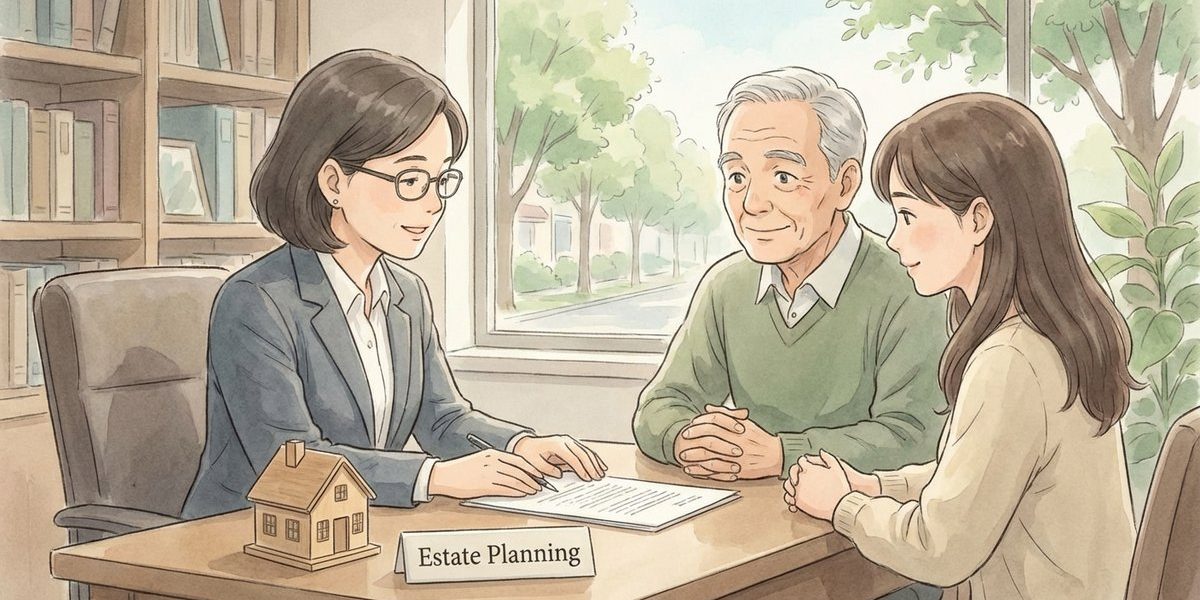
If I’ve been paying the mortgage and expenses on a parent’s home, do I get any ownership interest or reimbursement later? – North Carolina
Short Answer
Usually not automatically. In North Carolina, paying a parent’s mortgage, taxes, insurance, or repairs on a home titled in the parent’s name typically does not give a child an ownership interest unless there is a valid deed or other enforceable written agreement. Reimbursement later is sometimes possible, but it often depends on whether there was a clear agreement for repayment, whether the child was also an owner (a “cotenant”), and whether a timely claim is made when an estate is administered.
Understanding the Problem
In North Carolina estate planning, this question usually comes up when an adult child pays the mortgage and household expenses on a parent’s home after the other parent dies, and the home ends up titled only in the surviving parent’s name. The key decision point is whether those payments create ownership in the home or a right to be paid back later from the parent or the parent’s estate. The answer depends heavily on how title is held, whether there is a written agreement about repayment or ownership, and what steps are taken while the parent is living.
Apply the Law
Under North Carolina law, real estate ownership generally follows the deed recorded with the county Register of Deeds. Paying expenses can help preserve the property, but it does not, by itself, transfer title. If repayment is expected, the cleanest way to protect that expectation is a written agreement (and, in some cases, a recorded lien) made while the parent is living. If the child is already an owner with the parent (for example, both are on the deed), North Carolina has specific rules that can allow contribution or credits in a partition case.
Key Requirements
- Title controls ownership: If the parent is the only person on the deed, the parent is the owner, even if someone else pays the bills.
- Real estate agreements usually must be in writing: Promises to transfer an interest in land (or agreements tied to land ownership) are often unenforceable if they are only oral.
- Reimbursement rights are strongest when there is co-ownership or a documented debt: If the child is a cotenant, North Carolina law can allow reimbursement/credits for certain carrying costs and, in limited situations, improvements. If the child is not an owner, reimbursement usually depends on proving a valid repayment obligation and making the right claim at the right time.
What the Statutes Say
- N.C. Gen. Stat. § 22-2 (Contracts to sell or convey land must be in writing) – A contract to convey an interest in land is generally void unless it is in writing and signed by the person who would be bound.
- N.C. Gen. Stat. § 41-86 (Reimbursement of a cotenant) – In co-ownership situations, a cotenant may have reimbursement rights for certain taxes, interest on an existing encumbrance, and (in partition) limited credits for improvements.
- N.C. Gen. Stat. § 46A-27 (Carrying costs and improvements in partition) – In a partition case, a cotenant can seek contribution for carrying costs and limited credits for improvements, with specific procedural limits.
- N.C. Gen. Stat. § 41-64 (Tenancy by the entirety; survivorship) – If the home was owned by both spouses as tenants by the entirety, it generally passes to the surviving spouse automatically at death.
Analysis
Apply the Rule to the Facts: Here, the home appears to have transferred to the surviving parent after the other parent died, which often happens when spouses owned the home as tenants by the entirety and the survivor becomes the sole owner. If the surviving parent is the only person on the deed, the child’s payment of the mortgage and expenses usually does not create ownership. Reimbursement later is possible in some situations, but it is much easier to prove and enforce if there is a clear written repayment agreement (or if the child is also on title and can seek contribution as a cotenant).
Process & Timing
- Who documents it: The parent (as owner) and the child (as payer). Where: For ownership changes, the Register of Deeds in the county where the property is located; for estate matters later, the Clerk of Superior Court (Estates) in the county where the estate is opened. What: A written repayment agreement (often structured as a promissory note), and if appropriate, a deed of trust or other recorded instrument to secure repayment.
- While the parent is living: Keep clean records showing what was paid (mortgage statements, insurance bills, tax bills, receipts) and what the payments were meant to be (gift vs. loan vs. rent vs. shared household expenses). If the intent is repayment, reduce it to a signed writing sooner rather than later.
- After death (if an estate is opened): If repayment is owed, it is commonly handled as a creditor claim against the estate and must be asserted on the estate’s timeline. Deadlines can be short and can vary based on the estate’s published notice to creditors, so prompt action matters.
Exceptions & Pitfalls
- “It was understood” is often not enough: Without a signed writing, a child can end up arguing over intent (gift vs. loan) with siblings or other heirs, and the statute of frauds can block attempts to claim an ownership interest based on an oral promise to “leave the house later.”
- Cotenant rules only help if the child is on title: Statutes like North Carolina’s cotenant reimbursement and partition-credit rules generally apply when the payer is a co-owner. If the child is not a co-owner, those statutes usually do not create a reimbursement right by themselves.
- Mixing payments with occupancy can complicate reimbursement: If the child lived in the home, others may argue the payments were rent or part of living expenses rather than a reimbursable loan. Clear documentation (and a written agreement) helps avoid that fight.
- Improvements are treated differently than carrying costs: Even in co-ownership situations, improvements are not automatically reimbursed dollar-for-dollar; credits can be limited and are often tied to value added and the type of proceeding.
- Title history after the first parent’s death matters: If the home passed to the surviving spouse by survivorship, the deceased spouse’s estate may have had no interest in the home to reimburse anyone from that asset. That can change the strategy.
Conclusion
In North Carolina, paying a parent’s mortgage and home expenses usually does not create ownership in a home titled in the parent’s name, and reimbursement later is not automatic. The strongest path to repayment is a clear, signed written agreement made while the parent is living, and (when appropriate) a recorded instrument tied to the property. If repayment is pursued after death through an estate, the next step is to file a timely creditor claim with the Clerk of Superior Court handling the estate before the creditor-claim deadline expires.
Talk to a Estate Planning Attorney
If a family has been paying a parent’s mortgage or home expenses and wants to protect repayment or clarify who will own the home later, our firm has experienced attorneys who can help explain options and timelines under North Carolina law. Call us today at (919) 341-7055.
Disclaimer: This article provides general information about North Carolina law based on the single question stated above. It is not legal advice for your specific situation and does not create an attorney-client relationship. Laws, procedures, and local practice can change and may vary by county. If you have a deadline, act promptly and speak with a licensed North Carolina attorney.

