
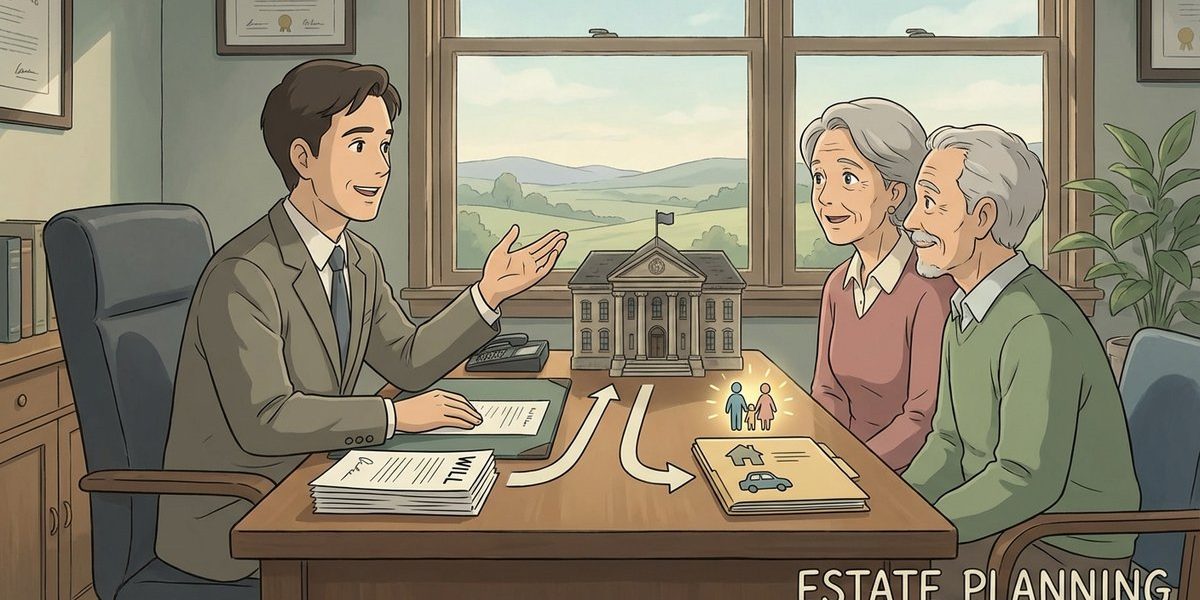
How does a trust keep my home and vehicles out of probate compared to a will? – North Carolina
Short Answer
In North Carolina, a will does not avoid probate for assets titled in an individual name at death; it generally works through the probate court process to transfer title. A properly funded trust can keep a home (and sometimes vehicles) out of probate because the trust—not the individual—owns the assets, so there is no need for the clerk of superior court to transfer title at death. The key difference is not the paperwork signed, but whether the home and vehicles are actually re-titled into the trust (or otherwise set up to transfer outside probate).
Understanding the Problem
In North Carolina estate planning, the decision point is: can a home and vehicles pass to the intended people without a probate estate being opened with the clerk of superior court. A will generally directs who receives property, but it typically requires a probate administration to move title out of the decedent’s name. A trust can avoid that step for assets the trust owns, but only if the home and vehicles are placed into the trust (or titled in a way that transfers outside probate) before death.
Apply the Law
North Carolina probate is administered through the Clerk of Superior Court in the county where the estate is opened. A will is effective to pass title once it is duly probated, which usually means an estate is opened and a personal representative is appointed to collect, manage, and distribute probate assets. By contrast, a revocable living trust is a lifetime arrangement where a trustee holds legal title to trust assets and follows the trust instructions; when the person who created the trust dies, the successor trustee can usually distribute trust-owned assets without opening a probate estate for those assets. The practical rule is simple: probate generally applies to assets titled in an individual name at death; trust administration generally applies to assets titled in the trust’s name at death.
Key Requirements
- A valid plan document: A will must be admitted to probate to control probate assets. A trust must be properly created and signed so a trustee has authority to act.
- Correct ownership (funding): A trust avoids probate only for assets that are actually transferred into the trust (for example, a recorded deed placing the home into the trustee’s name). If an asset stays in an individual name, a will-based probate process may still be needed for that asset.
- A workable transfer mechanism at death: With a will, the personal representative transfers title through probate. With a trust, the successor trustee transfers title under the trust terms, usually using trust certificates/affidavits and other transfer paperwork required by the register of deeds, DMV, or financial institutions.
What the Statutes Say
- N.C. Gen. Stat. § 31-39 (Probate necessary to pass title) – explains that a duly probated will is effective to pass title to real and personal property, and sets timing rules that can matter for protecting title against certain creditors and purchasers.
- N.C. Gen. Stat. § 39-6.7 (Conveyances to or by trusts) – provides rules for how deeds and other instruments transferring property to or from a trust are construed, supporting the common practice of titling property in a trustee’s name for trust ownership.
- N.C. Gen. Stat. § 41-48 (Nontestamentary transfer on death) – recognizes that certain “transfer on death” registrations can pass property outside probate by contract, which may be relevant for some personal property depending on how it is registered.
Analysis
Apply the Rule to the Facts: Here, the goal is to keep a home and vehicles from going through probate. Under North Carolina practice, a will alone usually does not accomplish that because the home and vehicles titled in an individual name still need a probate transfer. A trust can accomplish the probate-avoidance goal if the home is deeded into the trust and the vehicles are titled or otherwise arranged so the trustee (or a non-probate beneficiary) can transfer them without opening an estate for those assets.
Process & Timing
- Who sets it up: The person creating the trust (often with a spouse coordinating the plan). Where: For the home, the deed is recorded with the Register of Deeds in the county where the property is located. For vehicles, title work is handled through the North Carolina DMV title process. What: A trust agreement, plus a new deed transferring the home into the trust (typically to the trustee), and vehicle title transfer paperwork if vehicles are being moved into the trust. When: Before death; probate avoidance depends on the asset being titled correctly while the owner is alive.
- At death: If the home is in the trust, the successor trustee uses trust administration documents (often a certification/affidavit of trust and proof of death) to manage or distribute the property under the trust terms, instead of asking the clerk of superior court to appoint a personal representative just to transfer that title.
- Clean-up for anything not funded: If any assets remain outside the trust in an individual name, a probate estate may still be needed for those assets, even if a trust exists. Many plans use a “pour-over” will to direct leftover probate assets into the trust after probate, but that does not eliminate probate for those leftover assets.
Exceptions & Pitfalls
- “Signed a trust” but did not transfer the home: The most common problem is an unfunded trust. If the deed never gets recorded into the trust/trustee, the home can still require probate.
- Vehicles can be different than real estate: Some families choose not to retitle everyday vehicles into a trust due to administrative hassle, lender issues, or insurance/registration friction, and instead use other non-probate options where available. The right approach depends on the type of vehicle, any loan, and how the title is currently held.
- Joint ownership and creditor issues: How the home is titled (for example, between spouses) can change what happens at death and what probate steps are needed. Also, avoiding probate does not automatically eliminate valid debts; it mainly changes the transfer pathway.
- Mismatch with other documents: A trust-based plan should align with powers of attorney, beneficiary designations, and the overall distribution plan. Inconsistent documents can cause delays and disputes even when probate is avoided.
Conclusion
In North Carolina, a will typically transfers a home and vehicles through probate because the clerk of superior court must recognize the will and appoint someone to move title out of the decedent’s name. A trust can keep those assets out of probate if the home is deeded into the trust (to the trustee) and the vehicles are titled or arranged to transfer under a non-probate mechanism. The next step is to confirm how the home and vehicles are titled now and, if using a trust, complete the funding transfers before death.
Talk to a Estate Planning Attorney
If a home and vehicles are the main concern and the goal is avoiding probate where possible, our firm has experienced attorneys who can help compare a will-based plan to a trust-based plan and identify the specific title changes needed. Call us today at (919) 341-7055. For more background, see using a trust to avoid probate and deciding between a will-based plan and a trust-based plan.
Disclaimer: This article provides general information about North Carolina law based on the single question stated above. It is not legal advice for your specific situation and does not create an attorney-client relationship. Laws, procedures, and local practice can change and may vary by county. If you have a deadline, act promptly and speak with a licensed North Carolina attorney.

