
How do we write our wills so everything goes to the surviving spouse first and then gets split evenly between our adult children? – North Carolina
Short Answer
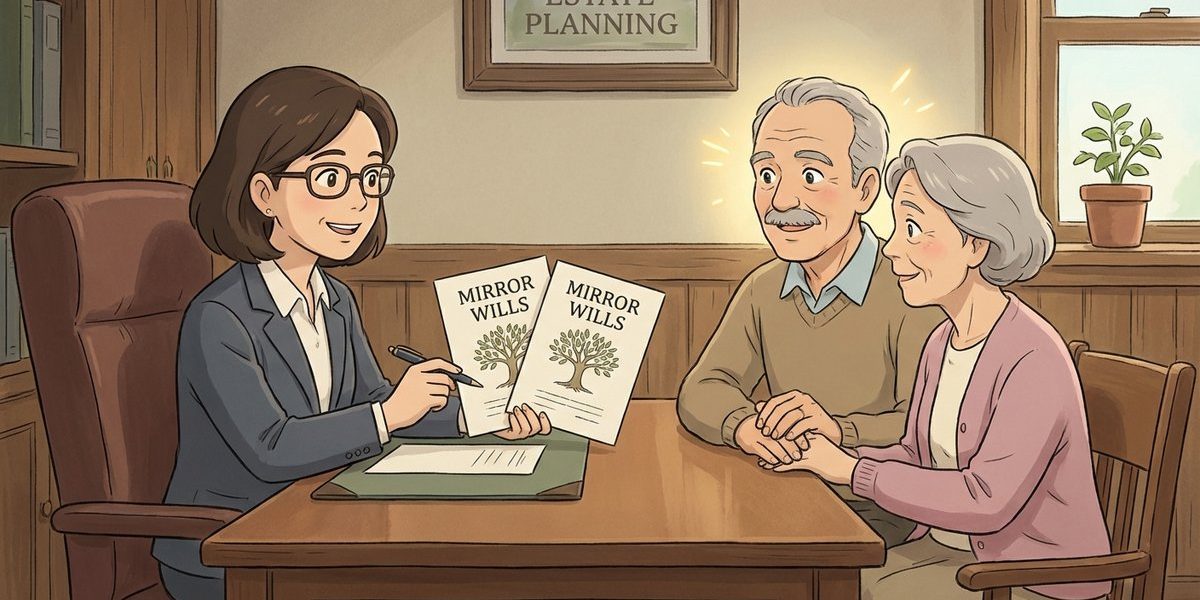
In North Carolina, spouses commonly use “mirror” wills that leave everything to the surviving spouse, and if the spouse does not survive, the estate passes to the adult children in equal shares. The will also names a primary executor and a backup executor to handle probate through the Clerk of Superior Court. To make the plan work smoothly, the wills must be properly signed and witnessed, and it is usually wise to add a self-proving affidavit so witnesses do not have to be tracked down later.
Understanding the Problem
In North Carolina estate planning, the single decision point is how to structure a married couple’s wills so the first death leaves the estate to the surviving spouse, and the second death leaves what remains to the couple’s adult children in equal shares. The wills also need to name one adult child to serve as executor and the other as a backup executor, so the estate has someone with authority to work with the court and carry out the instructions. The key trigger is death: the first death should route assets to the spouse, and the second death should route assets to the children.
Apply the Law
North Carolina allows an “attested written will” that directs who inherits probate assets and who serves as executor. For most couples seeking a simple plan, each spouse signs a separate will with matching terms: (1) a gift to the surviving spouse, (2) a contingent gift to the children if the spouse is not living, and (3) executor nominations. North Carolina also allows a will to be made “self-proved,” which generally reduces delays at probate because the court can accept the notarized witness statements instead of requiring live witness testimony later.
Key Requirements
- Clear “spouse first, children second” distribution: The will should state that the surviving spouse receives the estate, and only if the spouse does not survive does the estate pass to the adult children in equal shares.
- Proper signing and witnessing: North Carolina requires the testator to sign (or direct someone to sign in the testator’s presence) and requires at least two competent witnesses who sign in the testator’s presence.
- Executor and backup executor nominations: The will should name a primary executor and an alternate, so there is a built-in replacement if the first choice cannot or will not serve.
What the Statutes Say
- N.C. Gen. Stat. § 31-3.3 (Attested written will) – Sets the core execution rules for a written will, including signature and two-witness requirements.
- N.C. Gen. Stat. § 31-11.6 (Self-proved wills) – Allows a will to be made self-proved through notarized acknowledgments/affidavits, which can streamline probate.
- N.C. Gen. Stat. § 30-3.1 (Elective share) – Gives a surviving spouse a statutory right to claim an elective share in certain situations, even if a will says otherwise.
- N.C. Gen. Stat. § 30-3.4 (Elective share procedure and time limit) – Sets the procedure and a key deadline for making an elective share claim (commonly within six months after letters are issued).
- N.C. Gen. Stat. § 31-11 (Safekeeping wills with the clerk) – Allows a will to be deposited for safekeeping with the Clerk of Superior Court during life.
Analysis
Apply the Rule to the Facts: Under the stated facts, each spouse can sign an attested written will that leaves the entire probate estate to the surviving spouse, and then—only if the spouse does not survive—leaves the remaining estate to the adult children in equal shares. Each will can nominate one adult child as executor and the other as the backup executor, which helps avoid a gap in authority if the first choice cannot serve. If the wills are executed with two witnesses and include a self-proving affidavit, the surviving family typically has an easier time proving the will in probate.
Process & Timing
- Who signs: each spouse signs a separate will. Where: signing typically occurs in a law office or other controlled setting in North Carolina. What: an attested written will plus a self-proving affidavit page signed in front of a notary. When: while both spouses have capacity and can follow the witnessing steps.
- After the first death: the will is usually filed for probate with the Clerk of Superior Court in the county where the decedent lived, and the nominated executor seeks authority to act (often called “letters”). Local practice and timelines can vary by county.
- After the second death: the second spouse’s will controls distribution to the adult children in equal shares, and the executor completes the estate administration and distributions after required notices, claims handling, and court steps.
Exceptions & Pitfalls
- Non-probate assets can override the will: Some property passes by beneficiary designation or survivorship (for example, certain accounts or jointly held property). A “spouse first, children second” will may not control those assets unless the beneficiary designations and titles match the plan.
- “Equal split” needs careful wording: A will can split “equally,” but families often need to decide whether gifts go only to living children or also to a deceased child’s descendants. The wrong default can create surprises.
- Execution mistakes cause probate problems: Missing witnesses, improper witnessing, or unclear signatures can lead to delays or disputes. A self-proving affidavit often reduces later proof issues because witnesses may be hard to locate years later.
- Executor availability: Even with a primary and backup executor, both could be unable or unwilling to serve. Many wills include a method for appointing a successor or allow the Clerk of Superior Court to appoint someone if needed.
- Spousal rights are a backstop: North Carolina’s elective share rules can matter when a will tries to disinherit a spouse or leaves too little. In a “everything to spouse” plan, it is usually not the conflict point, but it is still part of the legal landscape.
For more on execution and avoiding probate delays, see make sure it’s valid.
Conclusion
In North Carolina, a common way to leave everything to the surviving spouse first and then split the estate evenly between adult children is to sign separate “mirror” attested wills that (1) give the estate to the spouse, (2) give the estate to the children in equal shares if the spouse does not survive, and (3) name a primary and backup executor. The most important next step is to sign each will with two witnesses (and usually a self-proving affidavit) so the Clerk of Superior Court can accept it in probate.
Talk to a Estate Planning Attorney
If a married couple is dealing with simple mirrored wills that leave everything to the surviving spouse first and then split the estate evenly between adult children, our firm has experienced attorneys who can help clarify options, wording, and timing. Call us today at [919-341-7055].
Disclaimer: This article provides general information about North Carolina law based on the single question stated above. It is not legal advice for your specific situation and does not create an attorney-client relationship. Laws, procedures, and local practice can change and may vary by county. If you have a deadline, act promptly and speak with a licensed North Carolina attorney.

