
How do I update an old trust after I remarry and the people I named in it have died? – North Carolina
Short Answer
In North Carolina, an old (usually revocable) trust is typically updated by signing a formal trust amendment or a trust restatement, and then updating the related documents that “work with” the trust (like a pour-over will, powers of attorney, and beneficiary designations). If key people named in the plan have died (trustees, executors, agents, or beneficiaries), the update should also name new fiduciaries and clean up outdated distribution instructions. Remarriage is also a trigger to review spousal rights, because a surviving spouse may have an elective share claim against the estate plan if the plan does not match the new marriage.
Understanding the Problem
In North Carolina estate planning, the core question is: when a person remarries and an older trust still names a prior spouse or other people who have since died, can the trust be changed so the current spouse and the current “decision-makers” (trustee, backup trustee, executor, and agents) match the new family situation? The practical issue is not only who receives property, but also who has legal authority to manage the trust and carry out the plan if incapacity or death occurs. The timing trigger is the remarriage and the discovery that the named fiduciaries or beneficiaries are no longer available or appropriate.
Apply the Law
Most living trusts used in North Carolina are designed to be revocable while the person who created the trust (the “settlor”) is alive and has capacity. A revocable trust is commonly updated in one of two ways: (1) an amendment that changes specific sections, or (2) a restatement that keeps the same trust name/date but replaces the operative terms in one clean document. If the trust is irrevocable (or has become irrevocable at a spouse’s death), changes can be limited and may require court involvement or other legal mechanisms.
Remarriage also matters because North Carolina gives a surviving spouse important statutory rights that can override an outdated plan. A will made before marriage is not automatically revoked by marriage, but the surviving spouse may still seek an elective share. In addition, if a prior marriage ended in divorce, North Carolina law generally revokes provisions in a will in favor of the former spouse unless the will clearly says otherwise.
Key Requirements
- Confirm the trust’s type and change power: Determine whether the trust is revocable and what the trust document requires for a valid amendment or restatement (signature, notarization, witnesses, delivery to trustee, etc.).
- Replace deceased or outdated fiduciaries: Update trustee and successor trustee provisions (and usually the will’s executor, plus agents under powers of attorney) so there is always a living, willing backup.
- Rebuild the plan around remarriage: Coordinate the trust with spousal rights, beneficiary designations, and the rest of the estate plan so the new spouse and other intended beneficiaries are addressed consistently.
What the Statutes Say
- N.C. Gen. Stat. § 31-5.3 (Will not revoked by marriage; elective share still possible) – Marriage does not automatically revoke a prior will, and the surviving spouse may still pursue an elective share.
- N.C. Gen. Stat. § 30-3.1 (Elective share) – Sets the surviving spouse’s elective share percentage based on length of marriage.
- N.C. Gen. Stat. § 30-3.4 (Elective share procedure; six-month deadline) – Requires an elective share claim to be filed within six months after letters are issued for the estate administration.
- N.C. Gen. Stat. § 31-5.4 (Revocation by divorce) – After divorce, provisions in a will favoring a former spouse are generally revoked unless the will clearly indicates otherwise.
Analysis
Apply the Rule to the Facts: Here, the trust and estate plan were created with a prior spouse, and the client has since remarried. Because key people named in the documents have died or are no longer appropriate choices, the plan likely needs a formal amendment or restatement to replace trustees and other fiduciaries and to update who benefits and when. Because remarriage can create spousal rights that may not match an older plan, the update should also be coordinated with the current spouse’s role in the plan and the overall distribution design.
Process & Timing
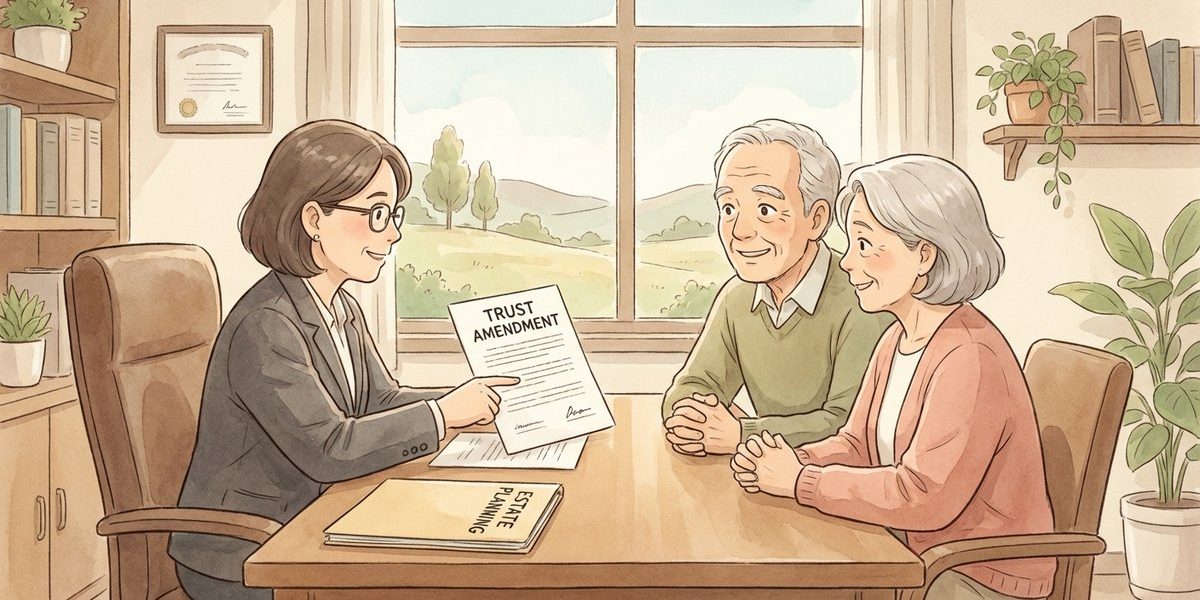
- Who starts the update: The person who created the trust (while living and with capacity). Where: Usually handled through an estate planning attorney’s office; court filing is not typically required for a revocable trust update. What: A written Trust Amendment or Trust Restatement, plus matching updates to the pour-over will, durable power of attorney, health care documents, and (often) a new schedule of assets or assignment documents. When: As soon as practical after remarriage or after learning that named fiduciaries/beneficiaries have died.
- Coordinate “outside-the-trust” transfers: Review beneficiary designations (life insurance, retirement accounts) and jointly owned property, because these often control who receives assets regardless of what the trust says.
- Re-fund and clean up administration details: Confirm which assets are actually titled in the trust, update successor trustee acceptance/transition language, and make sure the plan still works if the first-choice trustee cannot serve.
Exceptions & Pitfalls
- Assuming remarriage “updates” the trust automatically: A trust usually does not change just because family circumstances changed. Outdated trustee and beneficiary provisions can stay in place until a proper amendment/restatement is signed.
- Fixing the trust but forgetting the rest of the plan: An old pour-over will, powers of attorney, and beneficiary designations can still name deceased people or a prior spouse, creating delays and disputes.
- Not planning around spousal rights: Even with a trust, a surviving spouse may have statutory rights (including an elective share) that can affect the final outcome if the plan does not address the new marriage.
- Trustee gaps: If all named trustees and backups have died, the trust can become hard to administer. In some situations, court involvement may be needed to fill a vacancy, which adds time and cost.
For additional background on trust administration and successor trustee issues, see trustee powers and successor trustee provisions and how to update an estate plan so a home passes as intended.
Conclusion
In North Carolina, updating an old trust after remarriage usually means signing a written trust amendment or a full trust restatement, and then updating the related estate planning documents and beneficiary designations so the plan is consistent. The update should replace any deceased trustees, executors, or agents and address the new spouse’s role and statutory rights. The most important next step is to prepare and sign the amendment or restatement and align the rest of the estate plan with it, because an elective share claim later has a strict timeline once an estate is opened.
Talk to a Estate Planning Attorney
If you’re dealing with an older trust that no longer fits after a remarriage and key people named in the plan have died, our firm has experienced attorneys who can help explain options and timelines under North Carolina law. Call us today at (919) 341-7055.
Disclaimer: This article provides general information about North Carolina law based on the single question stated above. It is not legal advice for your specific situation and does not create an attorney-client relationship. Laws, procedures, and local practice can change and may vary by county. If you have a deadline, act promptly and speak with a licensed North Carolina attorney.

