
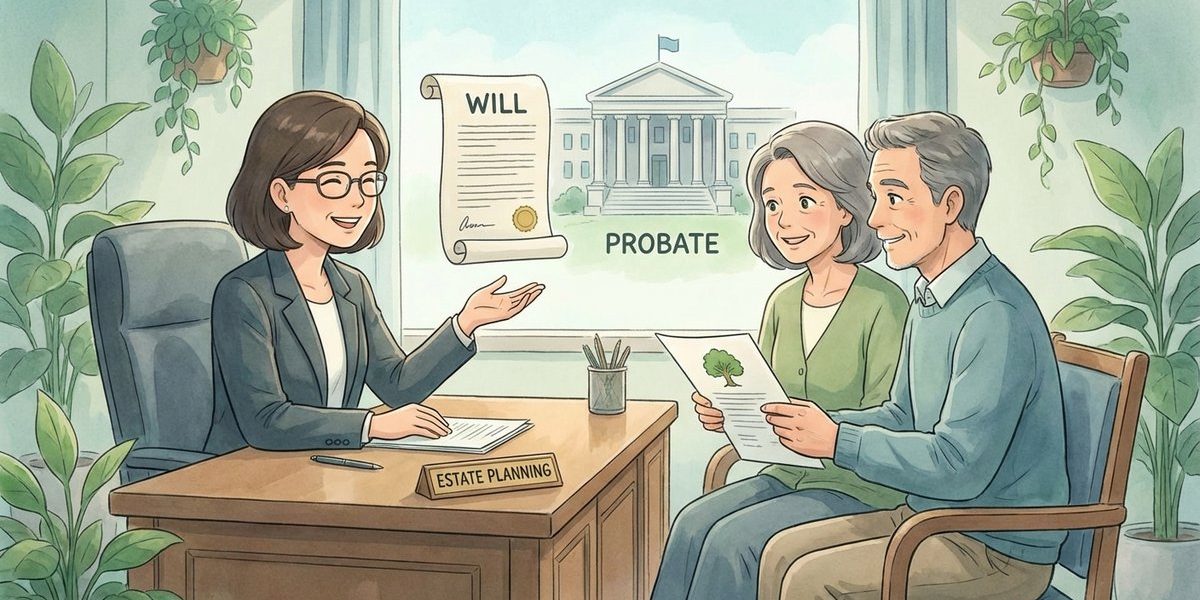
How do I know whether I need a will, probate help, or both? – North Carolina
Short Answer
In North Carolina, a will is a planning document made during life, while probate is the court-supervised process used after death to transfer assets, pay valid debts, and close an estate. A will is usually needed when someone wants to choose who inherits and who will serve as executor. Probate help is usually needed when a person has died owning assets that do not automatically pass to a co-owner or named beneficiary and a personal representative must be appointed by the Clerk of Superior Court.
Understanding the Problem
In North Carolina estate planning, the decision is whether the situation calls for (1) signing a will now, (2) getting help with probate because someone has already died, or (3) both because a family is trying to settle an estate while also planning ahead for another person. The key trigger is timing: a will is created before death, and probate is a court process that starts after death when an estate needs a court-appointed person to act. The question is not whether probate is “good” or “bad,” but whether probate is required for the assets involved and whether a will is needed to control who receives property and who is in charge.
Apply the Law
North Carolina probate and estate administration are handled through the Clerk of Superior Court, who has exclusive original jurisdiction over probate of wills and administration of decedents’ estates. When a person dies, a will (if one exists) generally must be probated to be effective to pass title, and the court process is also how an executor (under a will) or an administrator (when there is no will) gets authority to act for the estate. Separately, North Carolina law sets specific signing and witness rules for a valid written will, and it also allows a will to be made “self-proved,” which can streamline the probate step of proving the will.
Key Requirements
- Timing (life vs. death): A will is signed during life; probate help is needed only after a death when an estate must be administered through the Clerk of Superior Court.
- Asset “transfer method”: Probate is more likely when assets are titled in the decedent’s name alone and do not pass by beneficiary designation or survivorship.
- Proper documents and authority: A will must meet North Carolina execution rules to be accepted, and the person handling the estate typically needs court authority (often called “letters”) before collecting assets, paying bills, or selling property.
What the Statutes Say
- N.C. Gen. Stat. § 7A-241 (Probate jurisdiction) – places probate and estate administration under the Clerk of Superior Court (as judge of probate) in the Superior Court Division.
- N.C. Gen. Stat. § 31-39 (Probate needed to pass title) – explains that a duly probated will is effective to pass title and sets important timing rules affecting title as against certain creditors and purchasers.
- N.C. Gen. Stat. § 31-3.3 (Attested written wills) – requires a written will to be signed by the testator and attested by at least two competent witnesses, with specific signing/acknowledgment rules.
- N.C. Gen. Stat. § 31-11.6 (Self-proved wills) – allows a will to be made self-proved through a notarized acknowledgment and witness affidavits, which can simplify proof in probate.
Analysis
Apply the Rule to the Facts: The facts describe a request to understand whether the firm handles wills and probate and what the difference is. Under North Carolina law, the dividing line is whether the need is planning (a will) or administration after a death (probate), and whether the assets involved require a court-appointed personal representative through the Clerk of Superior Court. In many families, both issues come up at once: probate help for a recently deceased relative and will planning for the surviving spouse or adult children.
Process & Timing
- Who files: For a will, the person making the plan signs it during life. For probate, the named executor (if there is a will) or an interested heir (if there is no will) typically starts the case. Where: Clerk of Superior Court (Estates) in the North Carolina county with proper venue for the decedent’s estate. What: The original will (if one exists) and the required estate opening paperwork to qualify a personal representative and obtain authority to act. When: Probate starts after death; title-related timing can matter if a will is not promptly offered for probate.
- Next step: After qualification, the personal representative gathers information about assets and debts, gives required notices, and manages estate property. The timeline varies by county and by whether there are disputes, real estate, or hard-to-value assets.
- Final step: The personal representative files the required closing paperwork with the Clerk of Superior Court and distributes remaining property to the proper beneficiaries or heirs once allowed under the estate administration process.
Exceptions & Pitfalls
- A will does not automatically avoid probate; it often determines who is in charge and who inherits, but the estate may still need a probate administration to transfer assets titled in the decedent’s name alone.
- A will that is not properly signed and witnessed may be harder to admit to probate; North Carolina has specific execution rules, and a self-proved will can reduce proof problems later.
- Not every asset goes through probate. Accounts and policies with valid beneficiary designations, and certain jointly owned property, may pass outside probate, which can change how much probate help is needed.
Conclusion
In North Carolina, a will is used during life to name an executor and direct who receives property, while probate help is needed after death when the Clerk of Superior Court must appoint a personal representative to administer an estate and transfer assets that do not pass automatically. Many situations involve both planning and administration. A practical next step is to gather a basic asset list and any existing will, then open the estate with the Clerk of Superior Court promptly if a death has occurred.
Talk to a Estate Planning Attorney
If you’re dealing with the question of whether the situation calls for a will, probate help, or both, our firm has experienced attorneys who can help explain options and timelines under North Carolina law. Call us today at [919-341-7055].
Disclaimer: This article provides general information about North Carolina law based on the single question stated above. It is not legal advice for your specific situation and does not create an attorney-client relationship. Laws, procedures, and local practice can change and may vary by county. If you have a deadline, act promptly and speak with a licensed North Carolina attorney.

