
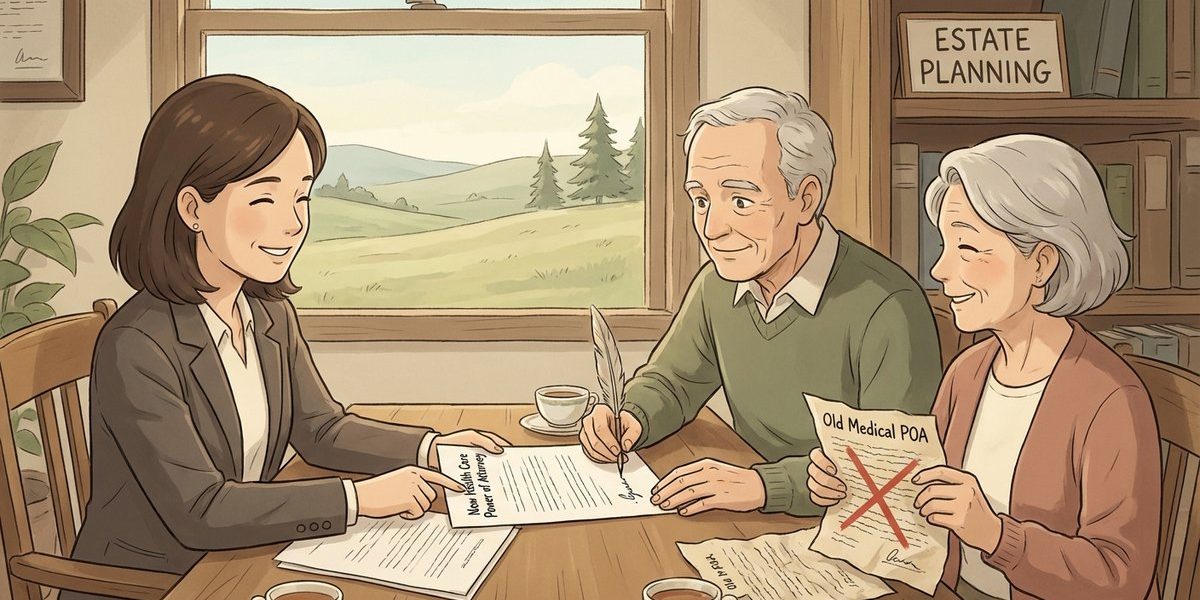
How do I change or revoke a medical power of attorney if I change my mind later? – NC
Short Answer
In North Carolina, a person can revoke a health care power of attorney at any time as long as that person still has the ability to make and communicate health care decisions. The revocation can be done by signing a revocation, signing a new health care power of attorney, or otherwise clearly communicating the intent to revoke. The key point is that the revocation does not become effective until it is communicated to each named health care agent and the attending physician or eligible psychologist.
Understanding the Problem
In North Carolina estate planning, the question is whether a person who already signed a medical power of attorney, also called a health care power of attorney, can later cancel it or replace it. The decision point is simple: if the person still has capacity to make and communicate health care decisions, North Carolina law allows that person to change course. Timing matters because the change must be communicated to the people and medical professionals who may rely on the old document.
Apply the Law
North Carolina law allows a principal to revoke a health care power of attorney at any time while capable of making and communicating health care decisions. A health care power of attorney usually becomes effective only after a written determination that the principal lacks sufficient understanding or capacity, but the principal keeps the right to revoke before that point if capacity remains. The main setting is not a courtroom in most cases; instead, the practical focus is the principal, the named health care agent, and the attending physician or eligible psychologist who may rely on the document.
Key Requirements
- Capacity to revoke: The principal must still be able to make and communicate health care decisions.
- Clear revocation method: The principal may sign and acknowledge a revocation, sign and acknowledge a new health care power of attorney, or otherwise communicate a clear intent to revoke.
- Communication to the right people: The revocation becomes effective only when the principal communicates it to each named health care agent and to the attending physician or eligible psychologist.
What the Statutes Say
- N.C. Gen. Stat. § 32A-20 (Effectiveness, duration, and revocation) – explains when a health care power of attorney takes effect and how a principal may revoke it.
- N.C. Gen. Stat. § 32A-24 (Reliance on health care power of attorney) – protects health care providers who rely on a document unless they have actual notice that it was revoked.
- N.C. Gen. Stat. § 32A-26 (Combined directive documents) – allows a health care power of attorney to be combined with a declaration about end-of-life wishes, which matters when updating related planning documents.
Analysis
Apply the Rule to the Facts: The facts describe a client who wants to prepare a medical power of attorney in North Carolina and is concerned about changing that choice later. Under North Carolina law, that concern is manageable because the document can be revoked or replaced later if the principal still has capacity. In practice, the safest approach is to make the change clearly, update the written document, and notify every named agent and the treating medical professional so an older document is not used by mistake.
Process & Timing
- Who files: Usually no court filing is required. Where: The change is handled directly with the principal, each named health care agent, and the attending physician or eligible psychologist in North Carolina. What: A signed and acknowledged revocation, or a signed and acknowledged new health care power of attorney that replaces the old one. When: As soon as the principal decides to revoke or change the document and while the principal still has capacity.
- Next, deliver the revocation or replacement to each person named in the old document and to the current treating medical professional. If copies were given to hospitals, clinics, or family members, those copies should also be updated promptly because providers may rely on an older document until they receive actual notice of the change.
- Final step and expected outcome/document: keep the new signed document or revocation with the rest of the estate planning papers, destroy outdated copies when possible, and confirm that the current medical record reflects the change. If the directive was part of a broader plan, it also makes sense to review related documents such as a power of attorney or healthcare directive so the documents work together.
Exceptions & Pitfalls
- If the principal no longer has capacity to make and communicate health care decisions, revocation may not be effective, so timing matters.
- A new document does not solve the problem if old agents or medical providers never receive notice and continue relying on the earlier version.
- If the health care agent is the principal’s spouse, a divorce or separation decree can revoke that spouse’s authority automatically, but that does not necessarily revoke the entire document if a successor agent is named.
Conclusion
In North Carolina, a person can change or revoke a medical power of attorney later, but only while still able to make and communicate health care decisions. The safest next step is to sign and acknowledge either a revocation or a new health care power of attorney, then promptly deliver that change to every named agent and the attending physician or eligible psychologist so the old document is not used.
Talk to a Estate Planning Attorney
If a medical power of attorney needs to be prepared, updated, or revoked in North Carolina, our firm can help explain the options, the signing requirements, and the steps needed to make the change effective. Call us today at [919-341-7055].
Disclaimer: This article provides general information about North Carolina law based on the single question stated above. It is not legal advice for your specific situation and does not create an attorney-client relationship. Laws, procedures, and local practice can change and may vary by county. If you have a deadline, act promptly and speak with a licensed North Carolina attorney.

