
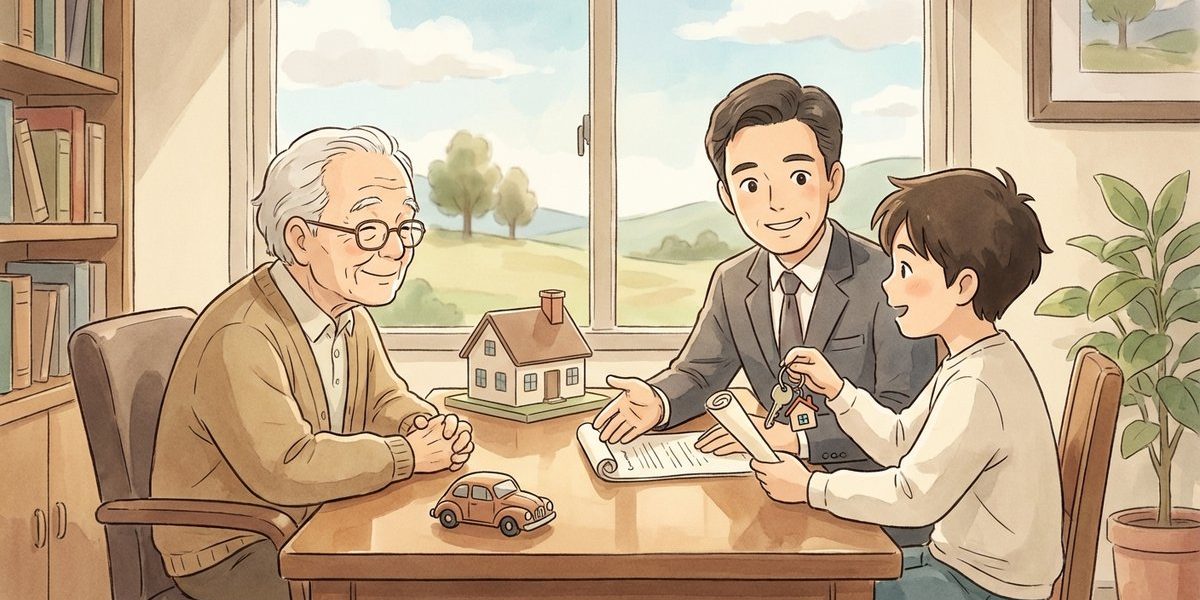
How can my grandparent leave a home and vehicles to me while avoiding probate? – NC
Short Answer
In North Carolina, the usual way to keep a home and vehicles out of probate is to place them into a properly funded revocable living trust during the grandparent’s lifetime, then back that plan up with a pour-over will and updated incapacity documents. The trust can own the home by recorded deed and can often hold vehicle title as well, but the plan only works if the assets are actually retitled before death. A will by itself still goes through probate, and a trust cannot automatically appoint a new guardian for another incapacitated adult, though the grandparent can leave a clear written nomination and care instructions for the court to consider.
Understanding the Problem
In North Carolina estate planning, the single issue is whether a grandparent can pass a home and vehicles to a grandchild without those assets going through probate at death. The answer usually turns on who owns the property at death, whether title was changed during life, and whether the grandparent also signed the supporting documents needed for incapacity and cleanup. The question also includes whether the grandparent can state who should step in to care for another adult relative if the grandparent dies first.
Apply the Law
Under North Carolina law, probate generally applies to property titled in the decedent’s individual name at death. A revocable living trust works differently because the trust, not the individual alone, holds title to the asset, and the successor trustee can manage or distribute trust property without opening probate for that asset. For a home, the transfer usually requires a new deed signed and recorded with the county Register of Deeds. For a broader plan, a pour-over will catches assets left outside the trust, while financial and health care powers of attorney help if incapacity happens before death. If another adult already lacks capacity, any change in guardianship after the grandparent’s death would still go through the clerk of superior court in the proper county.
Key Requirements
- Valid trust and funding: The trust document must be signed properly, and the home and vehicles must actually be retitled into the trust or otherwise aligned with the plan.
- Recorded real estate transfer: A deed transferring the home into the trust should be signed, acknowledged before an officer authorized to take acknowledgments, and recorded in the county where the property is located.
- Backup incapacity and probate documents: A pour-over will, durable financial power of attorney, health care power of attorney, and living will help cover assets missed by the trust and decisions during incapacity.
What the Statutes Say
- N.C. Gen. Stat. § 47-28 (Recording powers of attorney affecting real property) – if an agent signs a real estate transfer under a power of attorney, the power of attorney or certified copy must be recorded.
- N.C. Gen. Stat. § 31-11 (Safekeeping of wills with clerk) – North Carolina allows a signed will to be deposited with the clerk of superior court for safekeeping before death.
- N.C. Gen. Stat. § 32C-3-301 (Authority requiring specific grant; real property and trusts) – a power of attorney generally must expressly grant authority for certain acts involving real property and trusts.
- N.C. Gen. Stat. § 32A-25.1 (Statutory form health care power of attorney) – North Carolina provides a lawful form for naming a health care agent and successor agents, with witness and notary requirements.
- N.C. Gen. Stat. § 90-321 (Advance directive for a natural death) – North Carolina authorizes a living will and sets out when it applies and how it must be signed, witnessed, and notarized.
Analysis
Apply the Rule to the Facts: Based on the facts given, a revocable living trust is the main probate-avoidance tool because the goal is to pass a home and vehicles to a named beneficiary without those assets being owned solely in the grandparent’s probate estate at death. The plan should include a deed moving the home into the trust and title work for each vehicle so ownership matches the trust plan. A pour-over will still matters because it directs any missed asset into the trust through probate if retitling was incomplete. The incapacity documents also matter here because an older grandparent may need someone to handle property, health decisions, and trust funding if capacity declines before the plan is finished.
On the guardianship issue, the estate plan can express the grandparent’s wishes about who should take over care of the other incapacitated adult, but it cannot by itself transfer legal guardianship automatically. North Carolina courts control adult guardianship appointments, so the grandparent’s nomination is best treated as guidance for the clerk and family rather than a binding handoff. In practice, that means the plan should include a written statement of preferences, practical care information, and coordinated powers of attorney for the grandparent’s own affairs.
North Carolina practice also makes funding the trust the step that people most often miss. Signing the trust alone does not move the home, and a vehicle intended for the trust can still fall into probate if the title stays in the grandparent’s sole name. That is why a complete plan usually pairs the trust with a deed, title updates, and a review of any asset that has its own beneficiary or ownership rules. For readers comparing options, what estate planning documents do I need for my situation? gives a useful overview of how these pieces fit together.
Process & Timing
- Who files: the grandparent, or an agent acting under a valid power of attorney if the document allows it. Where: for the home, the county Register of Deeds where the property is located; for any later probate filing, the Clerk of Superior Court in the county of domicile. What: a revocable trust, a deed transferring the home into the trust, a pour-over will, a durable financial power of attorney, a health care power of attorney, and a living will. When: before incapacity or death, because probate avoidance depends on completing the transfer while the grandparent is alive.
- Next, the home deed is recorded and each vehicle title is reviewed with the North Carolina title office process to confirm whether and how the trust should be listed as owner. The estate plan should also name successor fiduciaries and alternates so someone can act if the first choice cannot serve.
- Final step and expected outcome: the trust holds the funded assets, the successor trustee can manage and distribute those trust assets after death, and only assets left outside the trust may need probate through the pour-over will.
Exceptions & Pitfalls
- A trust does not avoid probate for assets never transferred into it.
- Using a power of attorney for a deed can fail if the document does not authorize the act or if the power of attorney is not properly recorded for a real estate transfer.
- Guardianship wishes for another incapacitated adult are not self-executing; the court still decides who will serve, so unclear nominations or missing care instructions can create delay and conflict.
Conclusion
In North Carolina, a grandparent can usually leave a home and vehicles to a grandchild while avoiding probate by creating a revocable living trust and properly transferring those assets into the trust during life. The key threshold is ownership at death: if the home and vehicles are still titled only in the grandparent’s name, probate may still be required. The most important next step is to sign the trust plan and record the deed with the proper Register of Deeds before incapacity or death.
Talk to a Estate Planning Attorney
If your family is dealing with a plan to pass a home and vehicles outside probate while also preparing for incapacity and future caregiving decisions, our firm has experienced attorneys who can help explain the options and timing. Call us today at 919-341-7055. For a related overview, see what documents should I have in place to protect my family and my home as I get older?.
Disclaimer: This article provides general information about North Carolina law based on the single question stated above. It is not legal advice for your specific situation and does not create an attorney-client relationship. Laws, procedures, and local practice can change and may vary by county. If you have a deadline, act promptly and speak with a licensed North Carolina attorney.

