
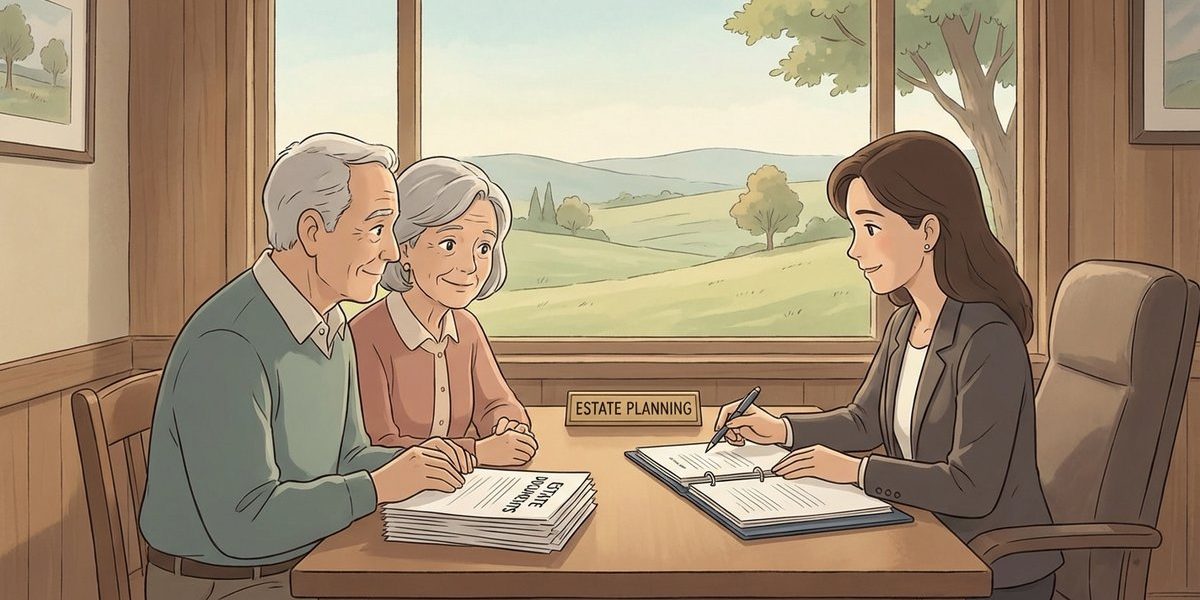
How can I make sure my estate plan is current and legally valid if it was prepared a while ago? – North Carolina
Short Answer
In North Carolina, an older estate plan is often still legally valid if it was signed with the right formalities, but it may no longer match current goals, family circumstances, or how assets are titled. The safest approach is a structured “checkup” of the will, powers of attorney, and health care documents, plus a review of beneficiary designations and deeds. If anything needs to change, it is usually cleaner to sign updated documents rather than hand-edit old ones.
Understanding the Problem
Under North Carolina estate-planning law, the main decision is whether older documents (such as a will and a power of attorney) still do what they are supposed to do and will be accepted when they are needed. The question focuses on how an older adult can confirm that an estate plan is still legally effective and still fits the intended plan for adult children, especially when at least one document (a power of attorney) already exists and additional documents may be needed.
Apply the Law
North Carolina generally recognizes properly executed estate-planning documents even if they were signed years ago. “Legally valid” usually turns on whether the document was executed with the required signing and witnessing rules and whether it has been revoked or replaced. “Current” is different: it means the documents still match the person’s wishes, the people named are still appropriate and available, and the plan still works with how property is owned and how beneficiary designations are set up.
Key Requirements
- Proper execution: The document must have been signed and completed using the formalities North Carolina requires for that type of document (for example, wills have specific witness rules).
- Consistency across documents and assets: The will, powers of attorney, and health care documents should not conflict with each other, and they should match how the home and other assets are titled and how beneficiaries are listed.
- Practical usability: The people named (executor, agent under power of attorney, health care agent) should still be willing and able to serve, and the documents should be in a form that banks, hospitals, and the court system can readily accept.
What the Statutes Say
- N.C. Gen. Stat. § 31-3.3 (Attested written will) – Requires a will to be signed by the testator and attested by at least two competent witnesses, with specific presence/acknowledgment rules.
- N.C. Gen. Stat. § 31-11.6 (Self-proved wills) – Allows a will to be made “self-proved” through notarized acknowledgments/affidavits, which can simplify probate proof later.
- N.C. Gen. Stat. § 47-28 (Recording powers of attorney for real property transfers) – Requires recording a power of attorney (or certified copy) with the register of deeds before an agent transfers real property.
- N.C. Gen. Stat. § 90-321 (Right to a natural death / living will) – Sets execution requirements for a living will, including qualified witnesses and proof before a notary or clerk/assistant clerk.
- N.C. Gen. Stat. § 130A-465 (Advance Health Care Directive Registry) – Establishes the statewide registry for advance health care directives maintained by the Secretary of State.
Analysis
Apply the Rule to the Facts: The facts describe an older adult who owns a home, wants to update estate affairs for adult children, and already has a power of attorney. The key legal validity question is whether the existing documents were executed with the correct North Carolina formalities and whether they still function in real life (for example, whether the named agents are still appropriate and whether the power of attorney will work for real estate if it ever needs to be used). The “current” question is whether the plan still matches the intended distribution to the adult children and whether the home and other assets will pass the way the documents assume.
Process & Timing
- Who initiates the review: The person who signed the documents. Where: With a North Carolina estate planning attorney; for certain filings, with the clerk of superior court or the register of deeds. What: Gather the existing will, any codicils, any trust documents, the financial power of attorney, health care power of attorney, living will, and a current list of assets (including the deed to the home and beneficiary designations). When: As soon as there is concern the plan is outdated, and also after major life events (death in the family, divorce, relocation, major purchase/sale, or a change in health).
- Legal-validity check: Confirm the will was signed and witnessed correctly under North Carolina law and determine whether it is self-proved (or can be made self-proved). Confirm the power of attorney is the type intended and that it is acceptable for the tasks it may need to handle; if the agent might ever need to sell or refinance the home, confirm recording requirements and whether recording should be done now or later depending on the plan.
- Update and implementation: If changes are needed, sign updated documents with proper formalities and replace older versions. Then “implement” the plan by aligning deeds, beneficiary designations, and document storage/sharing so the right people can actually use the documents when needed.
Exceptions & Pitfalls
- Handwritten edits and “do-it-yourself” changes: Writing on an old will or power of attorney can create confusion and may not be effective. In many situations, signing a clean updated document is safer than trying to patch an old one.
- Outdated decision-makers: A plan can be “valid” but still fail in practice if the named executor/agent has died, moved, become ill, or is no longer trusted. Backup choices matter.
- Beneficiary designations overriding the will: Certain assets pass by contract (like many retirement accounts and life insurance). If those beneficiaries are outdated, the will may not fix it.
- Real estate and recording issues: Even a valid power of attorney can run into delays if it is not recorded when a real estate transaction is needed, or if a lender/title company requires a more current form.
- Health care documents not accessible: A health care power of attorney or living will may be properly signed but still not help in a crisis if no one can find it or if it was never shared with medical providers. North Carolina’s registry can help with availability in emergencies.
Conclusion
In North Carolina, an older estate plan can remain legally valid if it was executed with the required formalities, but it may no longer be current if family roles, assets, or goals have changed. A proper update focuses on (1) confirming the will meets North Carolina signing and witness rules, (2) confirming the power of attorney and health care documents still work in real life, and (3) aligning deeds and beneficiary designations with the plan. Next step: schedule an estate-plan review and, if changes are needed, sign updated documents correctly.
Talk to a Estate Planning Attorney
If you’re dealing with an older will or power of attorney and want confidence that the plan is still valid and will work for your family, our firm has experienced attorneys who can help you understand your options and timelines. Call us today at (919) 341-7055.
Disclaimer: This article provides general information about North Carolina law based on the single question stated above. It is not legal advice for your specific situation and does not create an attorney-client relationship. Laws, procedures, and local practice can change and may vary by county. If you have a deadline, act promptly and speak with a licensed North Carolina attorney.

