
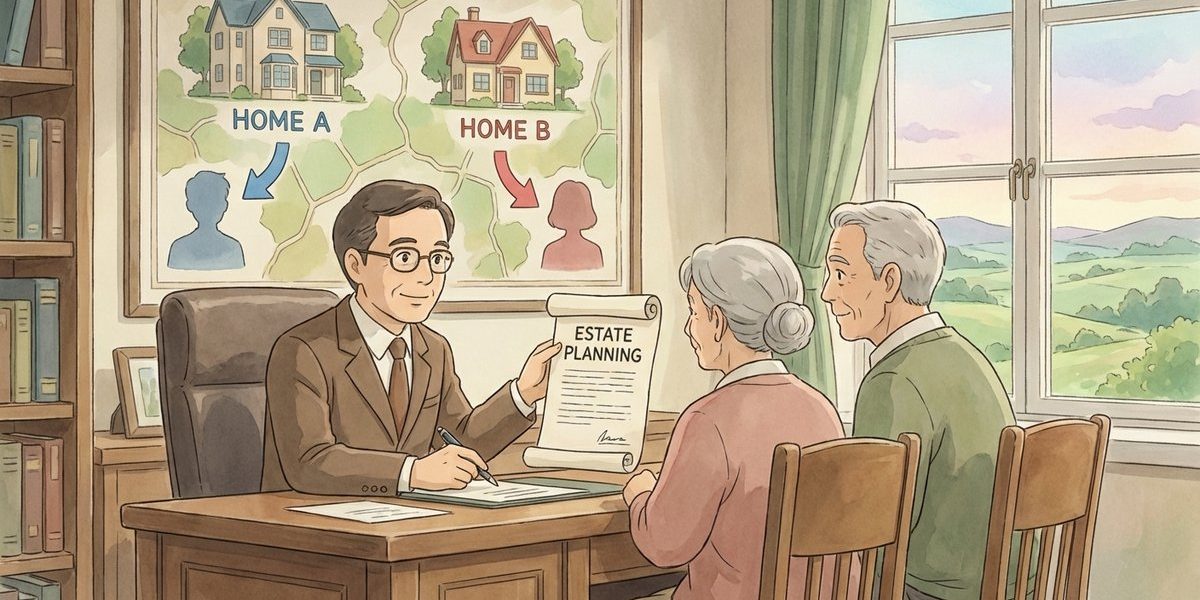
How can I leave one home to one child and a different home to another child using a revocable trust? – North Carolina
Short Answer
In North Carolina, a revocable trust can leave specific real estate to different children by (1) transferring each home into the trust during life and (2) writing clear “specific gift” instructions in the trust that identify which child receives which property. The trust should also name a successor trustee and give that trustee clear authority and instructions for handling mortgages, expenses, and sale decisions if a property cannot be distributed as-is. If a home is located in another state, the deed work and recording rules for that state still control, so local counsel is often needed to properly fund the trust.
Understanding the Problem
In North Carolina estate planning, the core question is how a revocable trust can direct that Home A goes to Child 1 and Home B goes to Child 2, especially when the homes are in different states and the plan depends on getting the deed work done correctly. The decision point is whether the trust will make a true “this exact house to this exact child” distribution, or whether the trust will allow a sale and use a backup plan if a property cannot be transferred or kept. The timing trigger is death (when the successor trustee takes over), but the key planning work happens during life when the homes are transferred into the trust and the distribution language is drafted.
Apply the Law
Under North Carolina law, a revocable trust is commonly used to hold title to property during life and then direct distribution at death without relying on a will to transfer that trust-owned property. For real estate, the practical rule is: the trust can only give away what it actually owns at death, so each home must be properly deeded into the trust (or to the trustee) and recorded in the county (and state) where the property sits. North Carolina also has specific rules that help clarify that a deed “to a trust” is treated as a deed to the trustee(s), which helps avoid technical title problems when the deed names the trust rather than the trustee.
Key Requirements
- Fund the trust with each home: Each property intended to pass under the trust should be transferred into the trust during life by a properly prepared and recorded deed (and any lender issues should be addressed before signing).
- Use clear “specific gift” language: The trust should identify each home with enough detail (address and/or legal description reference) and name the beneficiary who receives it, plus a backup plan if that home is sold or cannot be distributed.
- Give the successor trustee workable instructions: The trust should authorize the trustee to pay expenses, handle insurance and taxes, deal with mortgages, and either distribute the property in-kind or sell it if needed, with a clear method for equalizing value if that is part of the plan.
What the Statutes Say
- N.C. Gen. Stat. § 39-6.7 (Construction of conveyances to or by trusts) – Clarifies that a deed or other transfer “to a trust” is treated as a transfer to the trustee(s), and a transfer “by a trust” is treated as a transfer by the trustee(s).
- N.C. Gen. Stat. § 30-3.4 (Elective share procedure; six-month deadline) – Sets a key deadline and procedure for a surviving spouse’s elective share claim, which can affect a trust-based plan if the spouse’s rights are not addressed.
- N.C. Gen. Stat. § 30-3.6 (Waiver of elective share) – Allows waiver of elective share rights by written waiver meeting statutory standards, which is sometimes part of coordinated planning for married couples.
Analysis
Apply the Rule to the Facts: The plan described involves multiple homes in different states and a single North Carolina revocable trust. That can work well if each home is actually transferred into the trust (or to the trustee) with a deed that meets the recording requirements where the home is located, and if the trust contains specific gifts that clearly match each home to the intended child. Because at least one property is out of state, the trust language can be drafted in North Carolina, but the deed and recording details for that property often require local counsel to avoid title defects that could force probate or delay distribution.
Process & Timing
- Who files: The current owner(s) sign the deed(s) during life (often both spouses if both are on title). Where: For a North Carolina property, the deed is recorded with the Register of Deeds in the county where the property is located. What: A new deed transferring the home to the trustee(s) of the revocable trust (or, in some cases, “to the trust,” consistent with North Carolina’s construction statute). When: Ideally as part of the trust signing and funding process, not after death.
- Confirm the “funding” is complete: After recording, confirm the recorded deed is indexed correctly, the legal description matches, and the trust’s schedule of assets (if used) matches what was deeded. For out-of-state homes, confirm the deed format and recording steps required in that state were followed.
- At death, the successor trustee distributes: The successor trustee follows the trust’s specific gift instructions to transfer Home A to Child 1 and Home B to Child 2, usually by signing and recording trustee’s deeds in the county (and state) where each property sits, after handling any required expenses and administrative steps described in the trust.
Exceptions & Pitfalls
- Out-of-state real estate still follows local deed rules: A North Carolina trust does not override another state’s deed formalities, recording practices, or transfer requirements. A common pitfall is assuming a North Carolina-style deed will be accepted and properly indexed elsewhere.
- Mortgage and due-on-sale concerns: Some loans restrict transfers or require notice. Even when federal rules may protect certain transfers to a living trust for a borrower’s benefit, lenders and servicers can still create practical delays if paperwork is incomplete. The trust should also say who pays the mortgage and expenses between death and distribution.
- “What if the house is sold before death?” If the trust says “Home A to Child 1” but Home A is sold and replaced, unclear drafting can create conflict. A solid plan includes a backup clause (for example, a substitute property, a cash equivalent, or a residue allocation) and clear authority for the trustee.
- Unequal values and equalization disputes: Two homes rarely have the same value. If the intent is equal treatment overall, the trust should state whether the gifts are intended to be equalized (and how), or whether each child simply receives the designated home regardless of value.
- Spousal rights can affect the plan: For married couples, North Carolina’s elective share rules can impact what ultimately passes as planned if the surviving spouse’s rights are not addressed as part of the overall estate plan.
- Title and ownership mismatches: If a home is owned in a way that does not match the trust plan (for example, different owners on title, or a prior deed not recorded correctly), the trust distribution language alone will not fix the title problem.
Conclusion
In North Carolina, leaving one home to one child and a different home to another child through a revocable trust usually requires two things: the homes must be properly deeded into the trust (or to the trustee) during life, and the trust must contain clear specific-gift instructions and workable trustee powers for expenses, mortgages, and a backup plan if a property cannot be distributed as-is. If a surviving spouse’s elective share may be an issue, timing can matter because the claim deadline is tied to the estate administration. Next step: prepare and record the correct deed(s) for each property with the proper Register of Deeds (and use local counsel for out-of-state properties).
Talk to a Estate Planning Attorney
If dealing with multiple homes and a plan to leave different properties to different children through a revocable trust, our firm has experienced attorneys who can help clarify options, coordinate deed funding (including out-of-state counsel when needed), and reduce the risk of delays after death. Call us today at [CONTACT NUMBER].
Disclaimer: This article provides general information about North Carolina law based on the single question stated above. It is not legal advice for your specific situation and does not create an attorney-client relationship. Laws, procedures, and local practice can change and may vary by county. If you have a deadline, act promptly and speak with a licensed North Carolina attorney.

