
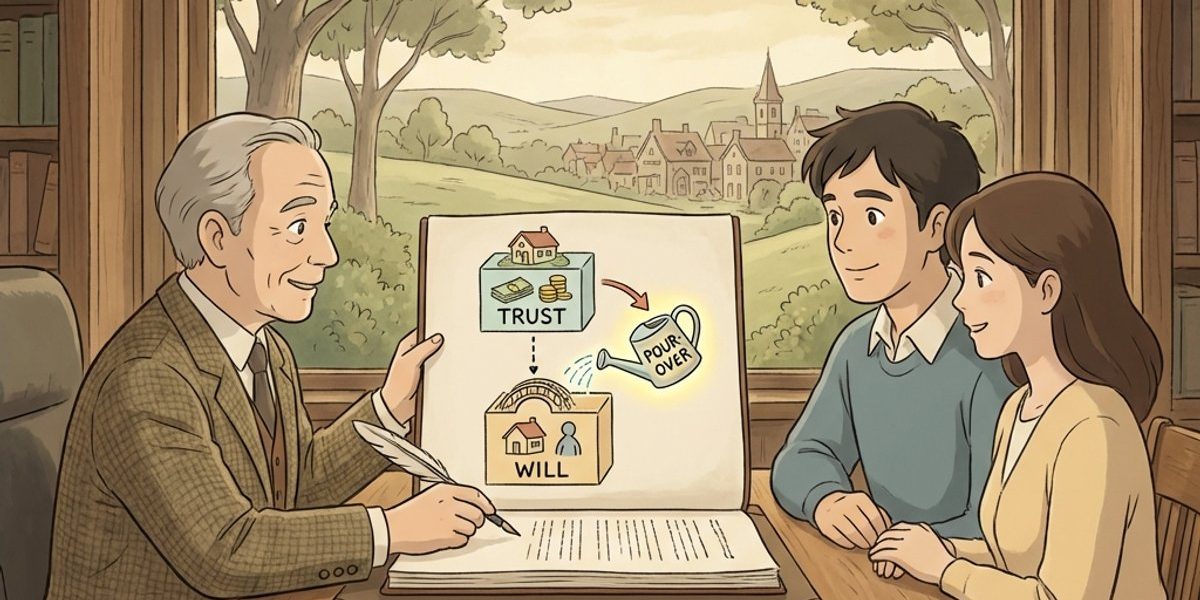
Do I still need a will if I set up a trust? – North Carolina
Short Answer
In North Carolina, most people still need a will even if they set up a trust. A trust controls the assets that are actually titled in the trust (or payable to it), but a will acts as a backstop for anything left outside the trust at death and lets a person name key decision-makers. Many trust-based plans use a “pour-over will” to direct leftover probate assets into the trust.
Understanding the Problem
In North Carolina estate planning, the main decision is whether setting up a trust replaces the need for a will. The issue usually comes up when a person plans to create a revocable living trust to manage property during life and distribute it at death, and wants to know whether a separate will is still required to handle anything the trust does not cover. The practical trigger is what happens at death if an asset is not owned by the trust or does not pass by beneficiary designation.
Apply the Law
Under North Carolina law, a will and a trust do different jobs. A trust generally controls property that has been transferred into the trust during life (often called “funding” the trust). A will controls probate property owned in an individual name at death and is also the document used to nominate an executor (personal representative) to handle the probate estate through the Clerk of Superior Court in the county where the estate is opened. Even with a trust-based plan, a will is commonly used as a “pour-over will” so that probate assets can be transferred into the trust after death and then distributed under the trust’s instructions.
North Carolina also has specific signing rules for wills. If those rules are not followed, the will may not be valid, which can push the estate into intestate (no-will) rules and create delays and disputes. Many wills are also signed with a self-proving affidavit to reduce the need to locate witnesses later.
Key Requirements
- The trust must be funded: The trust only controls assets that are actually titled in the trust’s name (or otherwise directed to the trust). If assets stay in an individual name, they may still require probate.
- A will covers the “leftovers”: A will can direct probate assets not already in the trust to be transferred to the trust (a pour-over approach) and can name an executor to handle the probate process.
- The will must be properly executed: North Carolina has formal requirements for a valid will, and many people add a self-proving affidavit so the will is easier to probate.
What the Statutes Say
- N.C. Gen. Stat. § 31-3.1 (Will invalid unless statutory requirements complied with) – A will is not valid unless it meets North Carolina’s statutory execution requirements.
- N.C. Gen. Stat. § 31-11.6 (Self-proved wills) – Allows a will to be made “self-proved,” which can streamline probate by reducing later witness issues.
- N.C. Gen. Stat. § 31-11 (Safekeeping wills with the Clerk of Superior Court) – Permits filing a will for safekeeping with the Clerk of Superior Court during life.
Analysis
Apply the Rule to the Facts: Here, the goal is to set up a trust and understand how the process works. In a typical North Carolina trust-based plan, a will is still used to catch assets that never get transferred into the trust and to name the person who will handle any probate administration. Without a will, any “outside-the-trust” assets may pass under North Carolina intestacy rules, and the court process can become more complicated than intended.
For example, if a bank account or vehicle title stays in an individual name with no beneficiary designation, that asset may require probate even though a trust exists. A pour-over will can direct that probate asset into the trust so the trust’s distribution plan still controls after the probate transfer.
Process & Timing
- Who signs: The person creating the plan signs the trust and the will. Where: Typically signed with an attorney and a notary; probate filings later go through the Clerk of Superior Court in the county where the estate is opened. What: A revocable trust agreement, a “pour-over” will, and (commonly) a self-proving affidavit attached to the will.
- Funding step: After signing, assets are retitled into the trust (for example, deeds for real estate, updated account ownership for non-retirement accounts). Beneficiary designations are reviewed so they coordinate with the trust plan.
- After death: If anything remains outside the trust, the executor uses the will to open probate (if needed), collect those assets, and then transfer them to the trust for administration and distribution under the trust terms.
Exceptions & Pitfalls
- Unfunded trust problem: Creating a trust but failing to retitle assets into it can defeat the main purpose of the trust and leave a probate estate anyway.
- Beneficiary designations don’t match the plan: Retirement accounts and life insurance usually pass by beneficiary form, not by the trust or will. Out-of-date designations can override the intended trust distribution.
- Improper will signing: If the will is not executed correctly, it may not be accepted in probate, which can force intestate administration for any probate assets.
- Minor children and other roles: Even with a trust, a will is often the place to nominate an executor and, when applicable, nominate guardians for minor children (subject to court approval).
Conclusion
In North Carolina, setting up a trust usually does not eliminate the need for a will. The trust controls assets that are titled in the trust, but a will (often a pour-over will) acts as a safety net for assets left outside the trust and names the executor to handle any required probate through the Clerk of Superior Court. The most important next step is to sign a will that matches the trust plan and then promptly fund the trust by retitling assets into it.
Talk to a Estate Planning Attorney
If you’re dealing with setting up a trust and figuring out whether a will is still needed, our firm has experienced attorneys who can help you understand your options and timelines. Call us today at (919) 341-7055.
Disclaimer: This article provides general information about North Carolina law based on the single question stated above. It is not legal advice for your specific situation and does not create an attorney-client relationship. Laws, procedures, and local practice can change and may vary by county. If you have a deadline, act promptly and speak with a licensed North Carolina attorney.

