
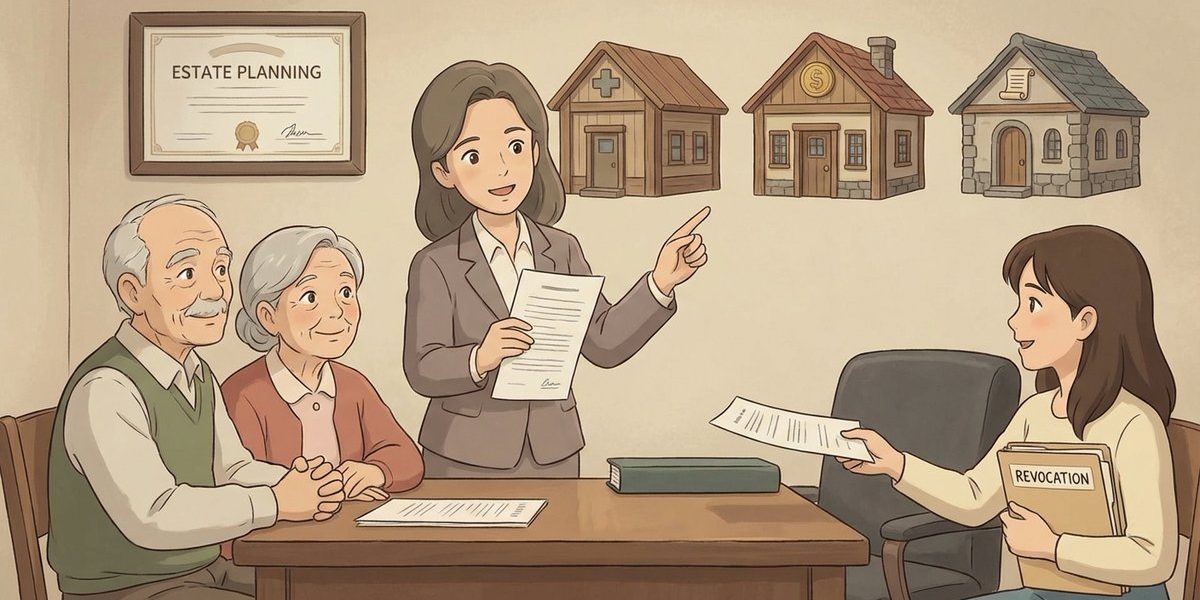
Do I need to notify banks, doctors, or other offices that the old power of attorney is revoked? – North Carolina
Short Answer
Usually, yes. In North Carolina, a revocation is most effective in the real world when the people and offices that might rely on the old power of attorney receive clear written notice that it has been revoked. Many banks and medical providers can keep honoring an agent’s instructions until they have actual notice of the revocation, so giving notice (and keeping proof) helps prevent the old agent from being treated as still authorized.
Understanding the Problem
In North Carolina estate planning, the practical question is whether banks, doctors, and other offices can keep treating an old agent as authorized after a principal signs a revocation. The decision point is whether the revocation has been communicated to the specific third parties who might rely on the old document. This issue often comes up when a power of attorney was signed using an online form, may not be accepted everywhere, and the principal wants to revoke it and possibly replace it with a new power of attorney prepared by a nearby attorney.
Apply the Law
North Carolina law protects third parties who act in good faith without actual notice that a power of attorney has been revoked. That means revoking a power of attorney is not only about signing a revocation document; it is also about making sure the right people and offices receive notice so they do not keep relying on the old authority. Separate rules can apply depending on whether the document is a health care power of attorney, a financial power of attorney used at a bank or credit union, or a power of attorney used for real estate transactions.
Key Requirements
- A clear revocation: A written revocation that identifies the prior power of attorney and states it is revoked helps avoid confusion and reduces the chance a third party treats the old agent as still authorized.
- Actual notice to the right places: Banks, medical providers, and other offices are more likely to stop accepting the old agent’s instructions once they receive actual notice of the revocation (often in writing, sometimes on their own forms).
- Recordation when real estate is involved: If the old power of attorney was recorded for real estate use, recording the revocation (or otherwise addressing the land records) can be important so the public record does not continue to show the agent’s authority.
What the Statutes Say
- N.C. Gen. Stat. § 32A-24 (Reliance on health care power of attorney; defense) – Health care providers may rely on a health care power of attorney unless they have actual notice of revocation, and they are generally protected when relying in good faith.
- N.C. Gen. Stat. § 54-109 (Credit unions; notice of revocation) – A credit union may continue to recognize an agent until it receives actual notice of death or written notice of revocation signed by the principal, and it has a short processing window for certain items.
- N.C. Gen. Stat. § 47-28 (Recording required for powers of attorney affecting real property) – For real estate transfers signed by an agent, the power of attorney (or a certified copy) generally must be recorded with the register of deeds in the appropriate county before the transfer.
- N.C. Gen. Stat. § 47-36.1 (Affidavit of agent re: no knowledge of revocation/termination) – An agent’s affidavit stating no actual knowledge or notice of revocation can protect reliance in certain recordable transactions, which is one reason notice and recordkeeping matter.
Analysis
Apply the Rule to the Facts: Here, the existing power of attorney was downloaded online, notarized, and not recorded. If a bank, doctor’s office, or other institution has a copy of that old document, it may continue to treat the named agent as authorized until it receives actual notice that the document has been revoked. Because mobility is limited and the goal is to revoke and possibly replace the document, a practical plan is to sign a written revocation (and a new power of attorney if desired) and then deliver notice to each place that might rely on the old one.
Process & Timing
- Who signs: The principal. Where: Typically in front of a notary (and, for health care documents, follow the execution formalities required for that document). What: A written “Revocation of Power of Attorney” that identifies the prior document and the agent, plus a new power of attorney if replacing it. When: As soon as the decision is made, especially before any upcoming medical visits, banking transactions, or caregiving changes.
- Give notice to third parties: Provide a copy of the signed revocation (and, if applicable, the new power of attorney) to each bank/financial institution, medical provider group, hospital system, and any other office that has the old document on file. Ask what their internal process requires (some require in-person verification, signature cards, or their own forms) and keep written confirmation of receipt.
- Address real estate records if relevant: If the old power of attorney was ever recorded or might be used for real estate, contact the register of deeds in the county where it would be recorded and ask what they require to record a revocation or related document. If a new power of attorney will be used for real estate transfers, recording requirements may apply before an agent can sign a deed.
Exceptions & Pitfalls
- Health care vs. financial documents get handled differently: A revocation given to a bank does not automatically update medical records, and vice versa. Health care providers are generally protected when they act without actual notice of revocation, so medical offices and hospital systems should receive direct notice. See N.C. Gen. Stat. § 32A-24.
- Not notifying the former agent: If the prior agent is not told clearly and in writing that authority has ended, the agent may keep trying to act. A written notice to the former agent (with delivery proof) helps reduce confusion and disputes.
- Assuming “a new POA automatically fixes everything”: Even if a new power of attorney is signed, third parties may still have the old one in their files. Many offices will not treat the old one as revoked unless they receive the revocation or updated paperwork.
- Real estate record issues: If an agent will sign documents that get recorded (like deeds), recording rules can become a gatekeeper issue. A power of attorney used for real estate transfers generally must be recorded in the proper county. See N.C. Gen. Stat. § 47-28.
- Institution-specific requirements: Banks and credit unions often have their own acceptance standards and may require additional steps. Credit unions, for example, can continue recognizing an agent until they receive the type of notice described by statute. See N.C. Gen. Stat. § 54-109.
Conclusion
In North Carolina, revoking a power of attorney works best when the revocation is put in writing and delivered to every bank, medical provider, and office that might rely on the old document, because many third parties can act on an agent’s instructions until they have actual notice of revocation. If real estate authority is involved, recording rules may also matter. The most practical next step is to sign a written revocation and promptly provide copies to each institution that has the old power of attorney on file.
Talk to a Estate Planning Attorney
If you’re dealing with revoking an old power of attorney and making sure banks, doctors, and other offices stop relying on it, our firm has experienced attorneys who can help you understand your options and timelines. Call us today at 919-341-7055.
Disclaimer: This article provides general information about North Carolina law based on the single question stated above. It is not legal advice for your specific situation and does not create an attorney-client relationship. Laws, procedures, and local practice can change and may vary by county. If you have a deadline, act promptly and speak with a licensed North Carolina attorney.

