
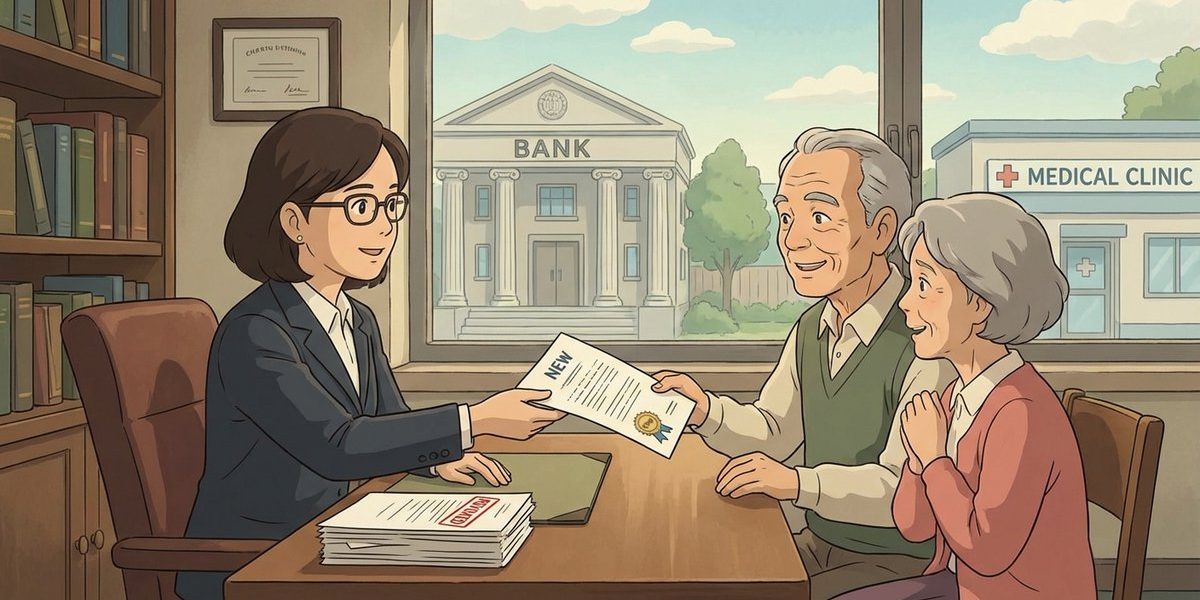
Can I revoke my current power of attorney and create a new one without issues with banks or doctors? – North Carolina
Short Answer
Yes. In North Carolina, a person can revoke a prior power of attorney and sign a new one, but banks and health care providers can keep relying on the old document until they receive notice of the revocation. For a health care power of attorney, the revocation is not effective for doctors and hospitals until the revocation is communicated to the named agent(s) and the attending physician (or eligible psychologist). For financial accounts, a bank may continue honoring the old authority until it receives actual or written notice of revocation.
Understanding the Problem
Under North Carolina estate planning law, can a principal revoke an existing power of attorney and sign a new one, and what must happen so banks and medical providers recognize the change? The key decision point is whether the revocation and the new document have been properly communicated to the people and offices that rely on them. Timing matters because third parties may keep following the old power of attorney until notice reaches the right place.
Apply the Law
North Carolina generally allows a principal to revoke a power of attorney and execute a new one. The practical issue is not whether revocation is allowed, but when the revocation becomes effective for the third parties who might rely on the old document. Health care providers have statutory protections when they act without actual knowledge of revocation, and certain banks may continue to recognize an agent’s authority until they receive notice that the authority has ended.
Key Requirements
- Capacity at the time of revocation: For a health care power of attorney, the principal must be capable of making and communicating health care decisions to revoke it.
- Clear revocation method: A health care power of attorney can be revoked by a signed, acknowledged revocation; by signing a later health care power of attorney; or by any other clear communication showing intent to revoke.
- Notice to the right people: Even a valid revocation may not protect against confusion unless the revocation is communicated to the prior agent(s) and the medical decision-makers, and written/actual notice is delivered to financial institutions that have the old document on file.
What the Statutes Say
- N.C. Gen. Stat. § 32A-20 (Revocation of health care power of attorney) – Allows revocation and explains when revocation becomes effective for health care purposes (after communication to the agent(s) and attending physician/eligible psychologist).
- N.C. Gen. Stat. § 32A-24 (Health care provider reliance) – Protects health care providers who rely in good faith on a health care power of attorney without actual knowledge of revocation.
- N.C. Gen. Stat. § 54C-174 (Bank reliance on power of attorney) – Allows certain banks to continue recognizing an agent’s authority until the bank receives written or actual notice of revocation (or other terminating events).
- N.C. Gen. Stat. § 32A-25.1 (Statutory form health care power of attorney) – Provides a lawful form and execution approach (including witness and notary requirements) and includes a standard revocation-of-prior-documents clause.
Analysis
Apply the Rule to the Facts: The question assumes an existing power of attorney is in place and a new one is desired. Under North Carolina law, revocation is allowed, but banks and doctors may continue to follow the old document until they receive notice of the change. For health care decisions, the revocation becomes effective only after the principal communicates the revocation to each named health care agent in the old document and to the attending physician (or eligible psychologist). For financial accounts, the risk of “issues” usually comes from a delay or gap in providing written/actual notice to the institution that has the old power of attorney on file.
Process & Timing
- Who acts: The principal. Where: For medical decisions, communication should go to the named health care agent(s) and the principal’s attending physician or the facility’s medical records/health information management office in North Carolina. For banking, notice should go to each financial institution’s branch or legal/POA processing unit that maintains the account records. What: A signed revocation (often notarized for clarity) and/or a newly executed power of attorney, plus a cover letter requesting the old document be removed from records. When: As soon as possible after signing, because third parties can rely on the old document until notice is received.
- Confirm receipt: Request written confirmation that the revocation and the new document were received and scanned into the provider’s or bank’s system. If a facility uses an electronic chart, request that the old power of attorney be marked “revoked” and the new one be uploaded.
- Reduce overlap: Provide the new document wherever the old one was previously provided (primary care office, specialists, hospital system, and each bank). Keep a dated list of who received notice and when.
Exceptions & Pitfalls
- Health care revocation is not effective until communicated: For a health care power of attorney, North Carolina law ties effectiveness of revocation to communication to the named agent(s) and the attending physician/eligible psychologist. If that communication does not happen, a provider may still rely on the old document.
- Providers and banks may rely without actual knowledge: Health care providers are generally protected when they act in good faith without actual knowledge of revocation. Certain banks may treat payments or withdrawals made before notice as fully discharged, which can be hard to unwind.
- Execution problems with the new health care power of attorney: If the new health care power of attorney is not properly executed (including the required witnessing and notarization approach), a hospital may reject it and default to the last valid document on file.
- Assuming “signing a new one” fixes everything automatically: Signing a later document can revoke an earlier one, but “issues” often arise because the old document remains in a bank’s or doctor’s records until someone updates the file.
- Divorce/separation effects: If the prior health care agent was a spouse, a divorce or separation order can revoke that spouse-agent’s authority under North Carolina law, which can create confusion if records are not updated to show the successor agent.
Conclusion
North Carolina law allows revocation of an existing power of attorney and creation of a new one, but banks and doctors may continue to rely on the old document until they receive notice. For a health care power of attorney, revocation becomes effective only after the principal communicates the revocation to each named health care agent and to the attending physician (or eligible psychologist). The most important next step is to deliver written notice of revocation and the new document to every bank and medical provider that has the old power of attorney on file.
Talk to a Estate Planning Attorney
If you’re dealing with revoking an old power of attorney and putting a new one in place without delays from banks or medical providers, our firm has experienced attorneys who can help you understand your options and timelines. Call us today at (919) 341-7055.
Disclaimer: This article provides general information about North Carolina law based on the single question stated above. It is not legal advice for your specific situation and does not create an attorney-client relationship. Laws, procedures, and local practice can change and may vary by county. If you have a deadline, act promptly and speak with a licensed North Carolina attorney.

