
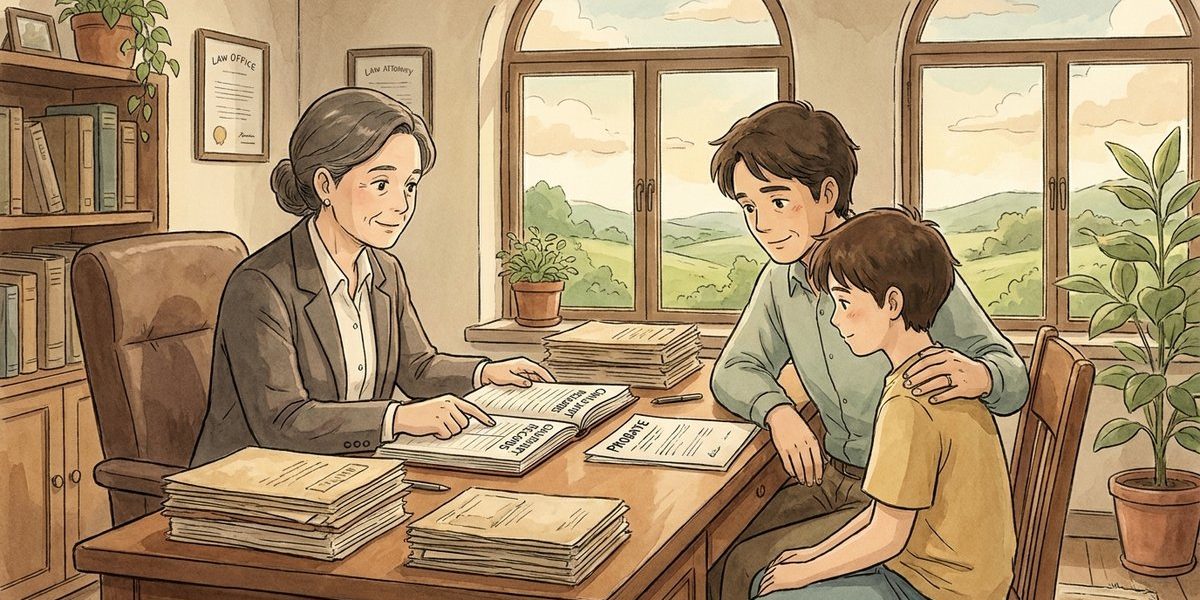
Can child support records be used to prove family relationship in a probate matter? – NC
Short Answer
Sometimes, but not by themselves in every case. In North Carolina probate matters, child support records may help show a parent-child relationship, especially if they include a court paternity finding or a signed acknowledgment, but inheritance rights usually depend on whether the relationship fits North Carolina’s intestacy rules. If the claim is through the mother, the rule is usually simpler; if the claim is through the father, the estate often needs stronger proof that paternity was legally established in a way North Carolina recognizes.
Understanding the Problem
In a North Carolina probate matter, the main question is whether a person can use child support records to show the family relationship needed to inherit from a grandparent’s estate. The issue usually turns on the claimed parent-child link, whether the claim runs through the mother or the father, and whether probate paperwork must be filed or supplemented before the clerk can treat that person as an heir.
Apply the Law
North Carolina probate law looks first to the legal parent-child relationship, not just family history. In an intestate estate, the clerk of superior court acting as judge of probate and the personal representative need enough proof to identify the correct heirs. For a child born outside marriage, North Carolina generally treats the child as the child of the mother for inheritance purposes. A claim through the father is narrower and usually requires one of a few recognized forms of proof, such as a final paternity adjudication, a qualifying written acknowledgment filed with the clerk, legitimation, or in limited cases DNA proof paired with timely notice to the estate. If the claim depends on the father’s line, a key deadline may apply: written notice of the basis of the claim must be given to the personal representative within six months after the first publication or posting of general notice to creditors.
Key Requirements
- Correct family line: The estate must know whether the inheritance claim runs through the maternal side or the paternal side, because North Carolina applies different proof rules.
- Legally recognized proof: Child support records help most when they show a court order, adjudication, or other formal finding of paternity rather than informal payment history alone.
- Probate timing and notice: If the claim is through a father in an intestate estate, the claimant may need to give timely written notice to the personal representative to preserve the inheritance claim.
What the Statutes Say
- N.C. Gen. Stat. § 29-19 (Succession by, through and from children born out of wedlock) – explains when a child born outside marriage may inherit through the mother and when the child may inherit through the father.
- N.C. Gen. Stat. § 49-10 (Legitimation) – allows a father to petition the court to have a child declared legitimate.
- N.C. Gen. Stat. § 49-12 (Legitimation by subsequent marriage) – provides that a child may become legitimate if the parents marry after the child’s birth.
- N.C. Gen. Stat. § 29-18 (Succession by, through and from legitimated children) – gives a legitimated child the same inheritance rights as a child born in wedlock.
Analysis
Apply the Rule to the Facts: Here, the estate needs documents that connect the individual to the grandparent through a legally recognized parent-child relationship. A birth certificate showing that a parent refused to sign does not automatically defeat the claim, but it may leave a gap if the inheritance claim depends on the father’s side. If old child support records include a court paternity determination, a support order entered after paternity was established, or a filed acknowledgment tied to the parent, those records may strongly support heirship; if they show only payment history without a legal finding, they may help but may not be enough on their own.
If the inheritance claim runs through the mother, North Carolina law is generally more direct, and the estate may accept records such as the birth certificate, other vital records, or probate affidavits that connect each generation. If the claim runs through the father, the clerk or personal representative may ask for stronger proof because North Carolina intestacy law limits when a child born outside marriage can inherit through the father’s line. That is why records from an old child support case can matter: they may show that paternity was already adjudicated in a court proceeding, which is much more useful than an unsigned birth record standing alone.
Related issues often come up when families are trying to prove heirship, including disputes about parentage or legal parent-child status and how to prove a deceased parent’s child relationship when challenged.
Process & Timing
- Who files: usually the personal representative, applicant for letters, or the person claiming heir status. Where: before the Clerk of Superior Court in the county where the estate is being administered in North Carolina. What: estate intake papers identifying heirs, plus supporting records such as birth certificates, prior court orders, child support or paternity files, legitimation orders, or affidavits if requested. When: as early as possible in the estate administration; if the claim is through the father under intestacy, written notice to the personal representative should be given within six months after the first publication or posting of general notice to creditors.
- The clerk or personal representative reviews the family information and may ask for more proof if the relationship is unclear, especially where the birth certificate is incomplete or the claim depends on paternal inheritance rights. County practice can vary on what supporting documents are requested first.
- If the proof is accepted, the person is treated as an heir for distribution purposes; if not, the matter may require a formal probate dispute or additional court records to resolve the relationship issue.
Exceptions & Pitfalls
- Child support records are not all the same. A court order based on an actual paternity adjudication carries more weight than a payment ledger or agency printout with no finding of parentage.
- A missing signature on a birth certificate does not always end the inquiry, but it often means the estate will need another formal record to bridge the gap.
- Claims through the mother and claims through the father are treated differently under North Carolina intestacy law, so using the wrong standard is a common mistake.
- Waiting too long to notify the personal representative can create problems in paternal-line claims, even if supporting records exist.
- If the child was later legitimated or the parents later married, those records may change the analysis and should be gathered early.
Conclusion
Yes, child support records can sometimes be used to prove a family relationship in a North Carolina probate matter, but the key question is whether those records show a legally recognized parent-child relationship for inheritance purposes. They are most useful when they contain a paternity adjudication, filed acknowledgment, or related court order. The next step is to file the supporting records with the estate matter before the Clerk of Superior Court and, if the claim runs through the father, give written notice to the personal representative within six months of general notice to creditors first being published or posted.
Talk to a Probate Attorney
If a family is dealing with an estate that requires proof of parentage or heirship, our firm has experienced attorneys who can help review the available records, explain the probate rules, and identify the next steps and deadlines. Call us today at [919-341-7055].
Disclaimer: This article provides general information about North Carolina law based on the single question stated above. It is not legal advice for your specific situation and does not create an attorney-client relationship. Laws, procedures, and local practice can change and may vary by county. If you have a deadline, act promptly and speak with a licensed North Carolina attorney.

