
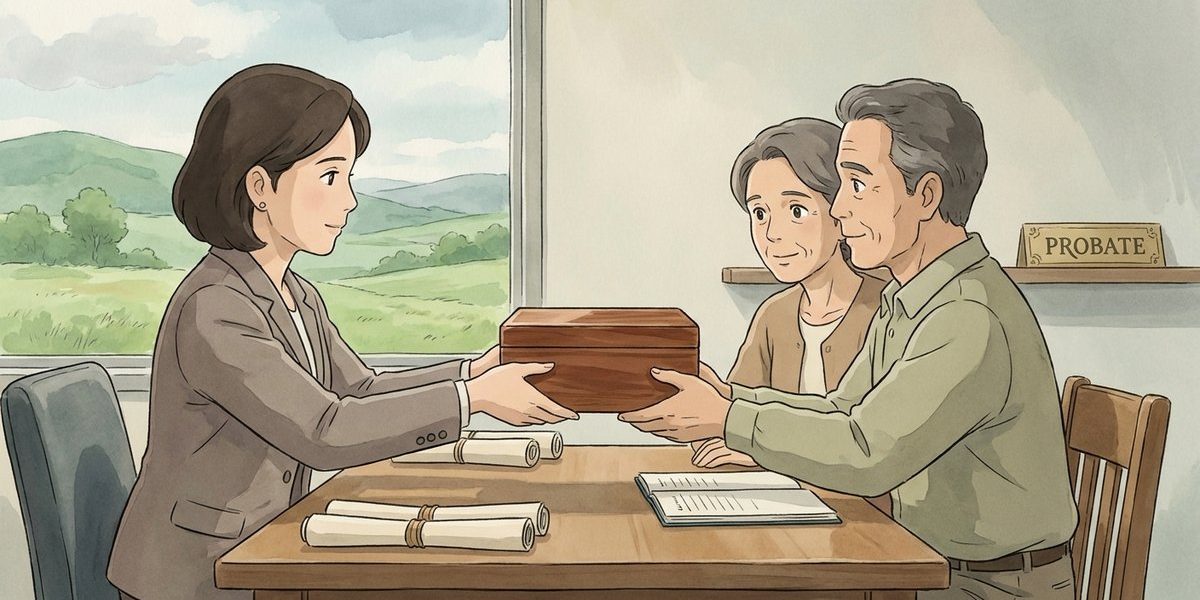
How are personal belongings or remains usually transferred between family members during estate administration? – NC
Short Answer
In North Carolina, personal belongings are usually transferred by the personal representative as part of the estate administration, often with written receipts, releases, or a family settlement agreement that shows who receives what. Human remains and cremated remains follow a separate set of rules: the person with legal authority over final disposition directs the transfer, and cremated remains are typically released to the person named by that authorizing agent. When family members have reached an agreement, clear written documentation helps the estate move forward and reduces later disputes.
Understanding the Problem
In North Carolina probate matters, the main question is how a personal representative or the family usually passes personal belongings or remains from one relative to another while the estate is still being administered. The issue is not whether the family can settle every estate dispute, but how these items are commonly delivered, documented, and handled so administration can continue. Timing matters because transfers made during administration should match the estate process, the authority of the person acting, and any agreement already reached among the interested family members.
Apply the Law
Under North Carolina law, ordinary personal belongings are generally estate assets if they belonged to the decedent alone, so the personal representative controls collection, safeguarding, and distribution of those items during probate. In practice, families often use an inventory, a written agreement, and signed receipts or releases to document who receives jewelry, furniture, keepsakes, or other tangible personal property. Remains are different. The right to control final disposition belongs first to the person chosen by the decedent in a valid written direction, and if there is no such direction, North Carolina law sets a priority list of relatives who may act. For cremated remains, the crematory releases the remains to the individual specified by the authorizing agent, and both sides sign a receipt. The main forum for estate administration is the Clerk of Superior Court in the county where the estate is pending, while disputes over remains can also involve the funeral provider or, if needed, a court order. A key timing rule is that a person with priority who does not act within five days of notification or 10 days from death, whichever is earlier, may be treated as having waived that right.
Key Requirements
- Proper authority: Personal belongings should be transferred by the duly appointed personal representative, while remains must be handled by the person with legal authority over disposition.
- Written documentation: Families usually reduce the transfer to writing through receipts, releases, delivery confirmations, or a broader family settlement agreement.
- Estate-process compliance: The transfer should fit within the probate file, creditor process, and any pending accounting so the estate can be closed without new disputes.
What the Statutes Say
- N.C. Gen. Stat. § 130A-420 (Authority to dispose of body or body parts) – sets the order of persons who may control final disposition and includes a waiver rule if a person with priority does not act in time.
- N.C. Gen. Stat. § 90-210.130 (Final disposition of cremated remains) – requires release of cremated remains to the person named by the authorizing agent and a signed receipt for delivery.
Analysis
Apply the Rule to the Facts: Here, the parties appear to have resolved the main estate-related payment and are separately arranging delivery of personal remains to a relative so the administration can continue. Under that setup, the usual North Carolina approach is to document the money transfer and the delivery of the remains as separate parts of the overall resolution, with the correct person signing for each. If the remains are cremated, the transfer should track the authorizing agent’s direction and include a receipt showing who received them and when. If personal belongings are also being exchanged, the personal representative commonly uses a written list and signed acknowledgment to show the items left the estate’s control by agreement.
Process & Timing
- Who files: the personal representative, if court action or probate documentation is needed. Where: the Clerk of Superior Court handling the estate in North Carolina. What: estate receipts, releases, a family settlement agreement if used, and updated accounting records; for cremated remains, the delivery receipt required by the funeral and cremation process. When: as soon as the family agreement is reached and before the estate is finalized; for body-disposition authority, within five days of notification or 10 days from death, whichever is earlier, the person with priority should act.
- Next, the personal representative or the person holding the remains coordinates delivery to the correct relative, obtains signatures, and keeps copies with the estate records. If the transfer is part of a broader settlement, the parties often exchange the item and payment only after the written terms are signed.
- Finally, the personal representative reflects the transfer in the estate file and final accounting, if applicable, so the Clerk can review the administration without uncertainty about who received the property or remains.
Exceptions & Pitfalls
- A written direction from the decedent about final disposition can override what relatives prefer, so the first step is confirming whether such a document exists.
- A family agreement about estate property works best when every affected person signs it; partial agreements often create new disputes about possession, value, or whether the transfer was final.
- Service and notice problems can delay closure of the estate. If creditors, heirs, or interested persons have not been properly addressed in the probate process, transferring property too casually can complicate the final accounting. Related issues sometimes arise in family settlement agreement disputes or when multiple family members disagree about how the estate should be handled.
Conclusion
In North Carolina, personal belongings are usually transferred during probate by the personal representative through a written agreement, receipt, or release, while remains are transferred by the person with legal authority over final disposition. The key threshold is proper authority: estate assets go through the estate process, but remains follow the separate statutory priority rules. The next step is to prepare and sign a clear written transfer record and, if remains are involved, complete delivery through the authorized person within the applicable five-day or 10-day window.
Talk to a Probate Attorney
If a family is dealing with the transfer of personal belongings, cremated remains, or a settlement tied to estate administration, our firm has experienced attorneys who can help explain the proper steps, documents, and timelines. Call us today at 919-341-7055.
Disclaimer: This article provides general information about North Carolina law based on the single question stated above. It is not legal advice for your specific situation and does not create an attorney-client relationship. Laws, procedures, and local practice can change and may vary by county. If you have a deadline, act promptly and speak with a licensed North Carolina attorney.

